
Does Artificial Grass Get Hot? Managing Turf Temperature in Australian Summers
Artificial Grass Guide • Summer heat and safety
Artificial turf can become hotter than living grass when both surfaces are exposed to direct summer sunlight. Natural grass releases moisture through evapotranspiration, while synthetic fibres and infill absorb solar energy without the same cooling process. So, is turf hotter than grass in practice? Generally, yes, though by how much depends on the day.
There is no single temperature that applies to every artificial lawn. Surface heat depends on the weather, time of day, shade, wind, moisture, turf construction, infill and nearby paving or walls. Two lawns installed a street apart can feel quite different underfoot on the same afternoon.
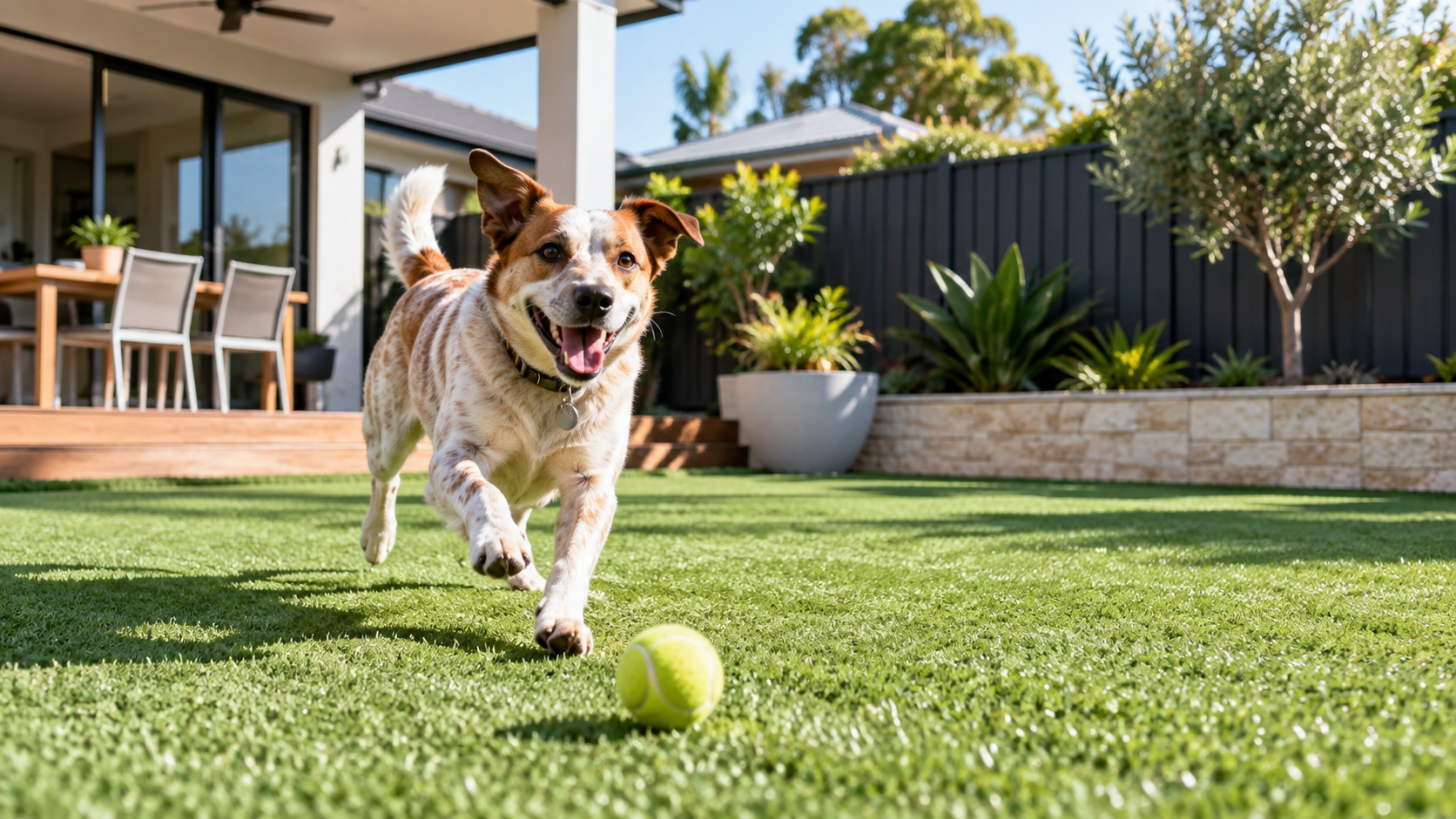
This is a practical concern for households with children and pets who spend time barefoot or on all fours outdoors. This guide explains the temperature difference between turf and natural grass, what causes artificial grass to heat, how hot it can get in Australian conditions, and the cooling methods and summer maintenance that make the biggest difference.
Artificial turf temperature is the measured heat at the surface of synthetic grass under specific weather, exposure and site conditions.
Is Turf Hotter Than Natural Grass in Australian Summers?
Yes, artificial turf is generally hotter than healthy natural grass when both are exposed to strong direct sunlight. The size of the difference varies with the turf system, the condition of the natural lawn and the weather at the time of measurement.
Living grass cools itself through evapotranspiration. Water moves through the plant and evaporates from its leaves, removing heat in the same way sweat cools the skin. Artificial fibres cannot perform this biological process, so they have no equivalent means of dissipating the solar energy they absorb.
The comparison is not as simple as “real grass always wins”, though. A dry, dormant or unhealthy natural lawn does not provide the same cooling effect as actively growing, adequately watered grass, and it can become noticeably warmer than a well-kept lawn nearby.
| Surface | Cooling Process | Summer Heat Behaviour | Important Qualification |
|---|---|---|---|
| Healthy natural grass | Evapotranspiration and soil moisture | Commonly remains cooler than artificial turf | Cooling depends on plant health and available water |
| Dry natural grass | Limited evapotranspiration | May become considerably warmer | Condition varies during drought and water restrictions |
| Artificial turf | No biological cooling | Can heat rapidly in direct sunlight | Temperature varies by product, infill and site |
| Concrete | No biological cooling | Absorbs and stores solar heat | Colour, thickness and exposure affect temperature |
| Pavers | No biological cooling | Can become hot and release stored heat later | Material and colour influence performance |
| Shaded ground cover | Reduced solar exposure | Usually cooler than an exposed equivalent | Shade position changes throughout the day |
The most reliable general conclusion is that direct shade reduces solar heating, while healthy natural grass usually remains cooler than exposed artificial turf.
Why Does Artificial Grass Get Hotter Than Natural Grass?
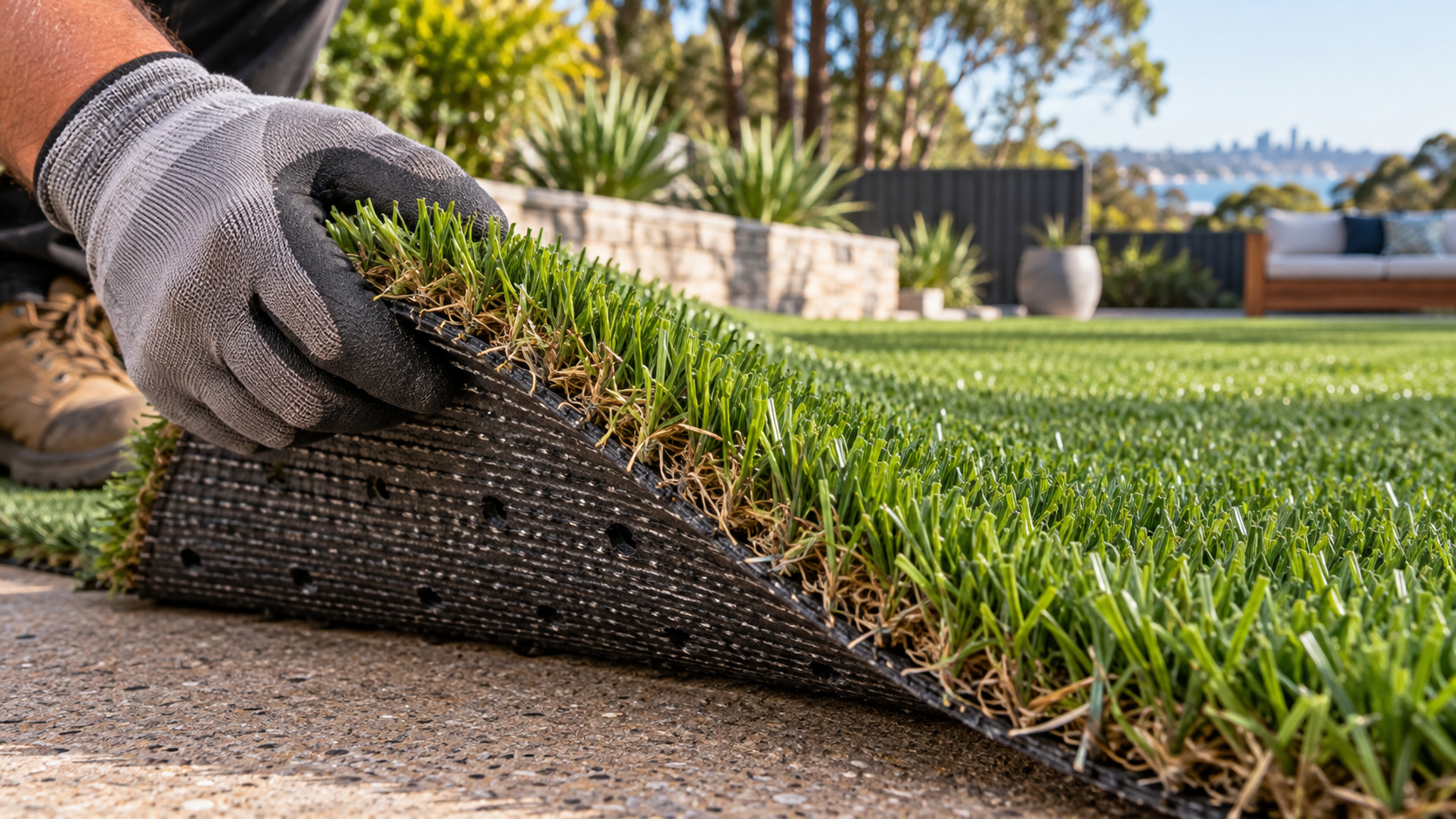
Artificial grass becomes hot because its fibres, backing and infill absorb solar radiation and convert part of that energy into heat. Unlike living grass, the system does not cool itself through evapotranspiration, so the heat has nowhere to go except back into the air and into anything touching the surface.
What Happens on a Hot Day
- Dark pigments absorb solar energy.
- Plastic fibres warm quickly in direct sunlight.
- Infill can absorb and store heat.
- The backing limits contact with cooler soil underneath.
- A dry surface provides little evaporative cooling.
- Enclosed yards may have limited airflow.
- Walls, windows and paving can reflect additional heat onto the turf.
- Dense turf may restrict air movement close to the backing.
- Warm base materials can slow overnight cooling.
| Heat Mechanism | How It Affects Turf | Site Example |
|---|---|---|
| Solar absorption | Fibres convert sunlight into surface heat | Unshaded north- or west-facing lawn |
| Limited evaporation | The turf cannot transpire like living grass | Dry synthetic lawn during a hot afternoon |
| Heat storage | Infill and the installation base may retain energy | Thick system exposed for several hours |
| Reflected radiation | Nearby surfaces direct more energy towards the turf | Lawn beside glass, metal fencing or light-coloured walls |
| Restricted airflow | Less moving air is available to remove heat | Enclosed courtyard |
| Surrounding hardscape | Paving and concrete contribute radiant heat | Small turf area bordered by dark pavers |
“Plastic gets hot” is only part of the answer. The complete site design, including orientation, shade, surrounding materials and airflow, influences the finished temperature just as much as the turf product itself.
How Hot Can Artificial Grass Get in Direct Australian Sunlight?
Artificial grass can become hot enough to feel uncomfortable in direct Australian sunlight, but there is no universal maximum temperature. Published measurements vary because air temperature, radiation, wind, turf construction and testing methods all differ between studies.
The most detailed Australian research on this question comes from the University of Melbourne, where researchers Pui Kwan Cheung and Stephen Livesley measured microclimate and surface temperatures across artificial turf, natural turf and other backyard surfaces. Separate Australian government research into synthetic sports turf and pavement has reported broadly similar patterns.
| Source and Location | Surface Tested | Air Temperature | Recorded Surface Temperature | Sun or Shade | Time and Conditions |
|---|---|---|---|---|---|
| Cheung and Livesley, University of Melbourne, Melbourne backyard measurements | Artificial turf | Not reported for this specific reading | 72°C maximum recorded | Full sun | Hot, sunny summer day; hot enough to risk irreversible adult skin burns for close to four hours that day |
| Same study, same location and day | Natural turf | Not reported for this specific reading | 39°C maximum recorded | Full sun | Measured for direct comparison with the artificial turf reading above; never reached burn-risk temperature |
| Western Sydney University, Cool Roads Trial, Campbelltown, NSW | Unshaded asphalt paving and car park | Approximately 31°C | Up to 68°C | Full sun | Clear February afternoon; similar nearby readings of 62°C to 64°C recorded under the same conditions |
Only rows measured under comparable conditions should be read against each other. Where a source did not report air temperature, exact timing or sun exposure, that has been marked as not reported rather than estimated.
What the Temperature Readings Mean
- Air temperature is usually recorded in a ventilated, shaded position, away from the surface itself.
- Surface temperature is measured directly on the material in question.
- Infrared thermometer readings capture a single spot at a moment in time.
- Thermal-camera images show temperature variation across a wider area.
- Short-term spot measurements can miss the hottest part of the day.
- Measurements recorded over an entire day show how the temperature rises and falls, rather than a single peak.
Check before use. Given the burn risk identified in the University of Melbourne research, check the turf shortly before children or pets use it. Test several areas, including sections near paving and reflective walls; use the back of your hand as a quick comfort check; do not rely on air temperature alone; and provide access to shade and a cooler alternative surface. Delay use when the turf feels uncomfortably hot.
There is no single “safe” touch temperature that applies to every person. Still, the same Melbourne research notes that adults can suffer irreversible burns from ten minutes of contact with a surface at 48°C or hotter, and that children’s skin is affected by temperatures roughly 2°C lower, since it is thinner and more sensitive. That gives a useful sense of scale rather than a rule to apply unthinkingly to every situation.
What Factors Affect the Temperature of Artificial Turf?
Two synthetic lawns can record different temperatures under identical weather because of differences in construction, exposure and the materials around them. The turf itself is only one variable among many.
Factors Worth Considering
- Strength and duration of sunlight
- Time of day, air temperature, wind speed and humidity
- Turf colour, fibre polymer, blade shape, pile height and density
- Thatch construction, infill material and depth, backing design and base material
- Moisture, natural or built shade, nearby paving and reflective walls or windows
- Yard orientation and local airflow
| Factor | Likely Effect | What the Homeowner Can Check |
|---|---|---|
| Direct sunlight | Usually increases surface temperature | Observe the site from morning to late afternoon |
| Shade | Reduces direct solar exposure | Check whether shade reaches the turf during peak heat |
| Turf colour | Darker components may absorb more energy | Compare samples, but request supporting test data |
| Infill | May affect heat storage and cooling response | Ask what infill is required and why |
| Moisture | Can provide temporary evaporative cooling | Confirm drainage and local watering restrictions |
| Wind | Can help remove some surface heat | Assess whether walls and screens restrict airflow |
| Paving | May radiate additional heat | Review materials surrounding the lawn |
| Reflective glass | Can concentrate sunlight in local areas | Inspect changing reflections across the day |
| Base system | Can influence drainage and stored heat | Ask how the proposed base suits the site |
| Turf density | May alter airflow and thermal behaviour | Compare complete product specifications |
Marketing terms such as “cool”, “cooling”, “heat-resistant” or “advanced cooling technology” should be backed by test data rather than taken at face value. The Synthetic Turf Council advises buyers to be cautious of unsupported claims about any single yarn type or technology, since comparisons are only meaningful when products are tested under matching conditions.
Questions to Ask a Supplier
- What was the comparison product?
- Were both products tested at the same time?
- What were the air temperature and solar conditions?
- Was the turf wet or dry?
- Which infill and base were used?
- How long did the claimed cooling effect last?
- Did an independent laboratory complete testing?
- Does the result apply to the proposed installation?
How Can You Keep Artificial Grass Cooler During Summer?
Shade is the most dependable way to limit artificial grass heating because it reduces direct solar exposure at the source. Watering can temporarily cool the surface, while turf and infill selection may influence heat behaviour, but cannot guarantee a cool surface on a 40°C day.
| Cooling Method | Expected Effect | Duration | Limitation |
|---|---|---|---|
| Permanent shade structure | Reduces direct solar heating | While shade covers the area | May require planning, suitable positioning or approval |
| Retractable shade | Allows seasonal and time-based control | While extended | Wind limits and operating requirements apply |
| Trees and planting | Provides shade and may improve the surrounding microclimate | Depends on canopy and season | Roots, leaf litter and establishment time need consideration |
| Watering or misting | Temporarily cools through evaporation | Usually short-term | Uses water, and the turf can reheat quickly |
| Heat-conscious turf selection | May reduce heating compared with another tested product | Product and condition dependent | Claims require comparable testing |
| Alternative infill | May change heat absorption or moisture retention | Product dependent | Performance, maintenance and suitability vary |
| Improved airflow | Helps remove accumulated heat | Depends on wind conditions | Often limited in enclosed courtyards |
| Cooler surrounding materials | Reduces heat radiated from adjacent surfaces | Ongoing | May require broader landscaping changes |
Practical Summer Measures
- Map the sun and shade before selecting the turf location.
- Add shade where children or pets spend the most time.
- Retain natural planting or another cooler surface.
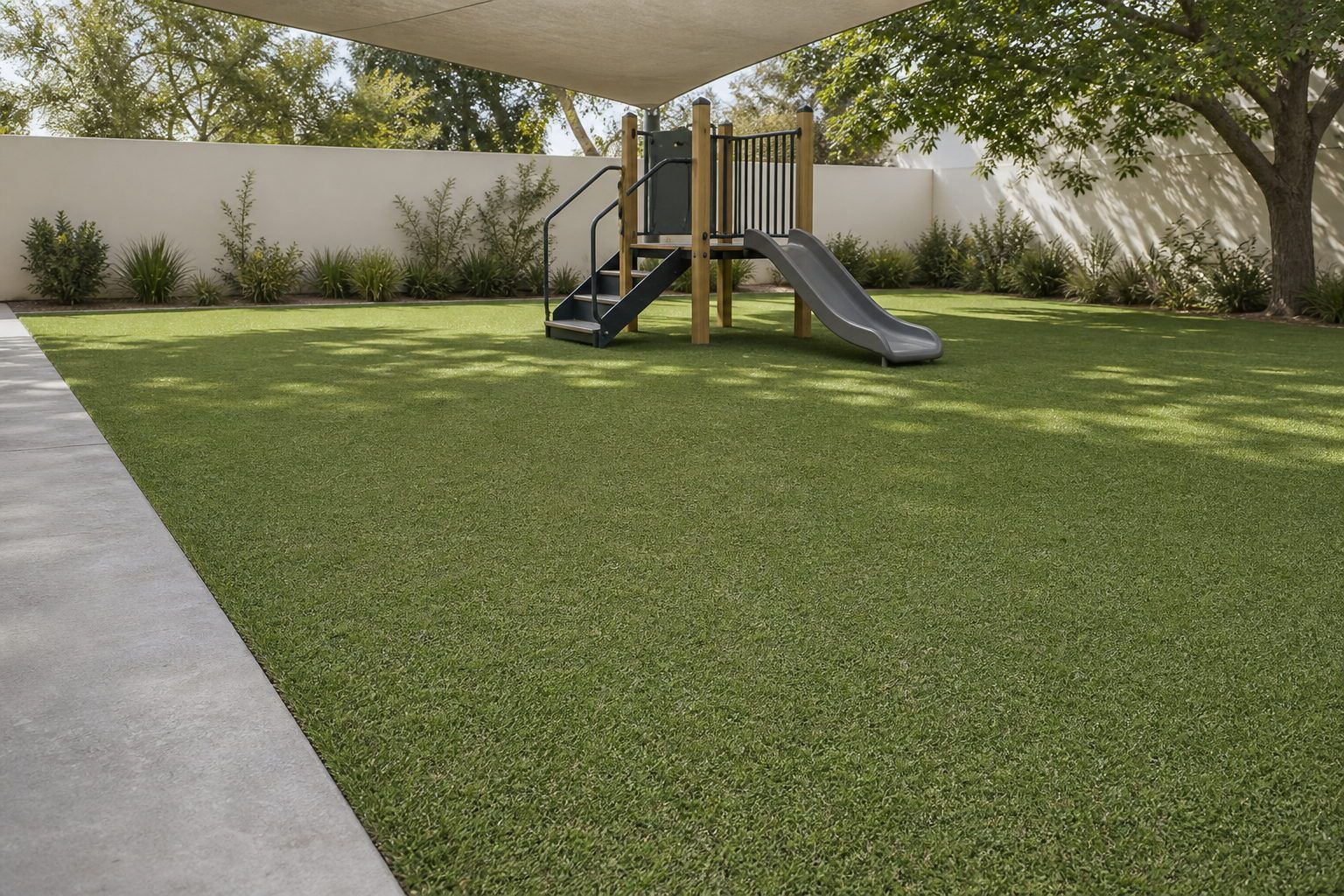
- Avoid placing play equipment in the hottest, most exposed area.
- Check for reflected sunlight from windows and metal surfaces.
- Test the turf before use and schedule outdoor play for cooler parts of the day.
- Provide drinking water for pets and keep drainage outlets clear.
- Rinse only where permitted and practical, and follow local water restrictions.
- Use the manufacturer’s maintenance instructions.
- Never assume a cooling product removes the need for temperature checks.
Cooling With Water
Watering can lower surface temperature through evaporation, but the result is temporary. The cooling period depends on sunlight, air temperature, wind, humidity and the amount of water applied, and the surface can warm back up within an hour or two once it dries out.
Constant watering is not the answer. Water availability, local restrictions, drainage, and the original reason for choosing a low-maintenance surface all need to be weighed against the quick, short-lived cooling effect.
Choosing Infill
Infill may affect heat absorption, moisture retention, stability and maintenance. Sand, coated materials, mineral products and other systems can behave differently from one another, and from one brand to the next.
No single infill can be called universally coolest or safest without comparable evidence. Check its compatibility with the turf, its intended use, its warranty, and the maintenance it requires before assuming it solves the heat question on its own.
Creating Shade
A well-positioned tree, sail, umbrella, pergola or retractable structure can prevent direct solar radiation from reaching the surface in the first place, which is generally more effective than trying to cool the turf after it has already heated up.
Shade moves during the day, so the design should be based on the period when the turf would otherwise receive its strongest exposure, not just where shade happens to fall at midday.
Summer Maintenance Checklist
Knowing how to maintain synthetic grass through summer supports drainage and general performance, even though maintenance alone cannot prevent exposed turf from heating in strong sunlight.
A Practical Summer Routine
- Remove leaves and debris that may block drainage.
- Keep drainage outlets clear.
- Check seams and edges after periods of expansion or heavy use.
- Brush flattened fibres with an appropriate non-metal tool.
- Clean pet toilet areas regularly.
- Check infill levels where applicable.
- Follow approved cleaning instructions.
- Inspect areas exposed to concentrated reflected sunlight.
- Test surface temperature before children or pets use the lawn.
- Monitor whether shade covers the intended area.
- Avoid placing heat-producing appliances directly on the turf.
- Keep barbecues, fire pits and hot equipment away from the surface.
- Follow watering restrictions.
- Arrange an inspection if the surface develops movement, odour or drainage problems.
Our detailed guide to cleaning and maintaining artificial grass covers the equipment and routine behind these steps in more depth.
What Should You Check Before Choosing Artificial Turf for a Hot Area?
The buying decision should account for the entire yard, not just the turf sample. A sample that feels pleasant in a showroom does not tell you how the finished lawn will behave in an exposed north-facing courtyard in February.
Buying Checklist
- How many hours of direct sunlight does the area receive?
- Is the strongest exposure in the morning or afternoon?
- Are children or pets likely to use the surface barefoot?
- Is a shaded alternative area available?
- Do windows or metal surfaces reflect sunlight onto the lawn?
- What fibre, thatch and backing materials are used?
- Does the product require infill?
- Is comparative temperature testing available, and under what conditions?
- How does the site drain after watering or rain?
- What base will be installed?
- Are shade features included in the landscape plan?
- What maintenance does the warranty require?
- Does the installer offer a site-specific heat-management plan?
| Quote Item | What It Should Explain |
|---|---|
| Turf specification | Fibre, pile, density, backing and intended application |
| Heat-related claims | Test method, comparison product and testing conditions |
| Infill | Material, purpose, amount and maintenance needs |
| Base preparation | Materials, depth, compaction and drainage |
| Site orientation | Sun, shade and reflected-heat considerations |
| Surrounding surfaces | Effects of paving, walls, glass and metal |
| Cooling measures | Shade, landscaping or temporary water-based options |
| Maintenance | Cleaning, brushing, infill and drainage requirements |
| Warranty | Heat-related exclusions and general conditions |
| Total price | Product, installation, preparation, disposal and additional work |
A site assessment carried out during or close to the period of strongest sunlight, where practical, gives a far more realistic picture than a measurement taken on a mild day. Our product range and residential installation guidance set out what to compare between products before you commit.
Planning for a Cooler Lawn
The answer to whether turf is hotter than grass is generally yes when artificial turf and healthy natural grass are compared in direct sunlight. The size and duration of the difference depend on the specific product, the weather and how the site is designed.
Shade, thoughtful landscape planning, temporary watering and regular temperature checks can help manage summer use of an existing lawn. Knowing how to maintain synthetic grass also supports drainage and general performance, but no maintenance routine removes all heat risk from an exposed surface on a hot day.
Ready to Plan for the Heat?
A site-specific assessment that considers sun exposure, shade, reflected heat, drainage and intended use will give you a far more useful answer than a general rule of thumb. Tell us about your yard, and we will help you weigh up the right turf system for your climate and your family.
Frequently Asked Questions
Is turf hotter than natural grass?
Yes, exposed artificial turf is generally hotter than healthy natural grass under strong sunlight. Natural grass cools itself through evapotranspiration, a biological process that synthetic fibres cannot replicate. The size of the difference depends on the turf’s construction, the weather on the day, available shade and the condition of the natural lawn being compared against it.
How hot does artificial grass get in summer?
There is no single maximum temperature that applies to every lawn. Artificial grass can become uncomfortable in direct summer sun, and Australian research has recorded surface temperatures well above 70°C on hot days. Measurements vary with air temperature, solar radiation, wind, product construction and the testing method used, so any figure needs its source and conditions attached.
Why does artificial grass get hot?
The fibres, backing and infill absorb solar energy and convert it into heat at the surface. Artificial turf also lacks the evaporative cooling that healthy natural grass provides through its leaves. Surrounding paving, reflected sunlight from windows or metal surfaces, and limited airflow in an enclosed yard can all compound the effect of direct sun exposure.
How can I cool down artificial grass?
Shade provides the most reliable reduction in solar heating because it prevents direct sunlight from reaching the surface. Water can produce a useful but temporary cooling effect through evaporation, and turf or infill selection may influence performance to a lesser degree. Check the surface before use and give children and pets access to a cooler alternative area on hot days.
Does artificial grass stay hot after the sun goes down?
Artificial grass begins cooling once direct solar exposure decreases, but the rate varies by site. Warm air, heat stored in the base material, surrounding paving and limited airflow can all slow the cooling process into the evening. Rather than assuming the lawn is comfortable soon after sunset, it is worth testing the surface before letting children or pets back onto it.
Recent Posts