When the mercury climbs, many homeowners start to wonder: Does artificial turf get hot underfoot, and is it still a practical choice for an Australian backyard? The short answer is yes: artificial turf gets hotter than natural grass in direct sunlight, especially during the peak of an Australian summer. The good news is that modern turf technology and a few simple cooling habits make it easy to keep your lawn comfortable all season long.
Quick Answer: Does Artificial Turf Get Hot in Summer?
Yes, artificial turf gets hotter than natural grass in direct sunlight because synthetic fibres absorb and hold heat rather than releasing moisture like living grass does. Surface temperatures can climb well above the surrounding air temperature on a still, sunny day. However, newer heat-reflective turf technologies, lighter colour blends, and simple cooling methods like light hosing or shade structures make the surface far more comfortable for everyday use.
Australian summers bring some of the highest UV and heat levels in the world, so it is worth understanding exactly why artificial turf behaves the way it does before choosing a product for your home. If you are still weighing up your options, our guide on “Is artificial turf better than natural grass” covers the broader pros and cons of each surface. The good news is that with the right turf and a few sensible habits, a synthetic lawn can stay perfectly usable even on a hot afternoon.
Why Does Artificial Turf Get Hot During Australian Summers?
Synthetic grass is made from man-made fibres, and these fibres respond to heat very differently from living plants. Unlike natural grass, artificial turf has no internal moisture to draw on, so it has fewer ways to shed the heat it absorbs from the sun.
Several factors combine to push surface temperatures up on a warm day:
- Direct exposure to sunlight, which heats the fibres throughout the day
- UV absorption by synthetic fibres, which converts light energy into heat
- Darker turf colours, which absorb more radiation than lighter tones
- Lack of natural moisture to cool the surface through evaporation
- Limited airflow at ground level, particularly in enclosed courtyards
- High ambient summer temperatures across much of Australia
Natural grass stays cooler mainly because it constantly releases moisture through a process called evapotranspiration, which has a similar cooling effect to sweating. Artificial turf cannot do this, so its surface temperature tracks much more closely with direct sun exposure. Australia’s climate, with long hours of strong summer sun as tracked by the Bureau of Meteorology, means this effect is more pronounced here than in cooler regions. Fortunately, premium artificial turf products are manufactured with heat-reducing technology and reflective coatings that greatly reduce surface temperatures compared with older, budget-style turf.
How Can You Keep Artificial Turf Cooler in Hot Weather?
Even on the hottest days, there are practical ways to bring the surface temperature down and keep your outdoor space comfortable for family time.
Some of the most effective cooling strategies include:
- Lightly hosing the surface before use to cool it quickly
- Installing shade structures or a pergola over key areas of the lawn
- Planting trees or garden beds around the turf to create natural shade
- Choosing lighter coloured turf, which reflects more heat than dark green blends
- Improving airflow around outdoor areas by avoiding fully enclosed layouts
- Selecting turf with heat-reducing or reflective fibre technology
A quick spray from the hose provides instant relief; the water cools as it evaporates from the surface. But this effect is only transitory, and the turf will warm up again when it is in direct sun. Shade is a more permanent solution because it prevents the heat from building up in the first place rather than removing it after the fact. The best result for most Australian homeowners is a combination of a few of these methods, such as partial shade from a pergola combined with a lighter-coloured, heat-reducing turf, to give the most comfortable outcome all year round.
Does the Colour and Material of Artificial Turf Affect Heat Retention?
The construction of the turf itself plays a major role in how hot it gets. Not all synthetic grass performs the same way in summer conditions.
Key product features that influence heat performance include:
- Fibre material, typically polyethylene or polypropylene
- Turf colour, with lighter blends generally staying cooler
- Pile height, which affects how heat moves through the surface
- Stitch density, which influences airflow within the turf
- Heat reflective technology built into premium fibre coatings
- UV-resistant fibres designed to withstand harsh Australian sun
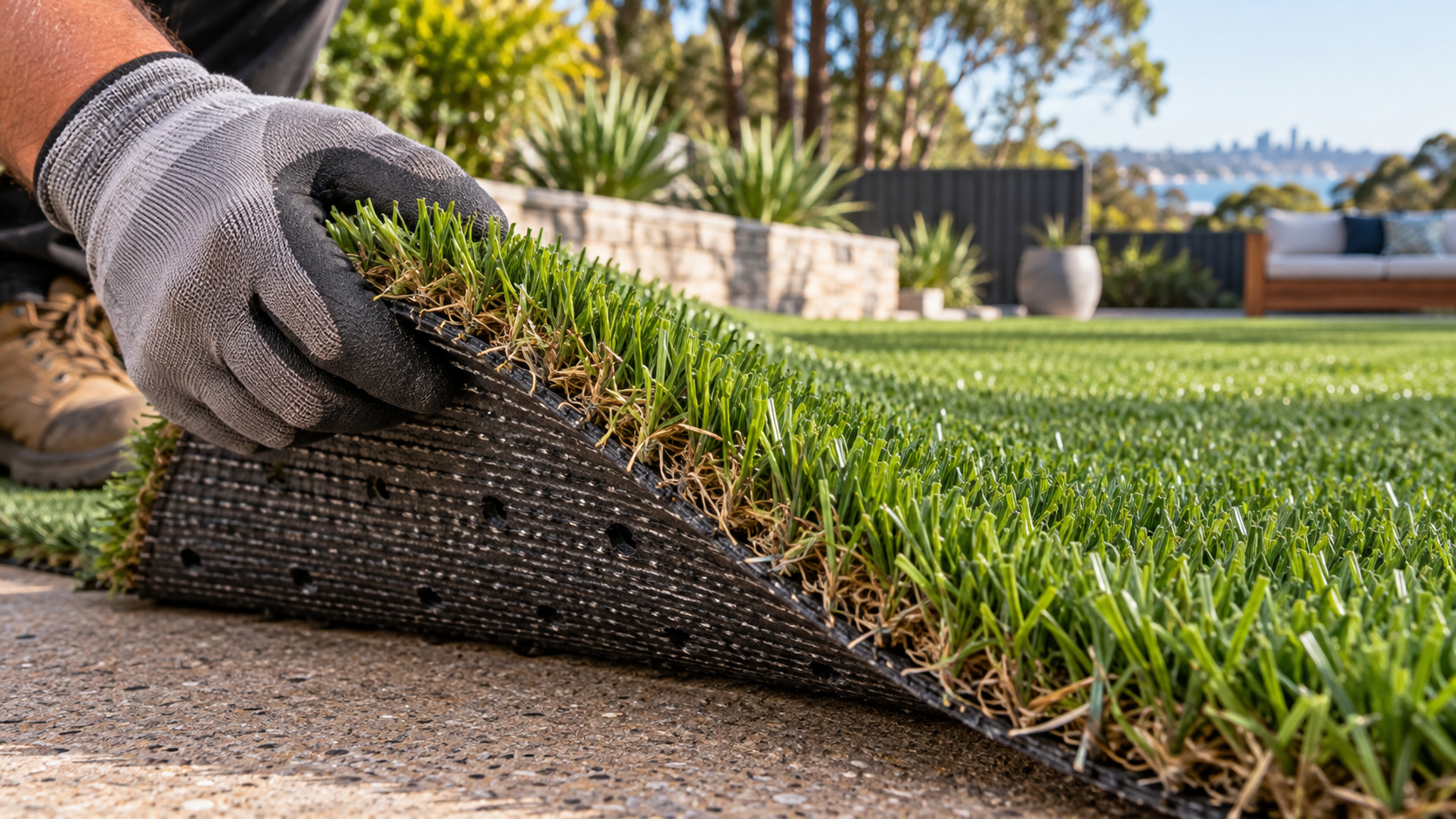
Polyethylene fibres are generally softer underfoot and tend to perform better in heat compared with older polypropylene-based products, which can feel harder and retain more warmth. Many manufacturers have responded to Australia’s climate by developing fibre technologies specifically designed to reflect rather than absorb solar radiation. As a result, the relationship between construction quality and heat performance is now one of the clearest indicators of how a lawn will feel on a 35-degree afternoon, and it is well worth comparing this detail before choosing a product. Professional
artificial turf installation also plays a role, as proper base preparation and drainage support better overall heat and moisture management over time.
Is Artificial Turf Too Hot for Children and Pets in Summer?
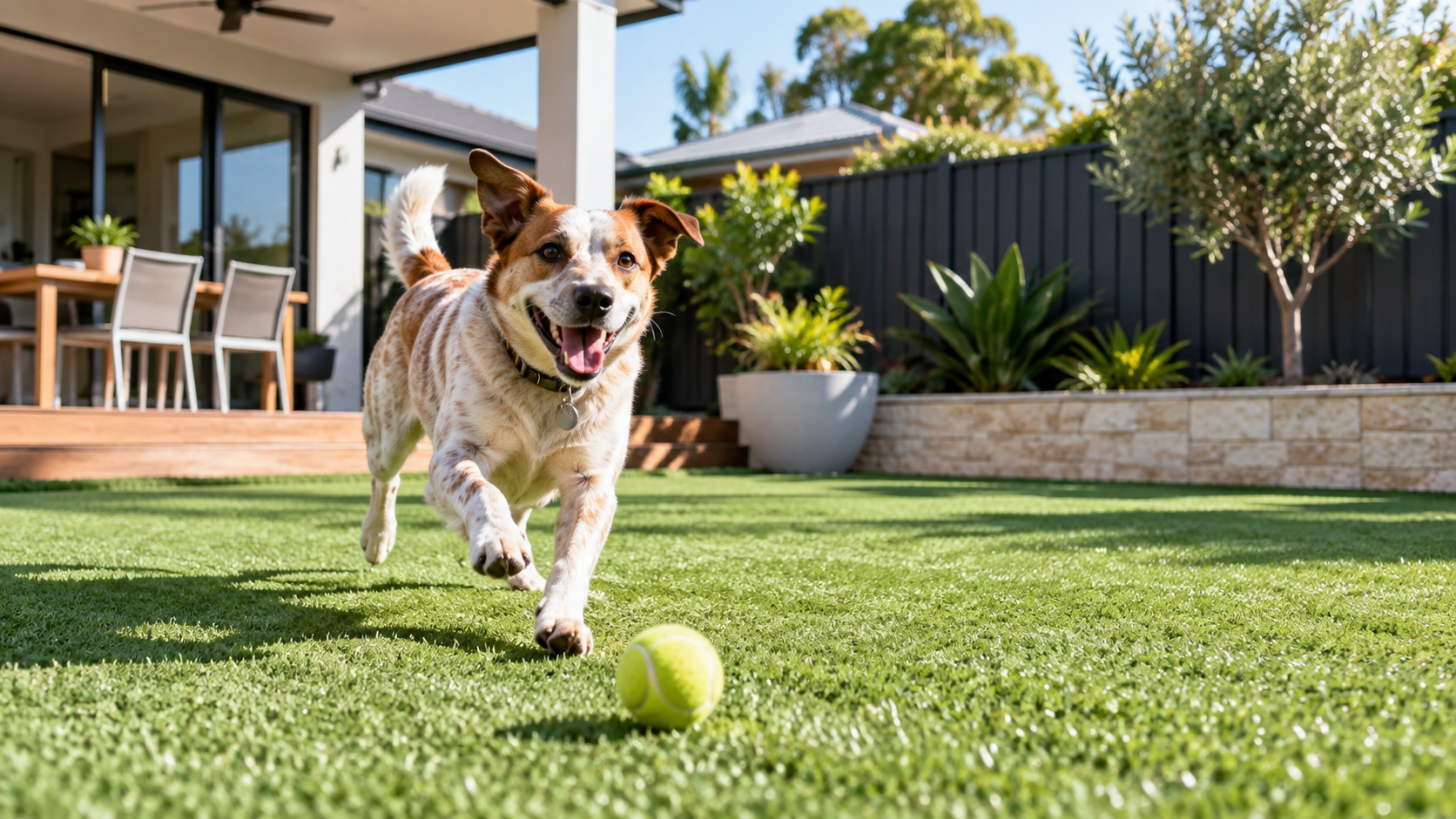
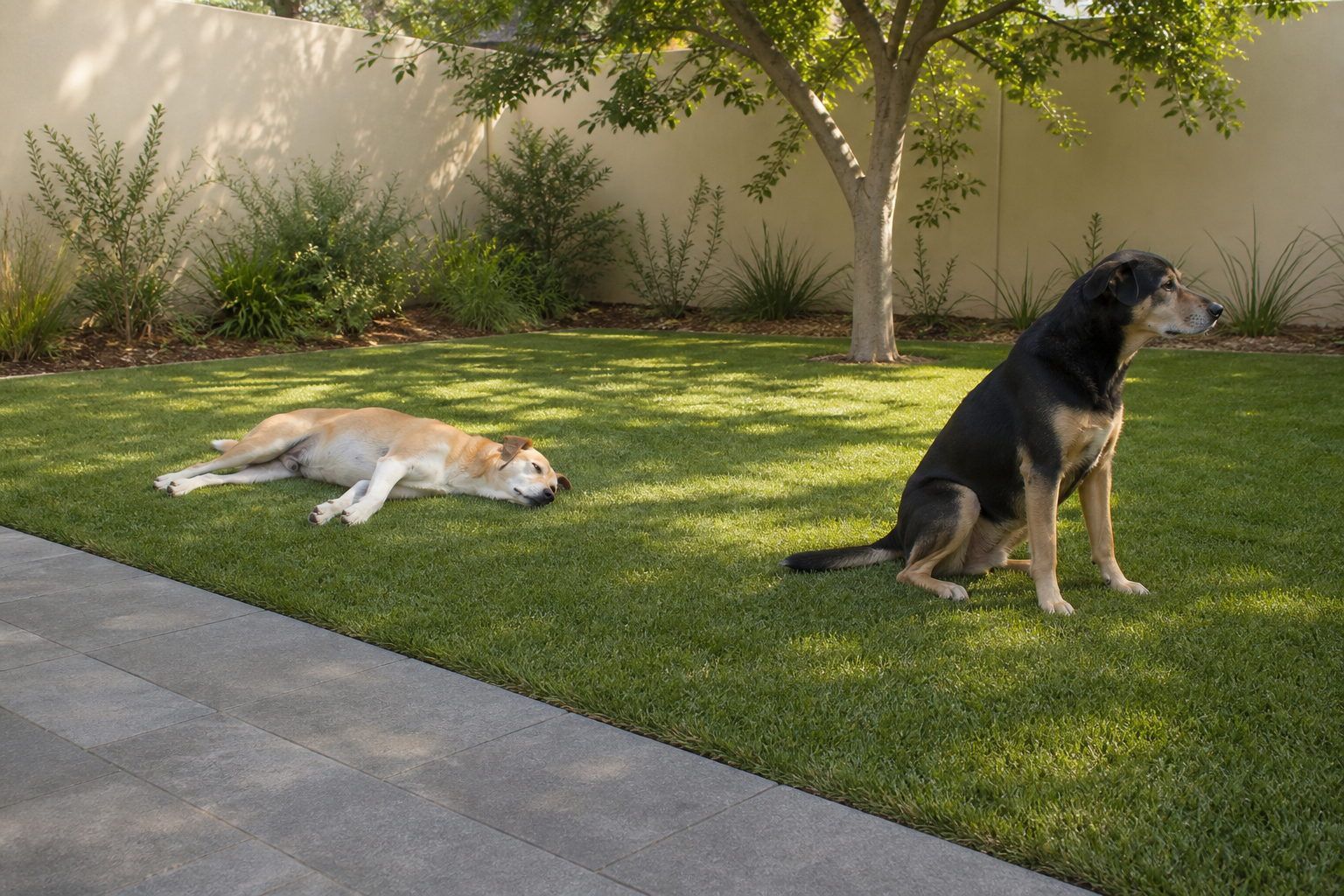
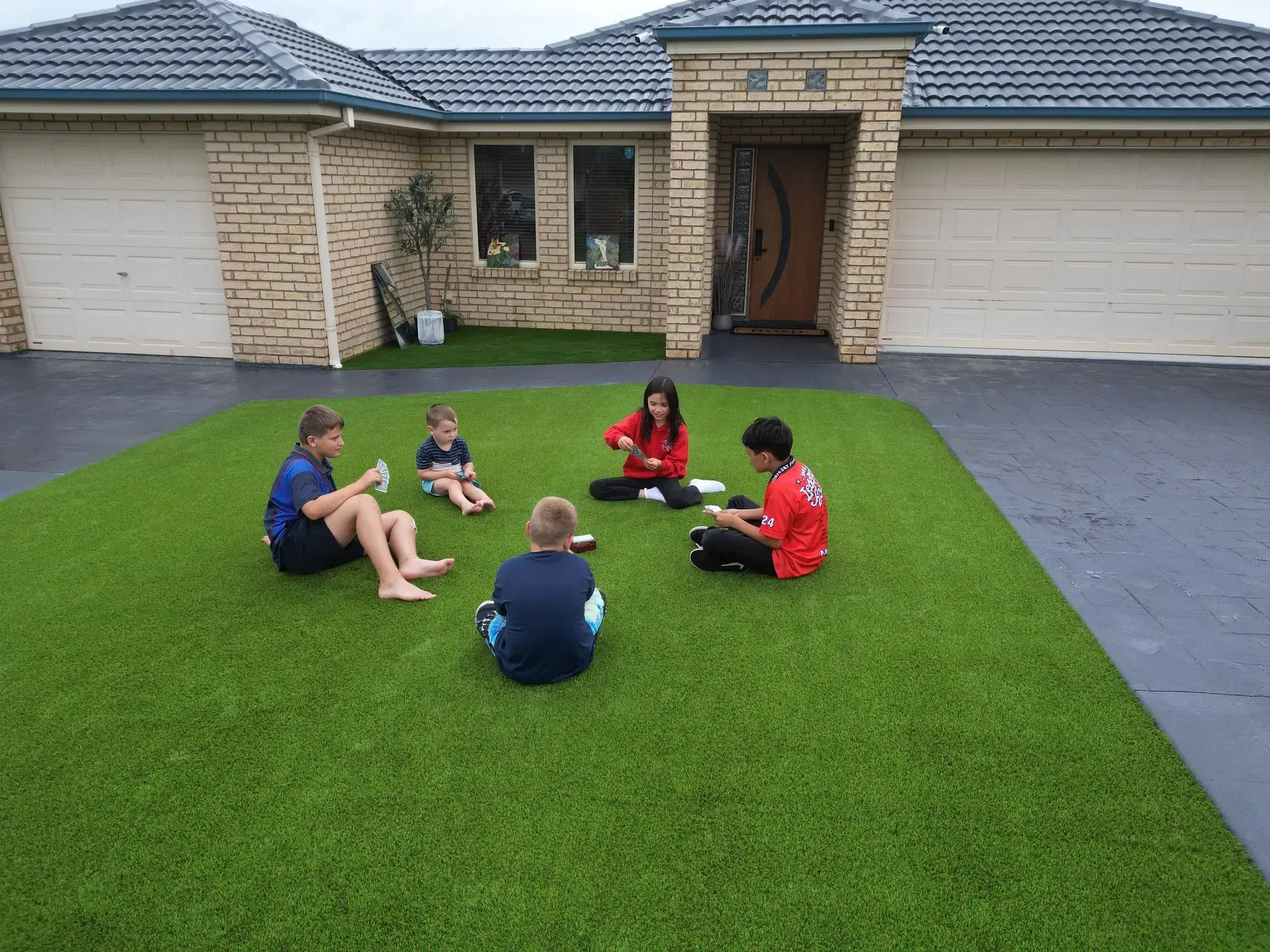
Families with young children or pets often ask whether synthetic grass is safe to use during a heatwave. With a few sensible precautions, artificial turf remains a practical and family-friendly surface throughout the warmer months.
Helpful safety habits include:
- Checking the surface temperature with your hand before letting children or pets play
- Avoiding peak afternoon heat, generally between midday and 3 pm
- Providing shaded play areas for breaks from direct sun
- Hosing the turf down before use to cool it quickly
- Ensuring pets always have access to fresh, cool drinking water
- Considering a heat-reducing turf product for high-use areas
Surface temperatures can vary widely over the course of a day, often peaking in the early to mid-afternoon, then dropping as the sun sinks lower. Areas of the lawn that are shaded, like under a pergola, a tree canopy, or along the side of the house, can be much cooler than areas in full sun, so they make sense as places for outdoor play during a heatwave. With the level of UV exposure in Australia, as
ARPANSA points out, it’s worth making these habits part of your family’s normal summer routine rather than just thinking about them on the hottest days.
What Are the Best Artificial Turf Options for Reducing Surface Heat?
Not all synthetic grass is created equal, and the difference between entry-level and premium products becomes very obvious once summer arrives.
Features to look for when comparing heat performance include:
- Dedicated heat-reducing fibre technology
- Premium polyethylene fibre construction
- UV-stabilised fibres built for long-term sun exposure
- Lighter colour blends rather than a single dark green tone
- Efficient drainage systems that support surface cooling
- High-quality, durable backing materials
Premium landscape turf generally outperforms entry level products because manufacturers invest in fibre technology specifically designed to manage heat, rather than simply mimicking the look of natural grass. Products developed with the Australian climate in mind, rather than adapted from overseas ranges, tend to handle extreme summer heat more reliably over time. A good synthetic grass supplier or experienced installer can assess your specific site, including its aspect and sun exposure, and recommend a turf option suited to local conditions.
Artificial Turf vs Natural Grass: Summer Heat Comparison