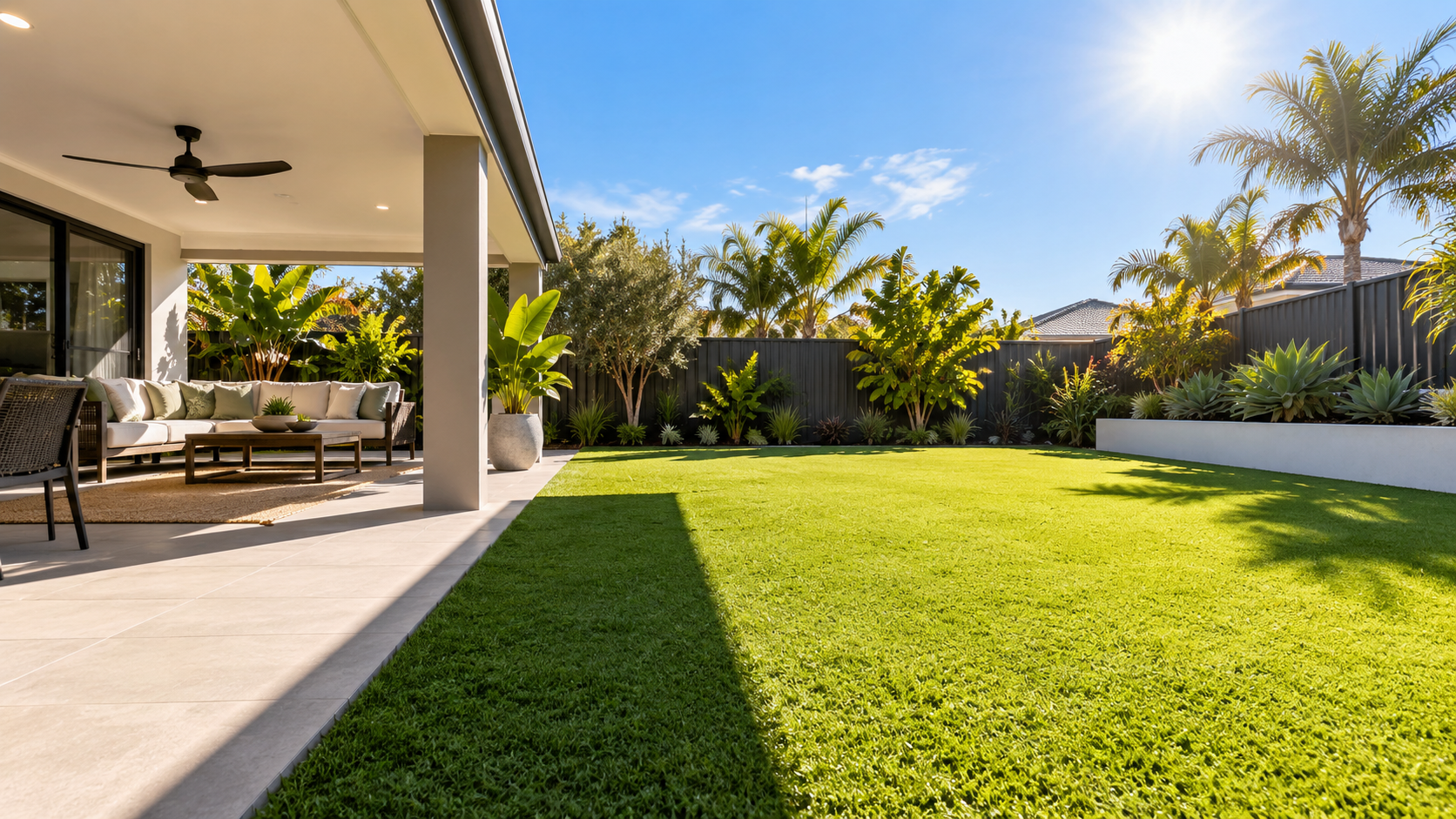
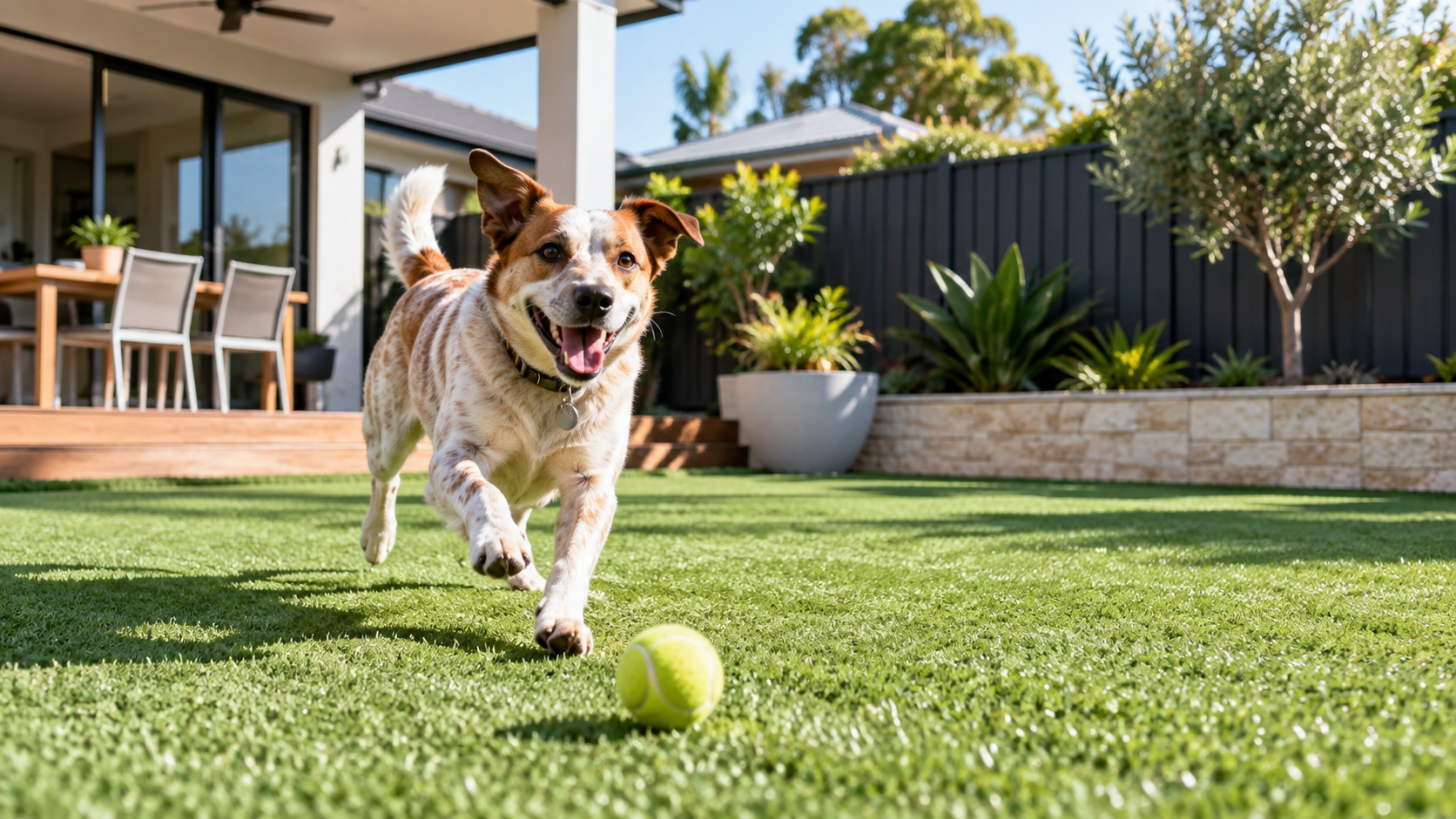
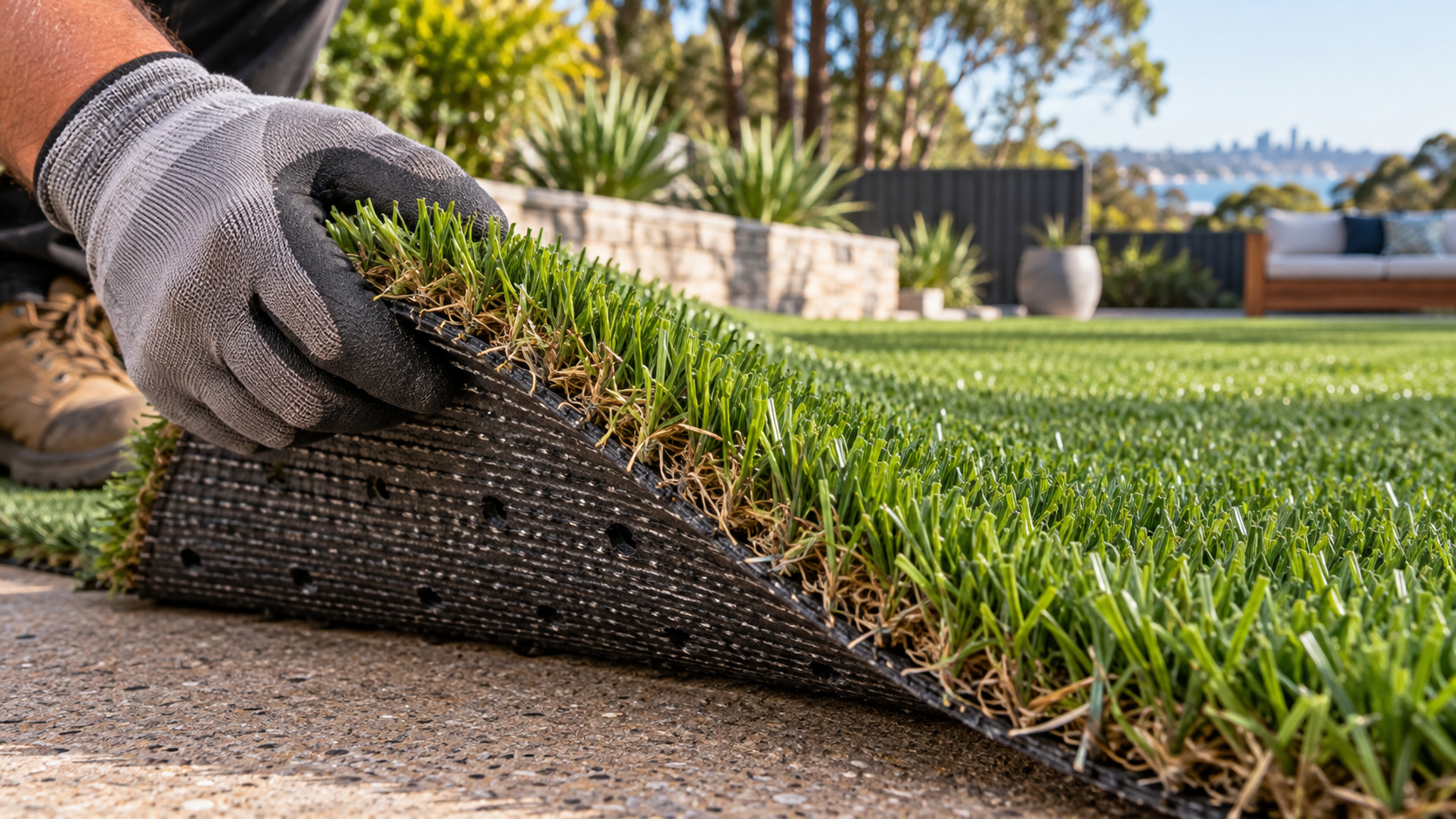
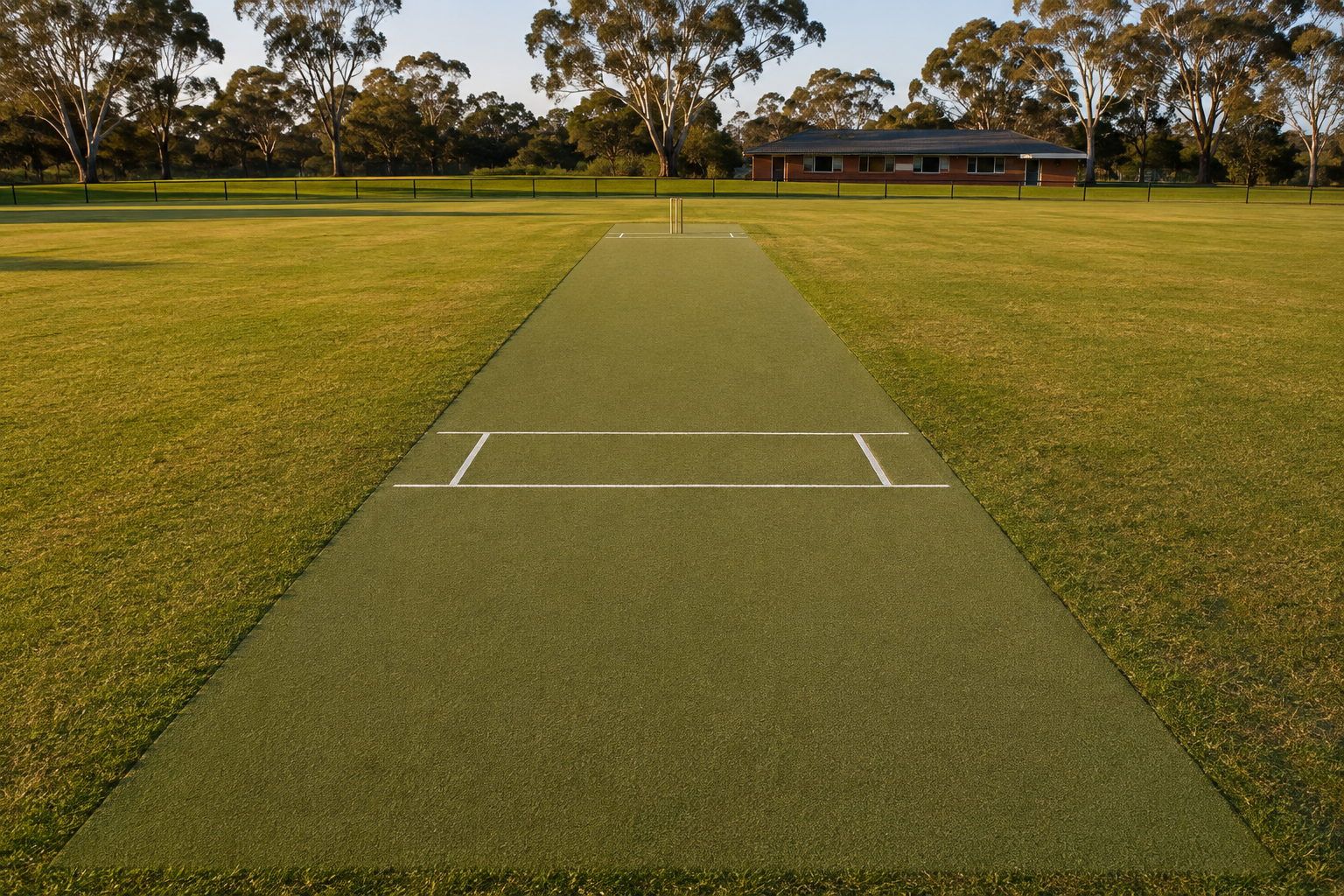
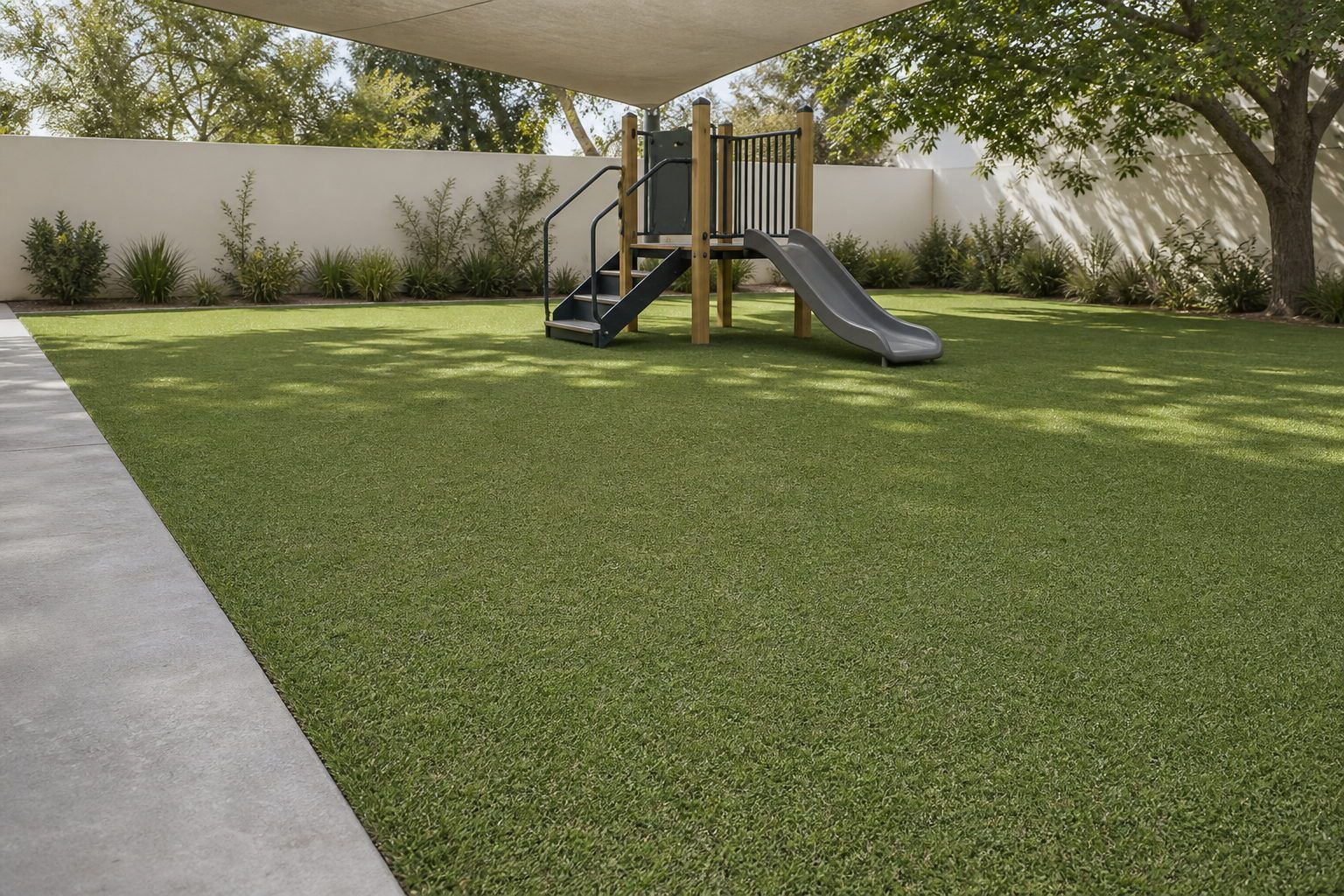
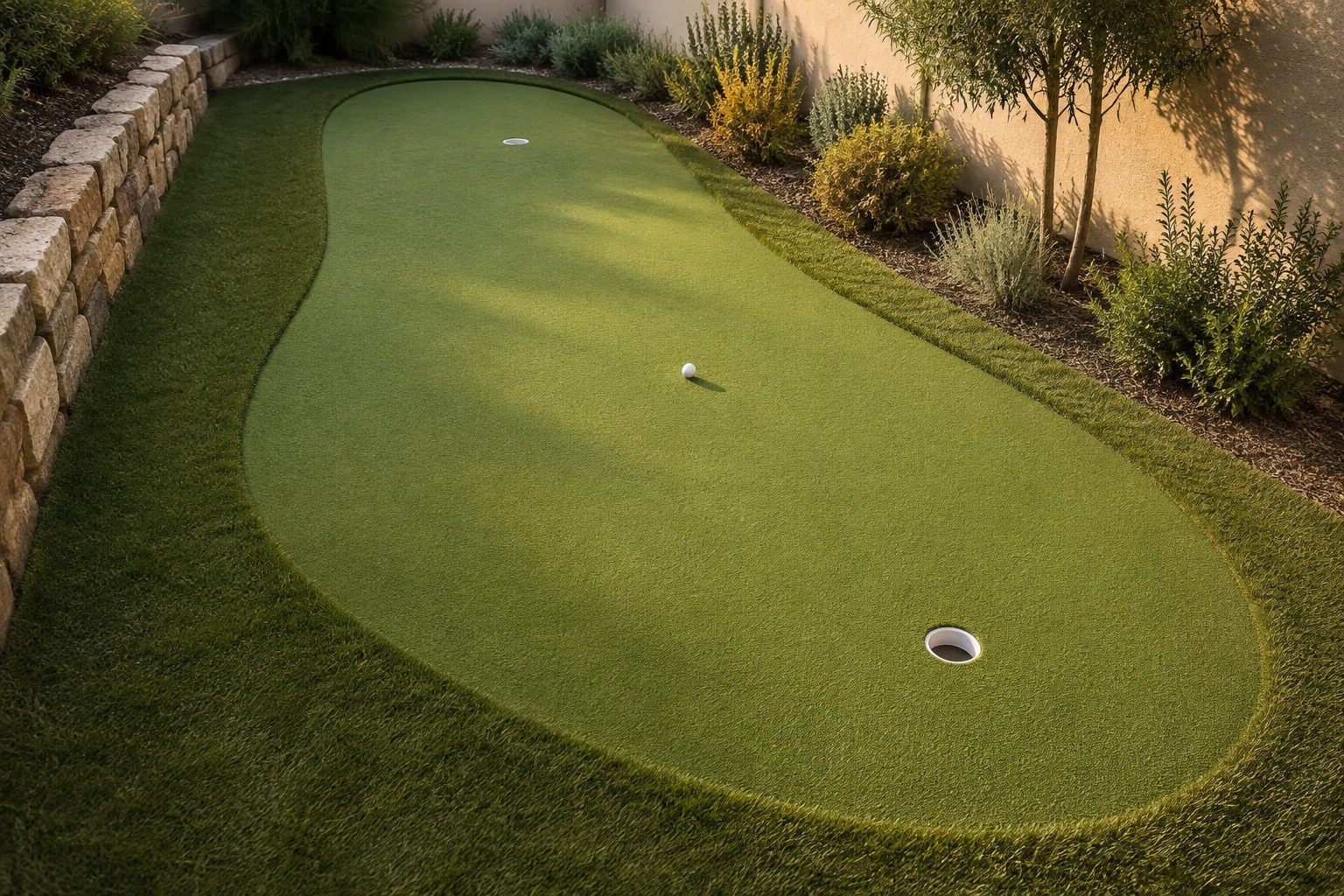
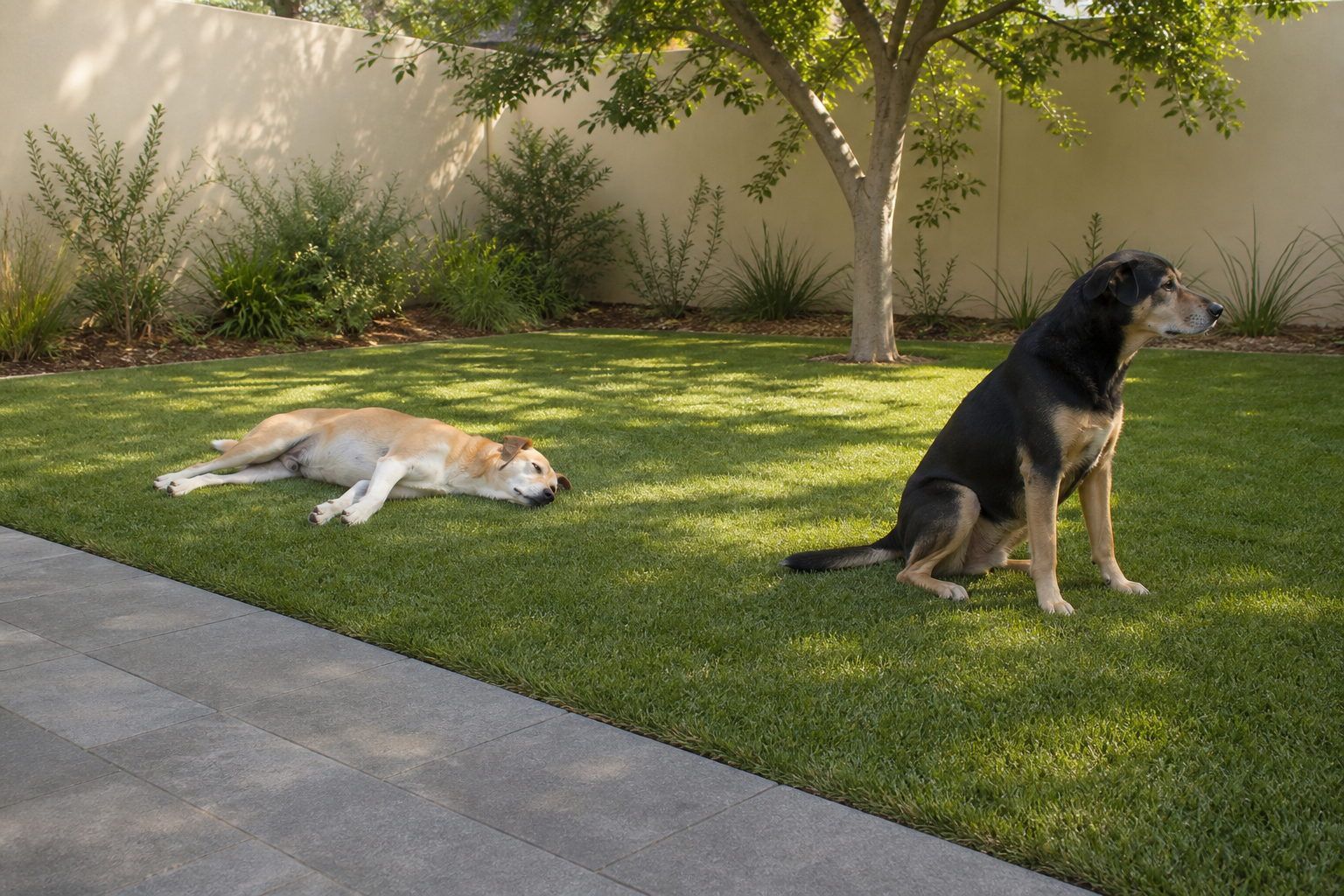
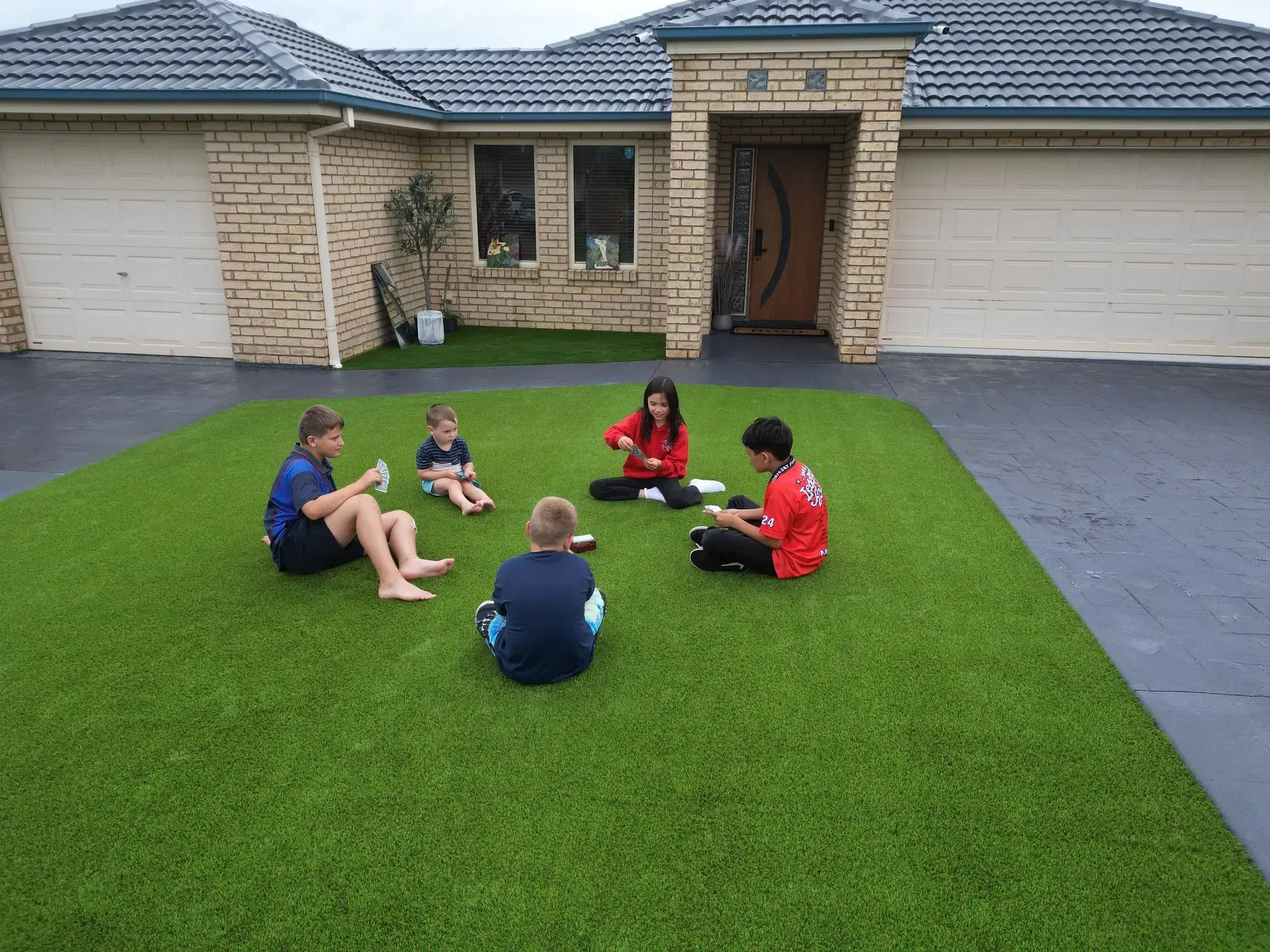
If you’re wondering how long does artificial turf lasts, the answer is typically between 10 and 20 years. Depending on product quality, installation quality, usage levels, and maintenance. Residential artificial turf generally sits toward the middle of that range with regular care. Professional installation protects the base and drainage system, while consistent maintenance helps fibres and backing perform well for longer.
What Factors Affect How Long Artificial Turf Lasts?
Several factors determine the lifespan of artificial turf, and understanding them helps homeowners set realistic expectations from the outset. Some factors relate to the product itself, while others come down to how the turf is installed and used day to day.
- Quality of artificial turf materials, including yarn type and density
- UV resistance and sun exposure over time
- Installation quality, particularly base preparation and drainage
- Foot traffic and daily use patterns
- Drainage system performance during heavy rain
- Climate and weather conditions across the seasons
- Routine maintenance and cleaning habits
UV stabilisation is vital in Australia’s climate. According to the
Australian Government Bureau of Meteorology’s UV index and temperature data, large areas of the country have consistently high UV levels for extended periods each year, which accelerate fibre breakdown in lower-quality products. UV-stabilised yarns are important for colour and structural integrity with prolonged exposure. A well-compacted, well-drained base will also help prevent fibres from flattening unevenly and prevent water from pooling beneath the surface. Proper base preparation will also prevent premature wear.
How Can You Extend the Lifespan of Artificial Turf?
Extending the lifespan of artificial turf comes down to consistent, straightforward maintenance rather than intensive work. A few simple habits, carried out regularly, make a noticeable difference to how the surface looks and performs over many years.
- Remove leaves and debris regularly to prevent moisture buildup
- Brush fibres periodically to maintain an upright, natural appearance
- Rinse the surface occasionally to remove dust and pollen
- Clean spills and pet waste promptly to avoid staining and odour
- Avoid dragging heavy furniture across the surface
- Inspect edges and seams periodically for early signs of lifting
Brushing prevents fibre matting, which is one of the most common cosmetic issues in high-traffic areas. Regular brushing against the direction of wear keeps fibres standing upright and looking fuller for longer. Maintaining efficient drainage is equally important, as blocked drainage can lead to pooling, odour, and bacterial growth beneath the surface. The
NSW Environment Protection Authority notes that effective stormwater and drainage management around residential surfaces helps reduce runoff issues and supports better environmental outcomes, which is another reason to keep drainage channels clear of debris.
What Are the Signs That Artificial Turf Needs Replacing?
Recognising the signs of ageing turf early allows homeowners to plan for replacement before minor issues become costly problems. Some signs are purely cosmetic, while others indicate deeper structural issues that affect safety and drainage.
- Flattened or worn fibres that no longer spring back
- Fading from prolonged UV exposure
- Loose seams or lifting edges around the perimeter
- Poor drainage after rainfall, with water pooling on the surface
- Damaged backing material, including cracking or brittleness
- Persistent odours despite regular cleaning
There is an important difference between cosmetic wear and structural failure. Fading or minor matting is often manageable with maintenance or spot repairs, while damaged backing or failing drainage usually signals that the underlying system has reached the end of its usable life. A professional assessment is recommended whenever drainage issues or backing damage appear, since these problems rarely improve on their own.
Does the Quality of Artificial Turf Affect How Long It Lasts?
Product quality has a significant impact on artificial turf lifespan, often more than any other single factor. Higher-quality turf is engineered to withstand Australian conditions, resulting in fewer replacement cycles over time.
- UV-stabilised fibres that resist fading and degradation
- High stitch density for a denser, more resilient surface
- Durable, well-ventilated backing systems
- Premium polyethylene or polypropylene yarns
- Strong manufacturer warranties back the product
Warranty length often reflects product quality, since manufacturers who are confident in their materials tend to offer longer coverage periods. When comparing options, it is worth reviewing
What is theHow Long Does Artificial Turf Last? Lifespan Explainedbest artificial turf for my home? to understand how different products compare. While premium turf carries a higher upfront cost, the long-term value usually outweighs the initial price difference once replacement frequency and maintenance costs are factored in.
Is Artificial Turf Worth Replacing or Repairing After Years of Use?
Deciding between repair and full replacement depends on several practical considerations rather than age alone. A clear-eyed assessment of the turf’s condition helps homeowners avoid spending money on repairs that only delay an inevitable replacement.
- Age of the turf relative to its expected lifespan
- Extent of visible damage across the surface
- Condition of the underlying foundation and base
- Cost of repairs compared with full replacement
- Plans for the property, including resale considerations
Replacing older turf often improves safety and drainage, particularly where the base has settled unevenly or the backing has degraded. Newer turf technology also offers benefits older products lack, including improved UV stabilisation and better heat management. For larger properties or commercial sites, exploring Commercial Artificial Grass Installation in NSW can clarify whether an upgrade makes sense.
Conclusion
Artificial turf can last 10 to 20 years with proper care, and product quality significantly affects where a lawn falls within that range. Regular maintenance extends durability, while professional installation protects long-term performance from the outset. When wear does appear, repair versus replacement decisions should be based on the overall condition of the turf and its foundation, not age alone.
If your existing turf is showing signs of wear, it’s worth exploring the
Urban Turf Solutions Range of premium products or requesting a professional assessment of your current lawn. Speak with experienced installers offering
Synthetic Grass Installation in NSW or
Residential Artificial Grass Installation in NSW for tailored recommendations suited to your property.
Frequently Asked Questions
How long does artificial turf typically last?
Artificial turf typically lasts between 10 and 20 years, depending on product quality, installation standards, and maintenance. Premium products with UV-stabilised fibres tend to last longer, while budget options may show wear sooner. Regular maintenance and proper drainage both play a significant role in reaching the upper end of this range.
What causes artificial turf to wear out?
Artificial turf wears out due to a combination of UV exposure, foot traffic, poor drainage, and inadequate maintenance. Lower-quality yarns degrade faster under Australia’s strong sun, while high-traffic areas flatten more quickly. Installation quality also matters, since a poorly prepared base can accelerate wear across the entire surface over time.
How do I know when artificial turf needs to be replaced?
Signs that artificial turf needs replacing include flattened fibres that no longer recover, noticeable fading, loose seams, poor drainage after rain, and damaged backing material. Cosmetic wear alone may not require a full replacement. Still, structural issues such as backing damage or persistent drainage problems usually indicate the system has reached the end of its life.
Can regular maintenance make artificial turf last longer?
Yes, regular maintenance meaningfully extends the lifespan of artificial turf. Simple habits like brushing fibres, clearing debris, and cleaning spills promptly prevent matting, staining, and odour buildup. Keeping drainage clear also protects the base and backing, helping turf perform well for longer and reducing the likelihood of early replacement.
Does artificial turf last longer than natural grass?
When comparing artificial grass vs natural grass, artificial turf generally offers a longer functional lifespan without the ongoing replacement of dead patches that natural lawns require. Natural grass needs continuous watering, mowing, and reseeding, while quality artificial turf maintains its appearance for 10 to 20 years with comparatively minimal upkeep.