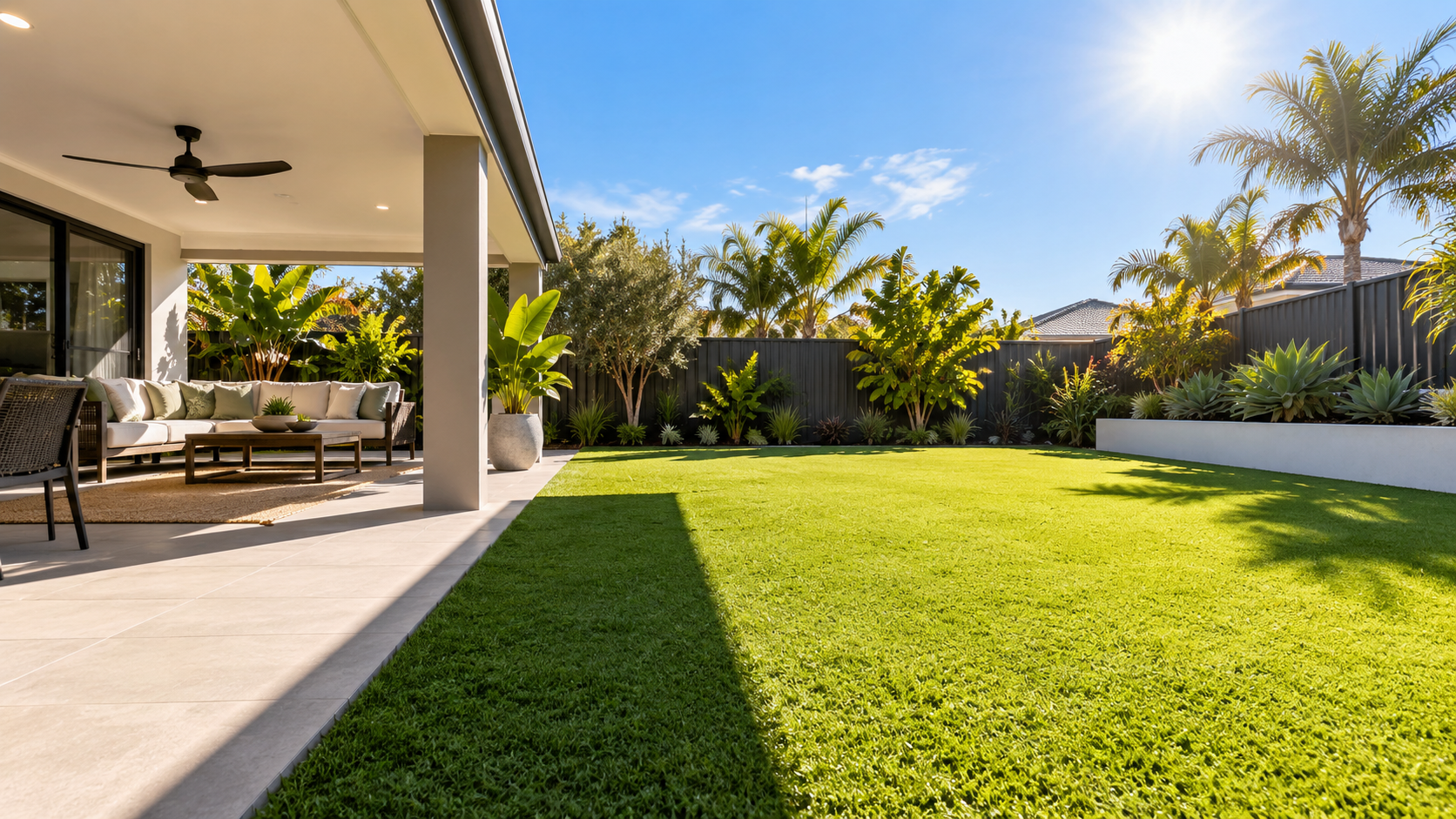
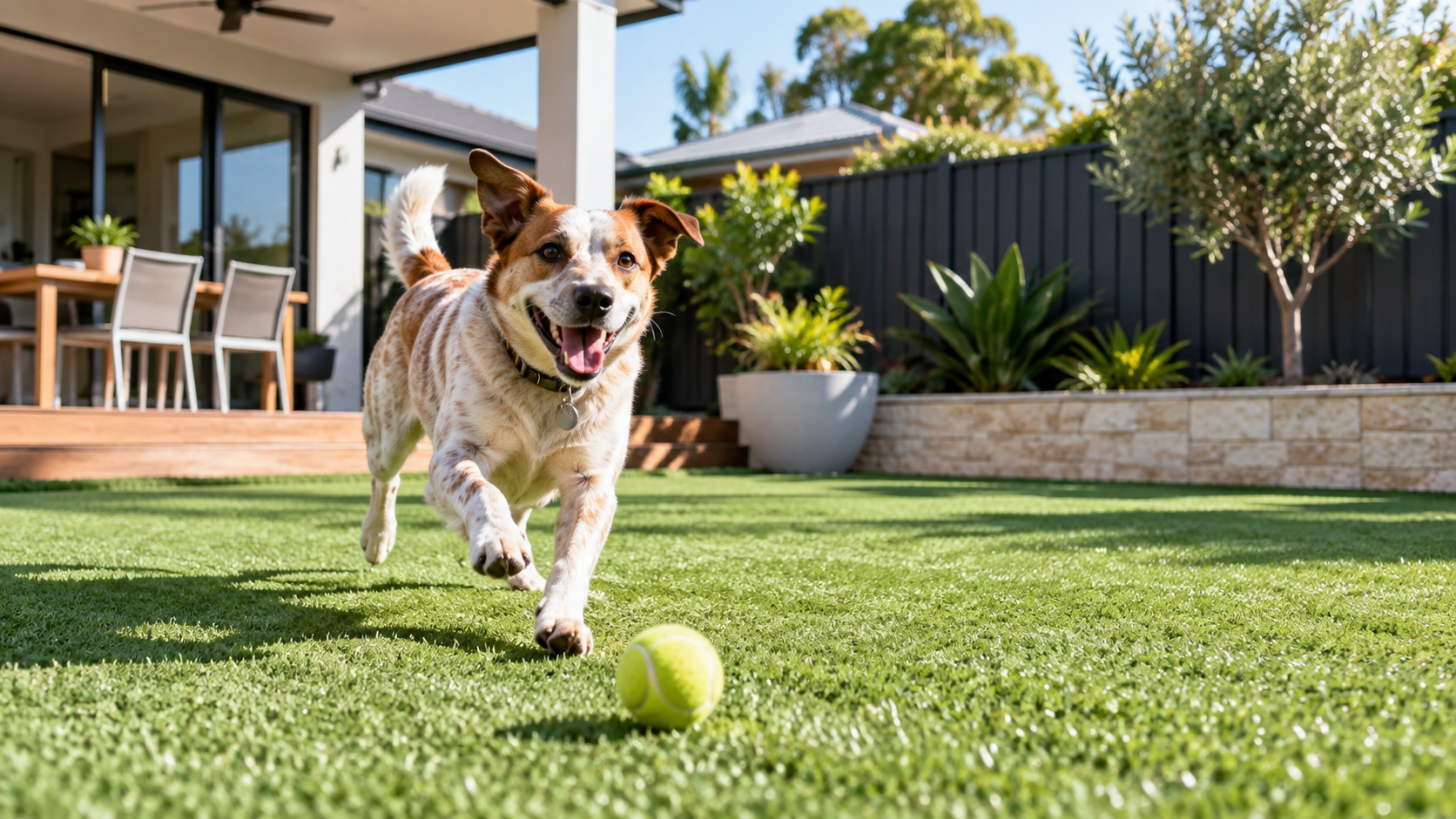
The best artificial turf for your home is one that matches how you actually use your outdoor space, whether that’s a low-traffic front lawn, a busy backyard full of kids and pets, or a pool surround that needs to drain fast. Artificial turf is getting more popular in Australian homes because it offers a low-maintenance alternative to natural grass. Modern artificial grass delivers a realistic appearance, genuine durability, and year-round greenery, even through drought and harsh sun.
What Features Should You Look for in the Best Artificial Turf for Your Home?
The best residential artificial turf combines a natural look with fibres and backing built to handle Australian conditions. Getting this balance right up front saves homeowners money and disappointment later.
When comparing products, look for:
- Realistic appearance and a natural colour blend, rather than a flat, single-tone green
- Comfortable pile height and softness underfoot
- UV-resistant fibres that hold their colour in direct sunlight
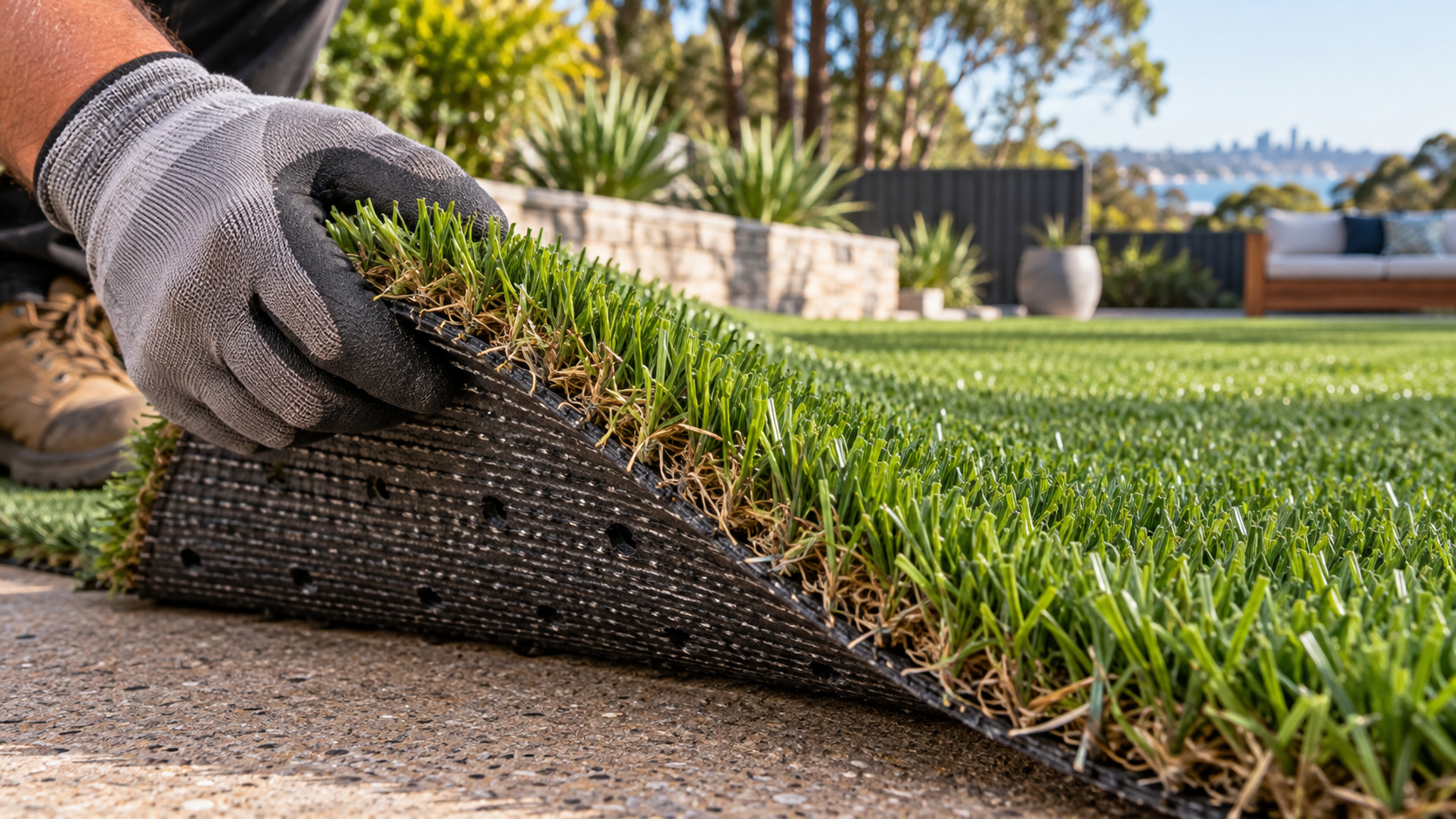
- An effective drainage system beneath the surface
- Durable backing and construction that resists fraying at the edges
Pile density often matters more than pile height. A shorter, denser turf tends to hold its shape and resist matting far better than a tall, sparse product, even if the taller option looks more impressive on a showroom sample. Density is also what gives turf that plush, cushioned feel when you walk across it.
UV stabilisation is just as important. Australia’s sun is unforgiving to synthetic fibres, and turf without proper UV protection can fade, discolour, or become brittle within a year or two. Balancing appearance, durability and functionality, rather than chasing the cheapest or most photogenic option, leads to a lawn that still looks good in five years.
How Do You Choose the Best Artificial Turf for Different Outdoor Areas?
Different areas of your property put different demands on turf, so the right choice depends on where it’s going and who will use it. A pet run needs different properties than a pool surround or a front display lawn.
Common residential applications include:
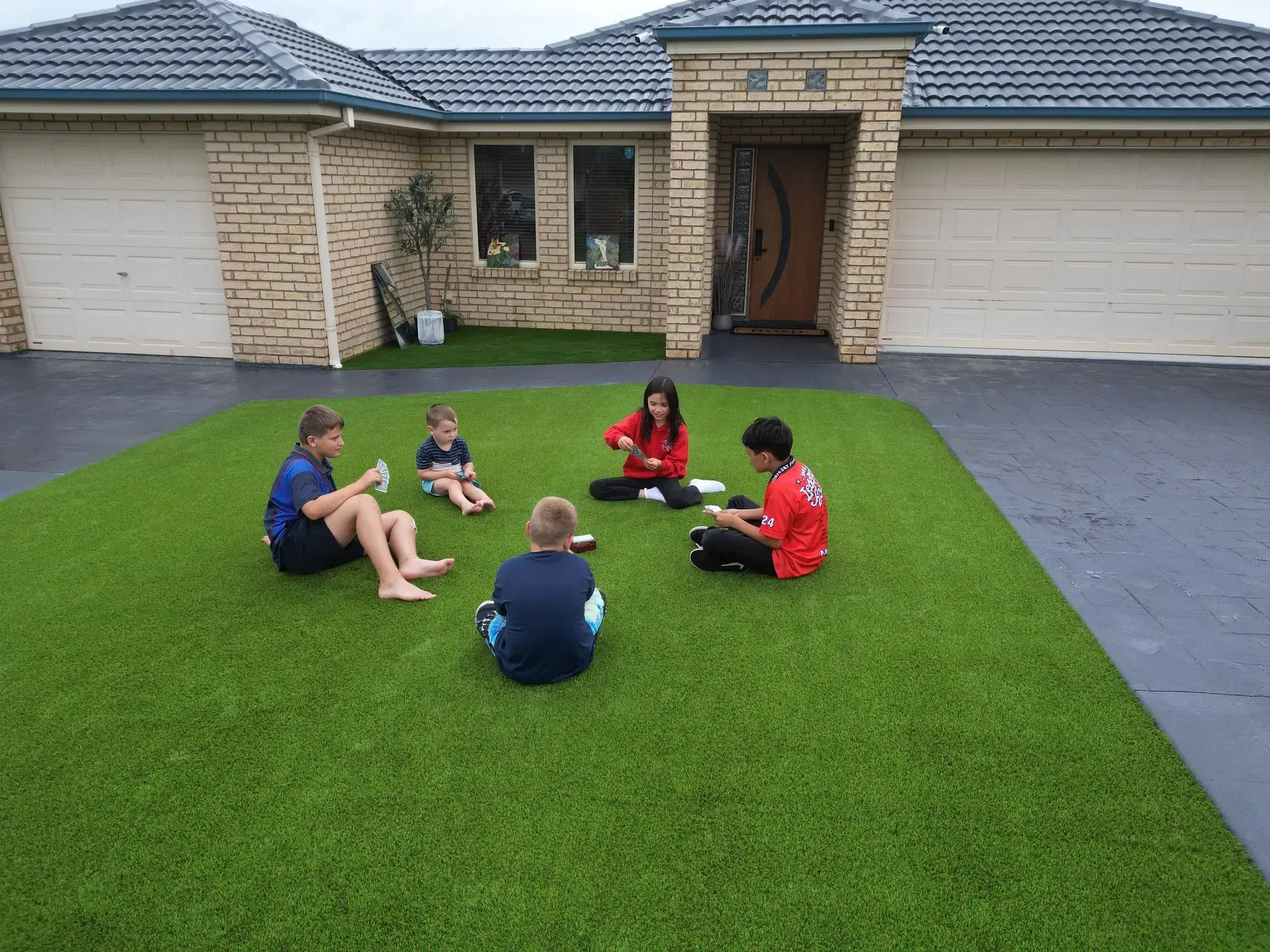
- Front lawns, where appearance and kerb appeal are the priority
- Backyards, which need to balance looks with everyday wear
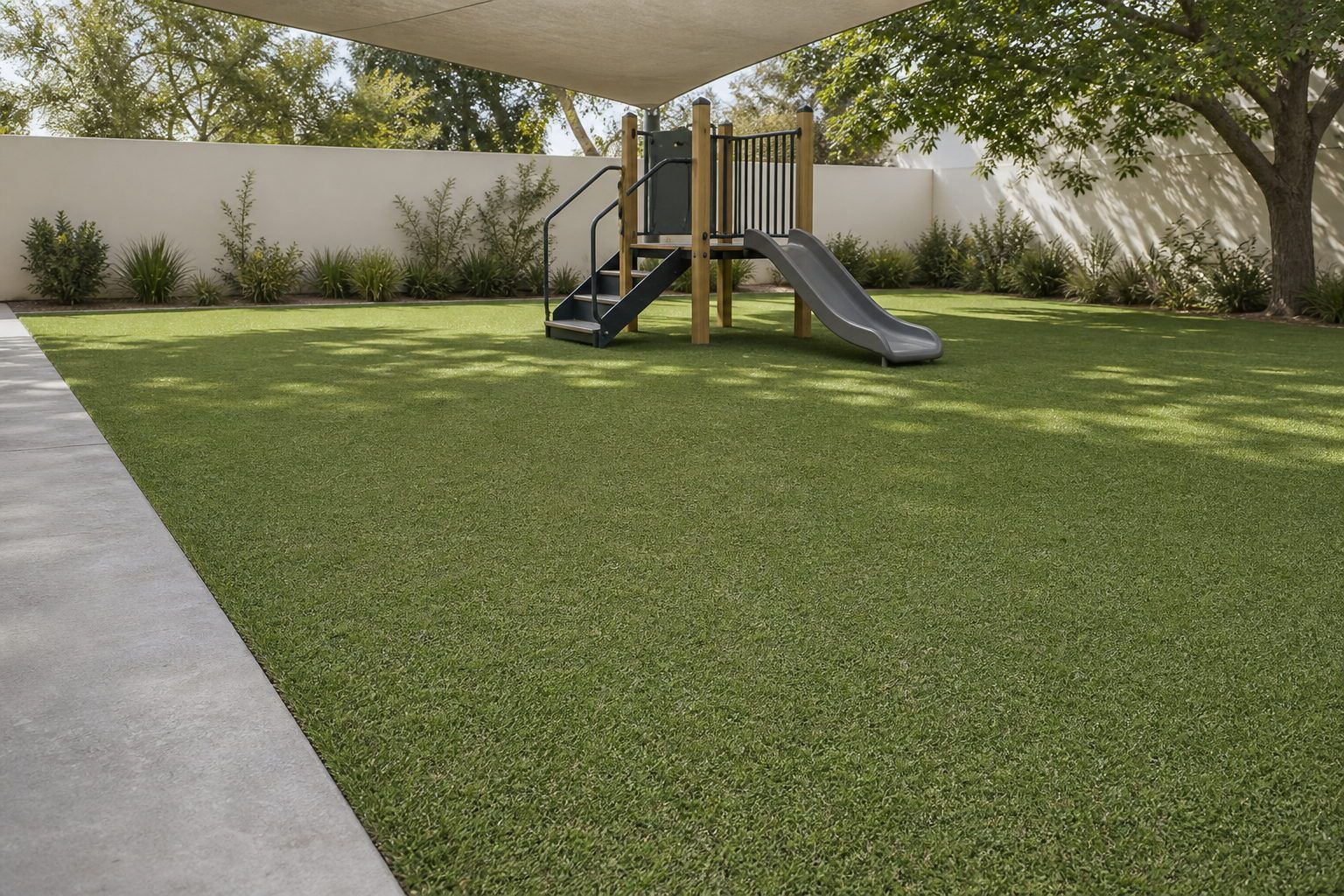
- Children’s play areas, where softness and shock absorption matter most
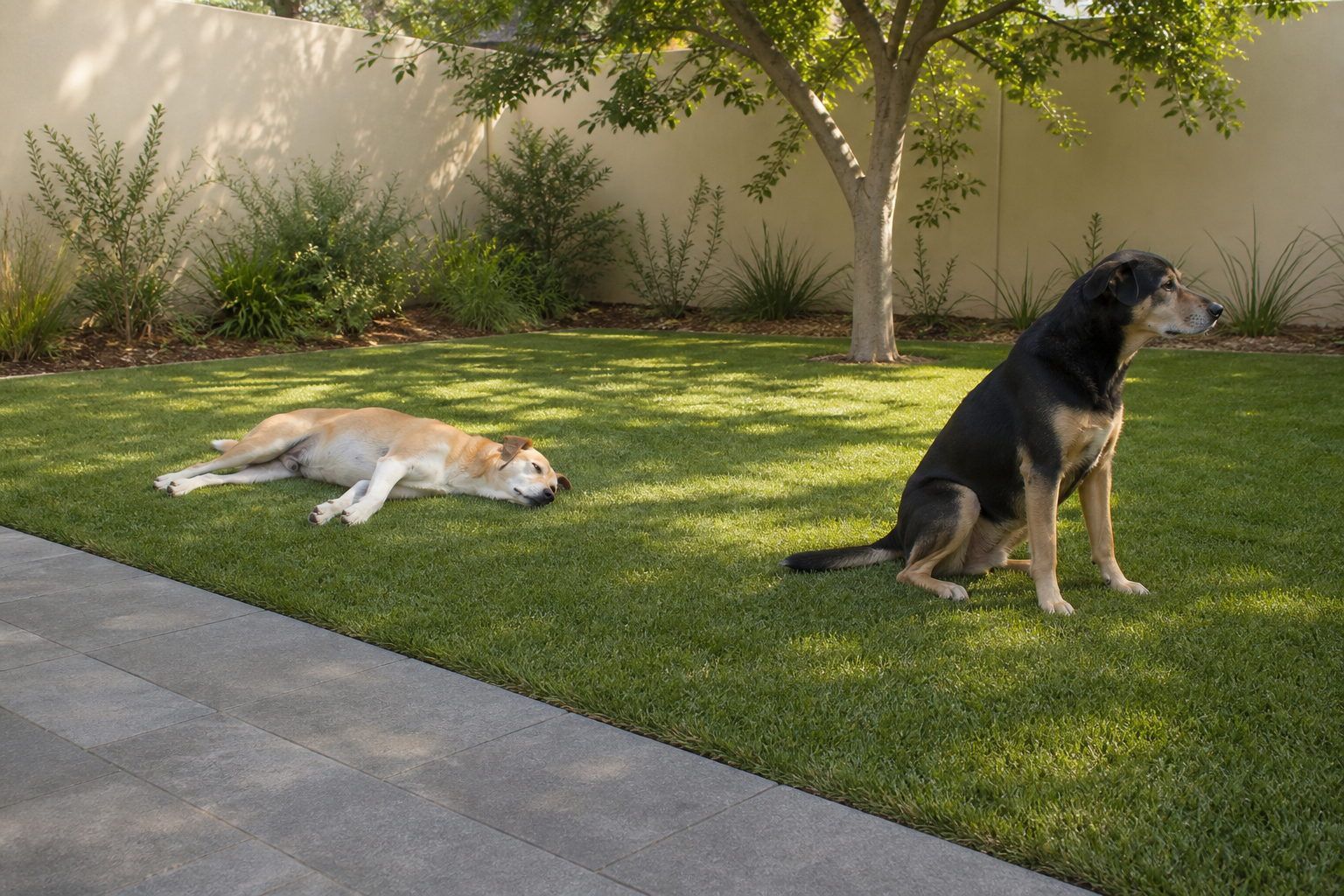
- Pet-friendly spaces, which need strong drainage and odour resistance
- Pool surrounds, where heat resistance and drainage are critical
- Courtyards and balconies, where lightweight, low-maintenance turf works well
Drainage matters enormously around pools and pet areas. Poor drainage in these zones can lead to pooling water, lingering odours, and a soggy, uneven surface underfoot. A turf with a permeable backing and a well-prepared base underneath will clear water quickly after rain or a pool splash session.
For family spaces, softer turf is usually preferred, particularly where children will regularly sit, play, or lie on the lawn. Matching turf to its intended use, rather than installing the same product everywhere, generally leads to a better-looking and longer-lasting result across the whole property. If you’re planning several zones with different needs, it’s worth browsing a
range of turf styles suited to various residential applications before settling on a single product for the entire yard.
Which Artificial Turf Materials Are Best for Residential Properties?
The material used in artificial turf fibres directly affects how soft, durable, and heat-resistant the finished lawn feels. Most residential products are made from one of a small number of common fibre types, each with its own strengths.
The main materials used in residential turf include:
- Polyethylene (PE) is valued for its soft, natural feel
- Polypropylene (PP) is often used in lower-cost or filler applications
- Nylon, prized for its strength, is less common in home lawns due to its firmer texture
- Hybrid fibre combinations that blend softness with resilience
- High-density backing systems that hold fibres securely in place
Polyethylene is commonly used in residential landscaping because it strikes a good balance between a soft, grass-like feel and reasonable durability under everyday foot traffic. Many premium residential products combine fibre types, using PE for softness alongside a sturdier fibre for structure, which creates a more natural, textured appearance than a single-fibre lawn.
Material choice affects softness underfoot, how well the turf resists wear over time, how the surface handles direct sun and heat, and how much upkeep the lawn will need. A well-chosen blend generally needs only occasional brushing and rinsing to stay looking its best.
How Long Does the Be
st Artificial Turf for Homes Typically Last?
Quality residential artificial turf typically lasts 15 to 20 years when made from durable materials and installed correctly. Lifespan depends on several factors working together, not just the product itself.
The main factors influencing turf lifespan are:
- Quality of the turf materials and fibre construction
- Installation quality, including base preparation
- UV exposure over the life of the product
- Foot traffic and general wear
- Routine maintenance, such as brushing and rinsing
- Drainage performance beneath the surface
Premium residential turf, properly installed and maintained, is generally expected to hold its colour, shape and softness for well over a decade. Cheaper products or poor installations tend to show wear far sooner, sometimes within a few years.
Proper installation is one of the biggest factors in how long turf lasts. A well-prepared base prevents shifting, uneven wear, and premature backing damage. This is where professional installation earns its keep. Getting the sub-base compaction, drainage falls, and seaming right isn’t something most homeowners can reliably do with a weekend DIY approach, and mistakes at this stage are expensive to fix later.
What Should You Consider Before Installing Artificial Turf at Home?
Before installing artificial turf, it’s worth thinking through how the space will be used, what your budget allows, and whether the ground underneath needs work before turf goes down. These decisions shape which product and installation approach will suit your property.
Key considerations include:
- The intended use of the area, such as play, pets, or entertaining
- Your budget, including product cost and installation
- Drainage requirements for the site
- Existing ground conditions, including slope and soil type
- Whether to use professional installation or attempt DIY
- The product warranty and what it covers
Correct sub-base preparation is one of the most overlooked parts of the process. A poorly compacted or badly graded base can cause the turf to shift, pool water, or develop dips and bumps within a year or two, no matter how good the turf itself is. This is also why many manufacturer warranties require professional installation. Skipping a qualified installer can void the entire policy, leaving homeowners exposed if problems develop.
Careful planning at this stage, rather than rushing into a purchase, contributes far more to long-term satisfaction than the specific turf brand chosen. For homeowners weighing up their options, comparing
residential artificial grass installation services across NSW is a useful starting point before committing to a product.
Artificial Grass vs Natural Grass
Water use is one of the clearest differences between the two. Natural lawns need regular watering to stay green, and most Australian water authorities enforce ongoing water-wise rules for gardens, such as
Sydney Water’s guidelines on responsible outdoor water use, which restrict watering times and methods year-round. Artificial turf sidesteps this issue almost entirely, since it needs no watering to stay green through summer.
Conclusion
The best artificial turf for your home ultimately depends on how you intend to use the space, whether that’s a quiet front lawn, a busy family backyard, or a pet-friendly courtyard. High-quality materials improve both appearance and longevity, while drainage, durability and a realistic finish all play a part in how the lawn performs over time. Professional installation helps protect that investment and gets the most value out of whichever product you choose.
If you’re ready to move forward, take the time to explore premium artificial turf options, compare styles and specifications side by side, and speak with professional installers about the best solution for your property. For metro and regional properties, it’s worth reviewing
synthetic grass installation options across NSW to see what’s available in your area. If the property also has commercial areas, a
commercial artificial grass installation service in NSW can handle larger-scale work during the same visit.
Australia’s UV exposure is among the highest in the world, which is a key reason UV-stabilised fibres matter so much for outdoor surfaces here. For more details on how UV levels affect outdoor materials and health across the country,
ARPANSA's overview of ultraviolet radiation in Australia is a useful reference. If you’re weighing up turf for a school or educational setting, our guide to
artificial grass vs natural grass for schools covers the additional factors to consider for larger, high-traffic sites.
Frequently Asked Questions
What is the best artificial turf for my home?
The best artificial turf for your home is one with UV-stabilised fibres, good pile density, and a backing system with strong drainage, matched to how the space will be used. A front lawn can prioritise appearance, while a play area or pet space needs extra softness and drainage. There’s no single best product for every home; the right choice depends on your household’s specific needs.
How do I choose the right artificial turf for my garden?
Start by identifying how each area of your garden will be used, since play areas, pet zones and display lawns all have different requirements. Consider pile height, density, drainage and UV resistance, then check the product warranty and installation requirements. Speaking with a professional installer can help match a specific turf product to your garden’s conditions and layout.
Is artificial turf safe for children and pets?
Yes, quality artificial turf is generally safe for children and pets when it includes proper drainage, UV-stable fibres and a non-toxic backing. Softer, denser turf is often chosen for family areas to provide better cushioning. Good drainage also helps manage pet waste and reduces odour build-up, keeping the surface hygienic with routine rinsing and cleaning.
How long does artificial turf last?
Most residential artificial grass products remain in good condition for 15 to 20 years, though their lifespan varies depending on manufacturing quality, installation methods, and how heavily the surface is used. UV exposure and drainage performance also affect longevity. Professional installation with proper base preparation significantly extends the turf’s lifespan compared with a poorly prepared DIY installation.
Does artificial turf require regular maintenance?
Artificial turf requires far less maintenance than natural grass, but it isn’t entirely maintenance-free. Occasional brushing keeps fibres upright, and periodic rinsing removes dust, debris and pet waste residue. There’s no mowing, fertilising or watering involved, which is why most homeowners find the ongoing upkeep minimal compared with a natural lawn.