
Artificial Grass vs Natural Grass for Schools & Childcare
When comparing artificial grass vs natural grass for schools, artificial grass generally offers stronger advantages in durability, maintenance efficiency, and year-round usability. Natural grass provides a traditional outdoor surface with environmental and sensory benefits. The best choice for your school or childcare centre depends on your budget, expected usage levels, safety requirements, and long-term maintenance goals.
How Does Artificial Grass Compare to Natural Grass for School Playground Maintenance?
Maintenance ranks among the most critical considerations for schools and childcare centres. Outdoor spaces endure daily use by large numbers of children, which means surfaces must remain safe, clean, and functional with minimal disruption to school operations. The maintenance requirements of your chosen surface directly affect staffing workloads, ongoing budgets, and how frequently children can access outdoor play areas.
Artificial grass requires significantly less ongoing maintenance than natural turf. Here is a clear breakdown of what each surface demands:
Artificial Grass Maintenance Requirements:
- No mowing required at any time of year
- No watering needed once installed
- Reduced weed growth due to the backing layer
- Minimal or no fertiliser use
- Consistent, presentable appearance throughout all seasons
Natural Grass Maintenance Requirements:
- Maintenance teams schedule regular mowing throughout the growing season.
- Ongoing irrigation, particularly during dry NSW summers
- Active weed and pest management programmes
- Seasonal growth variations affecting surface consistency
- Potential for worn, bare, or muddy patches in high-traffic zones
Over 10 years, the cumulative maintenance workload for natural grass adds up substantially. Schools that choose natural turf typically allocate time and resources to groundskeeping staff, irrigation infrastructure, fertiliser costs, and turf repair budgets annually. Artificial grass eliminates most of these ongoing requirements, freeing up resources for educational priorities.
Water conservation also represents a meaningful benefit for NSW schools. Artificial grass installations significantly reduce water consumption compared to irrigated natural turf, supporting sustainability goals and lowering utility expenses.
Reduced maintenance demands translate directly into more consistent playground access. When a surface requires no recovery time after rain or heavy use, children can access outdoor areas more reliably throughout the school year.
Artificial Grass vs Natural Grass for Schools: Which Offers Better Durability?
Schools and childcare centres subject their outdoor surfaces to intense daily foot traffic. Hundreds of children running, jumping, and playing across the same areas creates significant wear, especially in popular zones such as under equipment, along pathways, and on sports courts. The surface you choose must withstand this pressure consistently over many years.
The following table compares how artificial grass and natural grass perform under typical school conditions:
| Feature | Artificial Grass | Natural Grass |
|---|---|---|
| Wear Resistance | High | Moderate |
| Recovery After Use | Immediate | Variable |
| Mud Formation | None | Common |
| Heavy Foot Traffic Performance | Excellent | Often affected |
| Weather Resilience | High | Seasonal impact |
Natural turf in high-traffic school environments often develops worn patches, bare soil areas, and compacted zones within months of the school year beginning. Wet weather accelerates this deterioration, creating muddy, slippery, or unusable surfaces that prevent outdoor access.
Artificial grass maintains its performance characteristics regardless of usage intensity or weather conditions. The surface recovers immediately after use, sustains no permanent wear patterns from foot traffic, and remains fully usable following rainfall once drainage occurs.
This durability advantage matters across all outdoor areas, including playgrounds, sports courts, and outdoor learning spaces. Schools investing in commercial artificial grass installation in NSW benefit from surfaces that remain functional and visually consistent throughout the school year without seasonal performance drops.
Long-term appearance retention also contributes to the overall appeal of school environments. Artificial grass maintains its colour and texture over years of use, whereas natural turf undergoes seasonal changes that affect both appearance and surface quality.
What Are the Long-Term Costs of Artificial Grass vs Natural Grass for Schools?
Many decision-makers focus on installation costs when comparing surface options, but the true cost of ownership extends well beyond initial expenditure. Understanding the full lifecycle cost provides a far more accurate picture of which option delivers better financial value over time.
Artificial Grass Cost Considerations:
- Higher upfront installation investment compared to turf seeding or laying
- Significantly lower ongoing maintenance expenses
- Reduced or eliminated water costs after installation
- Lower equipment requirements (no mowers, trimmers, or irrigation systems)
- Predictable costs with minimal unplanned expenditure
Natural Grass Cost Considerations:
- Lower initial installation cost in many cases
- Higher annual maintenance expenses, including labour, fertiliser, and pest control
- Ongoing irrigation costs, particularly during warm NSW months
- Regular turf repairs to address worn patches and bare areas
- Unpredictable costs that vary with weather conditions and usage
A lifecycle cost analysis often shows that artificial grass becomes more cost-effective than natural turf over 7 to 10 years. The upfront premium of synthetic surfaces often pays for itself through reduced maintenance, water, and repair costs.
For school budget planners, artificial grass also offers a significant advantage in cost predictability. Natural turf maintenance costs fluctuate with rainfall, seasonal conditions, pest pressures, and usage patterns. Artificial grass eliminates most of these variables, making it easier to plan facility budgets with confidence.
Schools and childcare operators considering residential artificial grass installation in NSW, as well as commercial-scale projects, can request lifecycle cost assessments from qualified suppliers to accurately compare the total cost of ownership before making a decision.
How Do Artificial Grass and Natural Grass Affect Outdoor Learning and Play Areas?
The surface covering your outdoor spaces shapes how children interact with those environments every day. Surface selection influences not only recreation but also the quality and frequency of outdoor learning activities, physical development opportunities, and social interactions between students.
Key factors that affect learning and play environments include:
- Accessibility and usability: Artificial grass remains accessible after rain without waiting for the surface to dry or drain, meaning teachers can proceed with outdoor activities as planned.
- Surface consistency: A consistent, level surface supports a wider range of activities and reduces the risk of trips and falls caused by uneven terrain.
- Cleanliness after rain: Artificial grass drains efficiently, preventing mud and keeping children cleaner, reducing the risk of slipping after rain.
- Comfort during play: Quality synthetic turf provides a cushioned, soft surface that supports active play over extended periods.
- Availability for outdoor activities: Predictable surface availability allows teachers and administrators to plan outdoor learning sessions without weather-related cancellations.
- Visual appeal: Well-maintained artificial grass creates an inviting outdoor environment that encourages outdoor activity.
When outdoor areas remain reliably accessible, schools can provide more consistent opportunities for physical activity and active learning. Teachers can plan outdoor lessons, structured play sessions, and physical education classes without concern that surface conditions will disrupt the schedule.
Artificial grass also supports the development of multi-purpose outdoor spaces. Schools can use a single synthetic surface for sports, free play, and educational activities, maximising the return on investment from their outdoor infrastructure. Explore the Urban Turf Solutions range to understand how different product specifications suit different educational environments.
Uninterrupted outdoor play also contributes to children’s physical development, emotional well-being, and social skills. Any surface that reduces barriers to outdoor access meaningfully supports these developmental outcomes.
Which Is the Better Choice for Childcare Centres: Artificial Grass or Natural Grass?
Childcare centres are subject to specific obligations regarding child safety, hygiene, and the quality of the outdoor environment. Operators must meet the standards outlined by ACECQA (Australian Children’s Education and Care Quality Authority), which include requirements for safe, well-maintained outdoor spaces that support children’s health and development.
When evaluating surfaces for childcare environments, operators typically weigh the following decision factors:
- Safety performance: Does the surface provide appropriate fall protection and slip resistance?
- Fall-height requirements: Does the surface meet the impact attenuation requirements of the equipment installed under Australian standards?
- Cleanliness and hygiene: Does the surface remain clean and free of mud, pests, and contaminants that may affect young children?
- Maintenance demands: Can the operator manage the surface effectively within available staffing and budget resources?
- Longevity: Will the surface maintain its safety and performance characteristics over several years of intensive use?
- Budget considerations: Does the surface deliver an acceptable lifecycle cost for the centre’s financial planning?
- Year-round usability: Can children access outdoor areas consistently regardless of weather conditions?
Artificial grass often provides advantages in childcare environments because it addresses most of these priorities simultaneously. Many modern childcare centres across NSW now choose synthetic turf as their primary outdoor surface precisely because it reduces maintenance burden while improving surface consistency and usability.
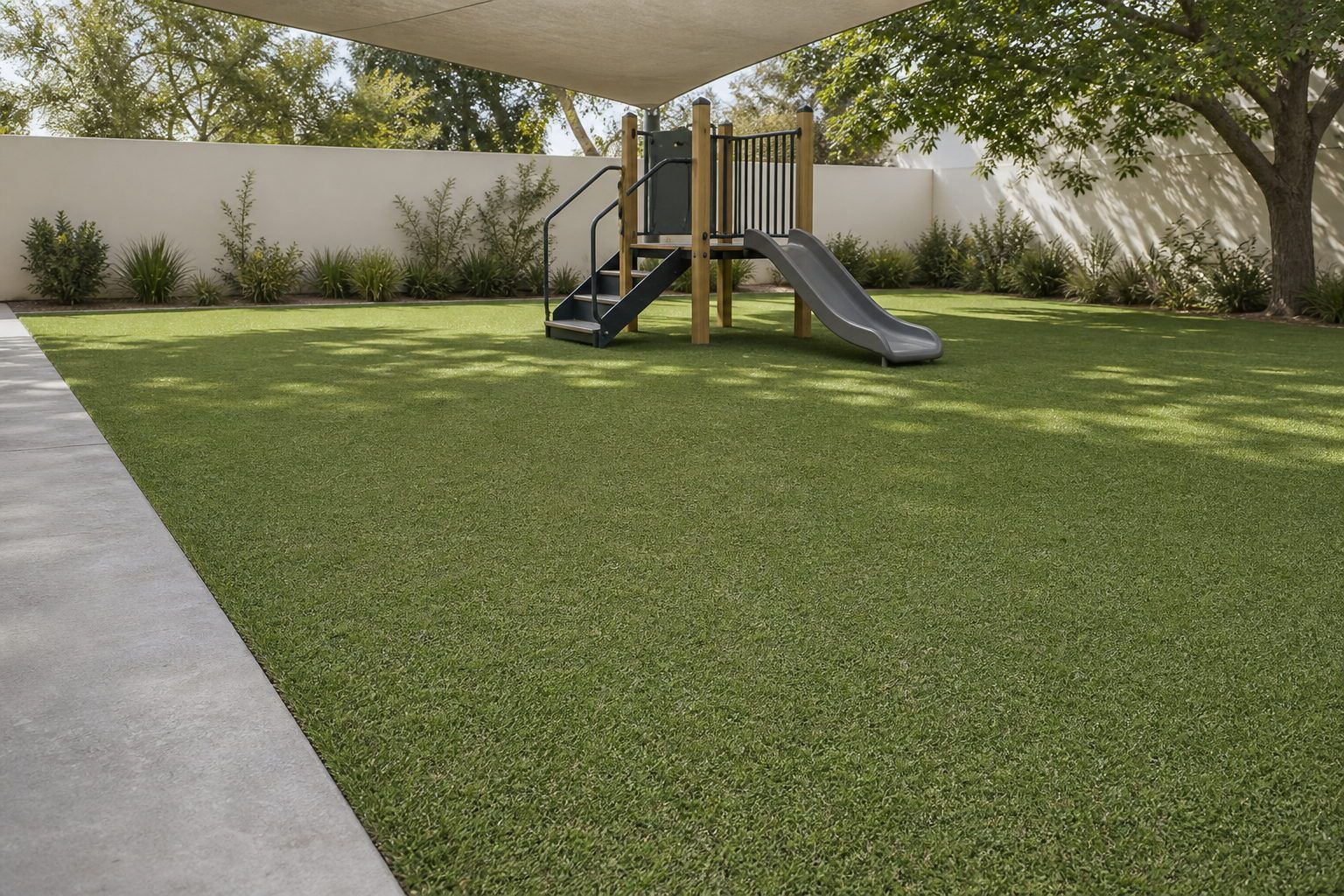
Artificial grass works particularly well when centres combine it with natural landscaping elements. Planting garden beds, trees, and sensory plants around synthetic turf areas gives children meaningful contact with natural environments without the maintenance challenges of natural grass underfoot.
Impact attenuation systems paired with appropriate synthetic turf products ensure that playground equipment meets fall-height compliance requirements. Kidsafe Australia provides guidance on safe playground design and surface selection, and operators should consult these resources when planning outdoor environments.
Natural grass may remain appropriate for childcare centres with large outdoor spaces, dedicated groundskeeping resources, and lower equipment density where fall-height compliance requirements are less demanding.
For centres researching options, our detailed guide on the best synthetic grass for childcare centres provides product-specific advice and installation considerations.
What Safety Standards Should Schools Consider When Choosing Artificial Grass?
Safety compliance must guide surface selection decisions for schools and childcare centres. Choosing a surface based solely on aesthetics or cost without addressing safety performance creates unacceptable risk for children and potential liability for operators. Australian standards provide a framework for evaluating playground surfaces against recognised safety benchmarks.
Schools should assess the following safety factors when selecting an artificial grass product:
Shock Absorption Performance: Artificial grass products used under playground equipment must deliver sufficient impact attenuation to protect children from injury during falls. The level of protection required depends on the fall height of the equipment installed above the surface. Standards Australia publishes AS 4422 Playground surfacing, which specifies test methods and performance requirements for all playground surfaces, including synthetic turf.
Fall-Height Compliance: Every playground surface must provide protection appropriate to the height from which a child could fall. Schools must verify that the specific artificial grass product and its underlayment system meet the critical fall height requirements for all equipment installed on that surface.
Non-Toxic Materials: Products used in children’s environments must be manufactured from materials that do not release harmful substances through contact, abrasion, or degradation. Reputable synthetic turf suppliers provide safety data and certifications confirming the material’s safety for children.
Drainage Systems: Effective subsurface drainage prevents water pooling on playground surfaces, reducing slip hazards and ensuring the area remains accessible shortly after rainfall. Professional installation includes appropriate drainage design.
Slip Resistance: Surface texture must provide adequate grip for children running and changing direction during play, particularly when the surface is wet.
Certified playground surfaces installed by qualified professionals reduce both physical risk to children and legal risk to school operators. SafeWork Australia also provides guidance on workplace health and safety obligations relevant to school and childcare environments, which administrators should review as part of their risk management process.
Professional installation by experienced contractors ensures that all components, including infill selection, base preparation, drainage design, and edge finishing, meet relevant standards consistently across the entire installation.
Artificial Grass vs Natural Grass for Schools at a Glance
The following table summarises the key differences between artificial grass and natural grass across the factors most relevant to schools and childcare centres:
| Factor | Artificial Grass | Natural Grass |
|---|---|---|
| Maintenance | Low | High |
| Water Usage | Very Low | High |
| Durability | High | Moderate |
| Year-Round Appearance | Consistent | Seasonal |
| Upfront Cost | Higher | Lower |
| Long-Term Costs | Lower | Higher |
| Mud and Dirt | Minimal | Common |
| Play Area Availability | High | Weather Dependent |
This comparison illustrates why many schools and childcare centres in NSW choose artificial grass despite the higher upfront investment. Artificial grass delivers lower lifetime costs, more reliable access for children, significantly reduced maintenance requirements, and consistent safety performance year-round. Natural grass offers a lower initial cost and some environmental benefits, but requires ongoing investment in maintenance, water, and repair to remain safe and usable under high-traffic conditions.
Conclusion
Choosing between artificial grass vs natural grass for schools requires careful consideration of maintenance priorities, budget planning, durability requirements, and how outdoor spaces will be used over time. Neither option suits every situation universally, but a clear comparison of long-term factors helps decision-makers identify which surface delivers better value for their specific context.
Many schools and childcare centres across NSW choose artificial grass because it delivers consistent durability, lower maintenance requirements, year-round performance, and predictable lifecycle costs. For environments that must remain safe, clean, and accessible to children every day, synthetic turf effectively addresses these priorities.
Schools and childcare operators should carefully compare both options, review applicable safety requirements under Australian standards, seek professional advice from qualified installers, and explore the full range of commercial-grade synthetic grass solutions available in NSW before making a final decision.
To explore product options and obtain professional advice for your school or childcare project, visit Synthetic Grass Installation in NSW for expert guidance on synthetic grass installation across NSW.
Frequently Asked Questions
Is artificial grass safer than natural grass for schools and childcare centres?
Artificial grass can be safer than natural grass when schools choose the correct product and install it professionally. Quality synthetic turf with an appropriate shock-absorbing underlay meets Australian fall-height compliance requirements under AS 4422, provides consistent slip resistance, and eliminates the mud and uneven terrain hazards that natural turf develops under heavy use. Product quality and professional installation are both critical to achieving compliant safety performance.
Which requires less maintenance: artificial grass or natural grass?
Artificial grass requires significantly less maintenance than natural grass. Synthetic turf eliminates the need for mowing, watering, fertilising, and seasonal turf repair. Schools that install artificial grass reduce groundskeeping labour substantially, eliminate irrigation costs, and avoid the surface disruptions caused by worn patches and pest damage. Over 10 years, the maintenance workload difference between the two surfaces is considerable.
Is artificial grass more cost-effective than natural grass for schools?
Artificial grass carries a higher installation cost than natural turf but typically delivers lower total lifecycle costs. Schools save on irrigation, mowing, fertiliser, pest control, and ongoing turf repairs. These savings accumulate over time, and many schools find that artificial grass reaches cost parity with natural turf within 7 to 10 years. For long-term budget planning, synthetic turf also offers more predictable annual expenditure.
How long does artificial grass last in school environments?
High-quality artificial grass installed professionally in school environments typically lasts 10-20 years, depending on product specifications, daily traffic levels, and maintenance practices. Commercial-grade synthetic turf products designed for educational environments offer enhanced durability compared to residential-grade options. Professional installation, including proper base preparation and drainage design, directly influences product longevity.
Can artificial grass be used in all school and childcare outdoor areas?
Artificial grass suits most school and childcare outdoor areas, including playgrounds, learning spaces, activity zones, sports courts, and general recreation areas. Individual site requirements, including equipment fall heights, drainage conditions, and usage patterns, influence product selection and installation design. A qualified synthetic turf installer can assess your specific site and recommend appropriate products for each zone within your outdoor environment.
Recent Posts