
A backyard putting green is a dedicated golf practice area built with specialist artificial turf over a stable, prepared foundation. The total cost depends on the green’s size, turf specification, soil conditions, drainage, contours and installation requirements. Planning the playing layout and groundwork together helps Australian homeowners choose a useful design and understand what their quotation should include.
A home green offers convenient practice, but base construction, pile direction, joins and contours all affect ball roll. This guide focuses on budgeting and design choices. For a broader explanation of the installation process, see A1SGS’s synthetic putting green guide.
How Much Does a Backyard Putting Green Cost?
Backyard putting green costs vary with area, shape, turf construction, site preparation, and design complexity. A compact green with one cup usually requires less material and shaping than a multi-hole layout with contours and fringe turf. Two greens of similar size may nevertheless cost different amounts because one property has better access, firmer soil, or simpler drainage.
Standard artificial lawn pricing is not a reliable basis for a putting green quotation.
Backyard Putting Green Cost Breakdown
| Cost Component | What It Includes | Main Cost Considerations |
|---|---|---|
| Site clearing and excavation | Removing turf, soil and debris | Ground conditions, depth and disposal |
| Base materials and compaction | Specified aggregate and levelling | Quantity, grading and equipment |
| Drainage preparation | Surface or subsurface water management | Soil permeability and outlet design |
| Specialist putting turf | Turf selected for putting performance | Construction, area and product specification |
| Underlay or shock pad | Additional layers if specified | Compatibility and intended use |
| Cups and accessories | Cups, flags and practice features | Number and fitting requirements |
| Contours and shaping | Putting breaks and graded transitions | Precision and design complexity |
| Edging and landscaping | Perimeter support and surrounding fringe | Materials and finished appearance |
| Installation labour | Preparation, laying and finishing | Access, handling and project scope |
What Factors Affect the Final Quote?
The largest variables are the usable green area, planned cup positions, contours, turf specification and required groundwork. Site access matters too: moving excavation material through a narrow side passage can affect labour and equipment choices.
Consider a small green on reasonably level, free-draining ground against a similarly sized green on a sloping, clay-heavy block. The second may need more investigation, grading, and water management, despite using roughly the same amount of turf.
Quotation tip: Ask whether the quote covers excavation, compaction, cups, edging, drainage, waste disposal, reinstatement and GST.
What Is the Best Base for Artificial Grass?
The best base for a putting green is a stable, appropriately compacted foundation that supports the intended contours and resists localised settlement. Unlike a decorative synthetic lawn, even small ridges or dips can change the pace or direction of a putt.
Suitable materials depend on the soil, drainage and the turf manufacturer’s installation system. Crushed rock, selected road base and fine aggregates have different compaction and permeability characteristics.
Comparing Common Base Materials
| Base Material | Stability and Compaction | Drainage and Surface Consistency | Putting Green Suitability |
|---|---|---|---|
| Crushed rock | Stable when properly graded and compacted | Depends on particle grading and drainage design | Common foundation option |
| Suitable road base | Can form a firm compacted layer | Fine content can affect permeability | Appropriate for some systems |
| Decomposed granite | May provide a smooth finish when specified | Behaviour varies with moisture and material | Possible finishing application |
| Fine aggregate | Helps refine surface levels | Must remain stable under turf | Selected levelling applications |
What Should Homeowners Check Before Selecting a Base?
Review soil stability, recent water pooling, the intended contours, material grading and the specified compacted thickness. A base that feels firm when dry may still perform poorly if water becomes trapped beneath it.
The selected putting turf also matters. Short-pile products, such as the specialist golf options described by A1SGS, are intended for short-game applications rather than ordinary decorative lawn use. Follow the actual product’s construction and installation instructions instead of assuming every putting turf uses the same base.
Pile direction, seams, specified infill, and cup finishing also affect ball roll.
How Do You Prepare Soil Before Laying Artificial Grass?
Putting green ground preparation begins with the playing layout, not simply excavation. The desired cup positions and gentle breaks should be agreed before work starts, because the underlying foundation must support those shapes while providing appropriate drainage.
Remove unstable or organic material and plan runoff away from buildings.
Step-by-Step Ground Preparation Process
- Measure and Mark the Area Identify the green boundary, practical standing space, planned cups, nearby paths and landscaping. Allow enough room to use the green comfortably.
- Remove Existing Vegetation Clear grass, roots, weeds and organic debris that could decompose beneath the base or interfere with compaction.
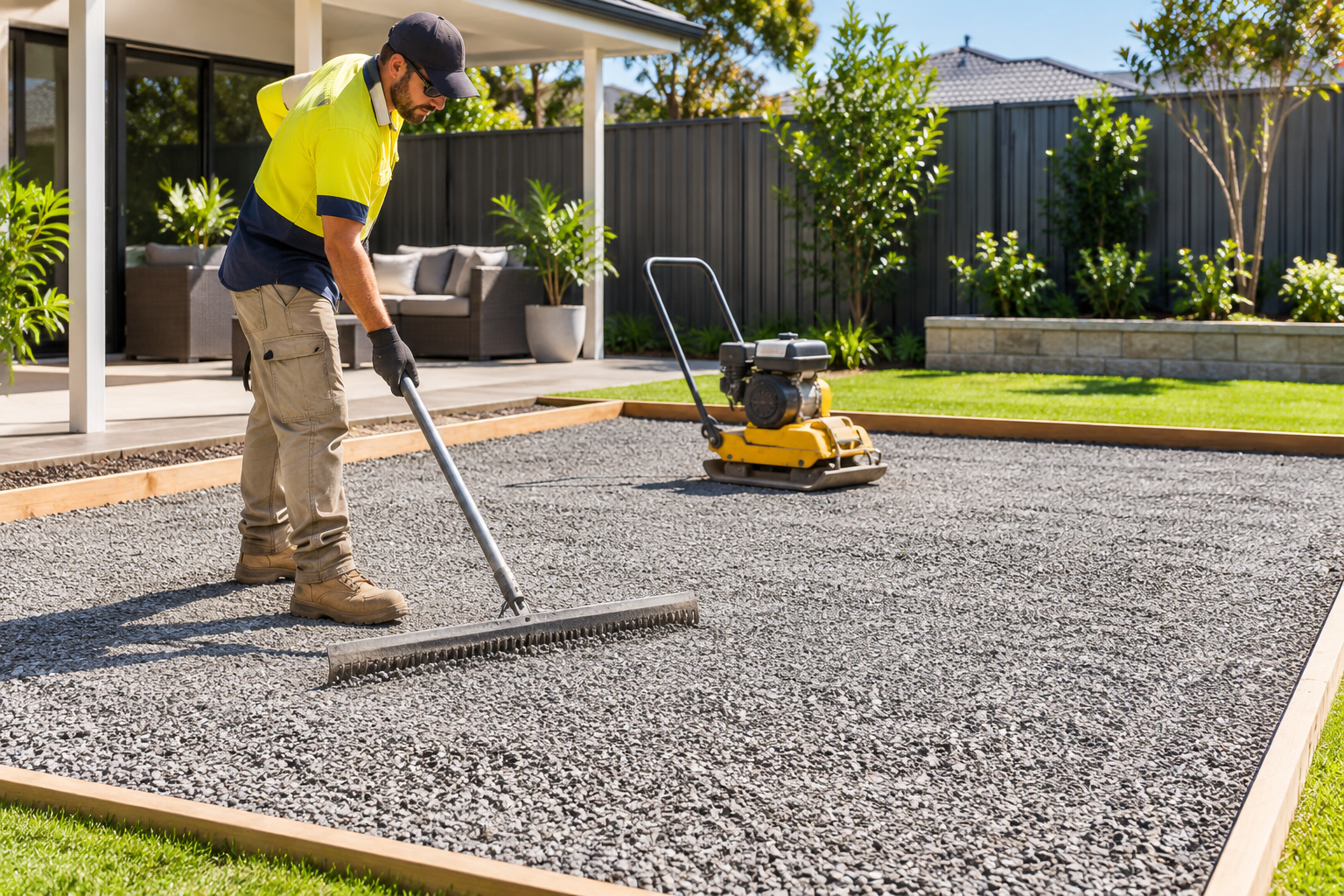
- Excavate the Ground Remove unsuitable material to the depth required for the specified compacted layers, levelling material, and finished turf height.
- Inspect Soil Stability and Drainage Identify soft spots, disturbed fill, clay and areas where water pools. Determine whether extra drainage design is required.
- Establish Levels and Contours Shape the subgrade for the planned putting breaks and surface drainage, avoiding sharp changes that could make practice frustrating.
- Install and Compact the Base Place suitable aggregate in manageable layers and compact each as specified. Work carefully around edges and cup positions.
- Inspect the Finished Foundation Check firmness, intended contours, drainage and smoothness. After turf placement, confirm seams, pile direction, cup edges and ball roll against the design.
Practical Ground Preparation Tips
Before excavation, obtain available underground-service information through Before You Dig Australia. Review the relevant asset owners’ instructions and arrange locating or verification where necessary. Drawings alone do not guarantee that every service has been found.
Plan water movement before constructing the foundation. Water must move through the turf and base and then infiltrate into suitable soil or reach an appropriately designed outlet. Permeable turf does not solve waterlogged clay or an obstructed drainage path.
YourHome stormwater guidance explains relevant site factors. Do not direct concentrated runoff towards buildings or neighbouring properties.
Test ball roll before final sign-off, including unintended breaks.
How Deep Should You Dig When Preparing a Base for Artificial Grass?
Excavation depth depends on soil stability, proposed aggregate layers, turf construction, drainage requirements and the required finished level beside paths or landscaping. No single depth is right for every putting green. Stable ground and sloping fill may need different preparation.
Backyard Putting Green Foundation Layers
| Installation Layer | Purpose |
|---|---|
| Prepared subgrade | Inspected ground with unsuitable material removed |
| Compacted aggregate | Provides stable support for the planned contours |
| Fine levelling layer | Refines the surface where the system requires it |
| Artificial putting turf | Creates the playing surface and ball-roll characteristics |
Factors That Determine Excavation Depth
Consider the existing ground height, weak soil, specified aggregate thickness, turf backing and pile height, surface drainage, and adjoining finishes.
Importantly, loose aggregate depth is not the same as compacted thickness. Material thickness decreases as it is consolidated, so the installer must verify completed levels and the specified compacted layer dimensions. Ask why the proposed depth suits your soil and design; extra excavation is not automatically better.
Do You Need a Weed Membrane Under Artificial Grass?
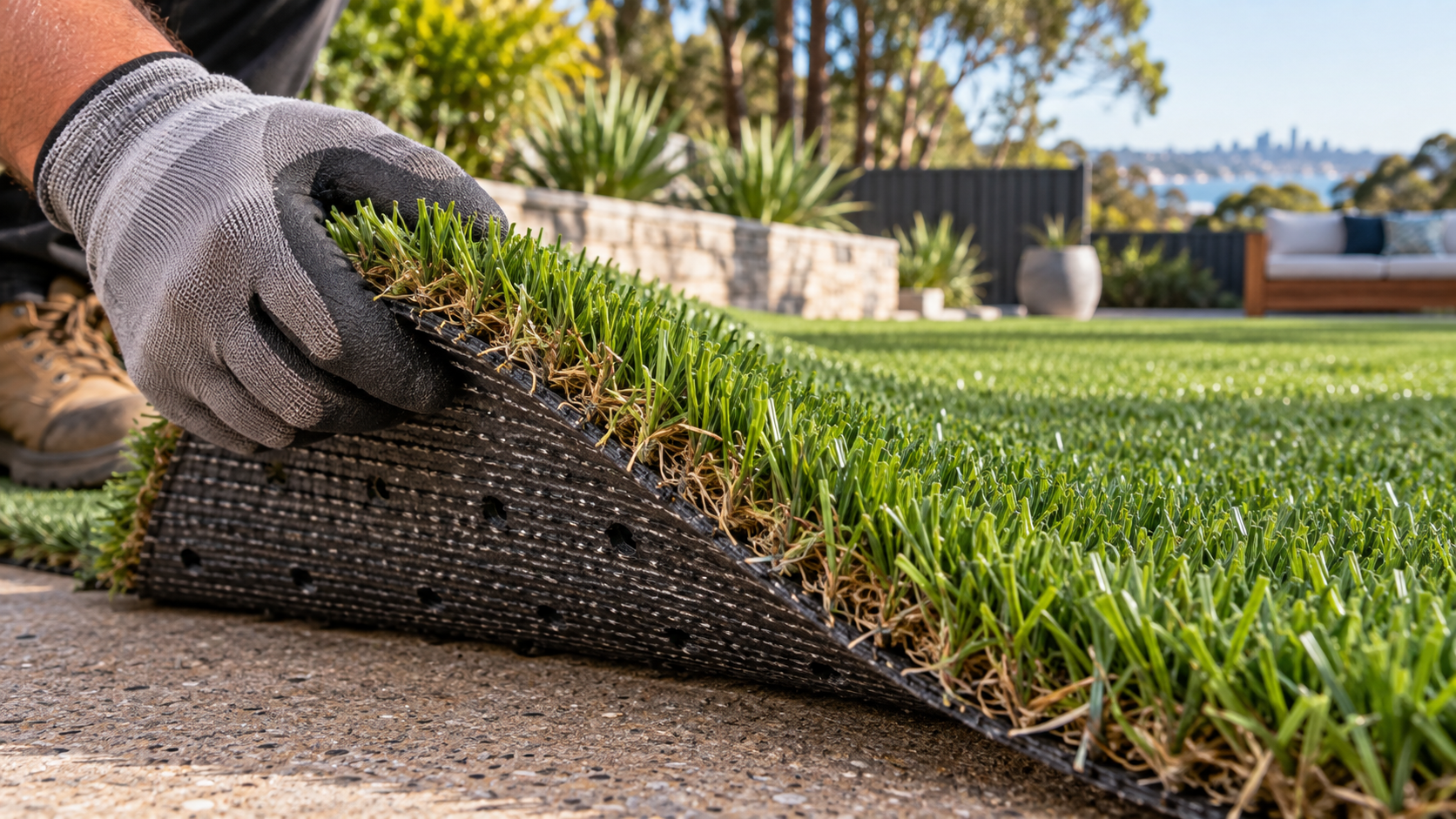
A weed-control membrane is not essential for every putting green. Removing vegetation and preparing a stable foundation remain the main steps. A permeable membrane may help with selected weed-management needs, but it must not compromise drainage.
A separation geotextile has a different primary function: preventing soil particles from mixing with the aggregate. Some products perform overlapping roles, but weed-control fabrics and separation layers should not be assumed interchangeable.
Advantages and Limitations of Weed Membranes
| Potential Advantage | Limitation |
|---|---|
| May help reduce vegetation growing from below | Does not eliminate all weeds |
| Selected products may separate soil and base | Not every weed membrane is suitable for separation |
| Can form part of the specified foundation system | May be unnecessary on some sites |
| Permeable materials can accommodate water movement | Unsuitable fabrics may restrict drainage |
Choose membranes for the soil, permeability and turf system. Weeds can still grow in debris on the surface.
Can Artificial Grass Be Installed Directly on Soil?
Installing putting turf directly onto untreated soil is generally unsuitable. Soil can shift or settle, vegetation can regrow, and uneven moisture can change the surface. Even minor depressions that are tolerable on an ordinary lawn may alter a golf ball’s path.
A prepared base is designed to support the selected contours, turf backing and drainage requirements.
Direct Soil Installation vs Prepared Base
| Performance Factor | Direct Installation on Soil | Properly Prepared Base |
|---|---|---|
| Surface stability | Greater risk of movement | More consistent when specified correctly |
| Ball roll | More vulnerable to irregularities | Supports predictable movement |
| Drainage | Relies heavily on native soil | Can be designed for site conditions |
| Weed management | Existing vegetation may remain | Vegetation removed during preparation |
| Long-term contours | More susceptible to settlement | Better support for designed breaks |
| Maintenance | Potential corrective groundworks | Routine turf and edge care still required |
Poor preparation may later require lifting and regrading.
What Design Features Should You Include in a Backyard Putting Green?
A practical backyard putting green design balances available space, practice goals, turf performance and the installation budget. A compact green may be ideal for short-putt drills, while a larger area can provide varied angles, longer putts and multiple holes.
Putting Green Size and Shape
Measure the usable space rather than the full backyard. Account for garden beds, paths, fences, access and a safe standing area around the green. A complicated outline may look attractive but can increase edging, seams and cutting work. Allow practical approaches to each cup.
Number of Holes and Putting Contours
One cup may be enough for basic practice. More cups create additional putting directions and distances, but require careful positioning and finishing. Gentle contours add useful breaks; overly steep slopes can make ordinary practice difficult. Plan the cups before final grading. Check that each cup sits properly within the finished surface and does not create an unintended lip or surrounding depression.
Specialist Putting Turf
Choose turf intended for putting, not standard landscape grass. Pile height, density, fibre orientation, backing and any specified infill can influence playing characteristics. Seams should be positioned and finished to minimise disruption to ball movement. Test the finished surface with putts from different directions. Do not rely on an assumed or guaranteed green speed without a product-specific specification and appropriate testing.
Surrounding Landscaping and Maintenance
Fringe turf can define the green and provide an area for short-game practice. Edging, paths and planting should complement the surface without obstructing drainage or maintenance access. Allow access for cleaning, brushing and cup inspections, particularly near trees.
Plan Your Backyard Putting Green with the Right Foundation
A successful backyard putting green brings together sensible budgeting, specialist artificial turf, stable ground preparation, effective drainage and contours suited to the way you practise. Compare the full installation scope, including cups, fringe areas and landscaping, rather than judging options by turf price alone.
For advice on your layout, ground conditions and preferred short-game features, explore A1SGS’s golf putting green solutions and request a site-specific discussion and quotation.
Explore A1SGS SolutionsFrequently Asked Questions
How Much Does a Backyard Putting Green Cost?
Costs depend on the green’s size, turf, excavation, drainage, contours and installation labour. A compact flat green may involve less work than a multi-hole custom design. Ask for an itemised site-specific quote covering the base, specialist turf, cups, edging, landscaping and any drainage measures.
What Is the Best Artificial Grass for a Backyard Putting Green?
Specialist putting turf with construction suitable for ball roll is generally preferable to ordinary landscaping grass. Compare pile characteristics, backing, proposed installation method and maintenance requirements. The turf and foundation must be specified together; a premium turf alone cannot correct an uneven base.
How Much Space Do You Need for a Home Putting Green?
A small area can support short-putt practice, while larger greens allow longer approaches and multiple cup positions. Measure usable space after allowing for paths, planting and safe movement. Choose a design based on the kinds of putts you want to practise rather than size alone.
Does a Backyard Putting Green Need Drainage?
Yes, appropriate drainage is important, but the solution varies by property. Water must move through the turf and base to suitable soil or an approved outlet. Clay, low spots and surrounding structures may require additional design. Drainage pipes are not automatically needed for every green.
How Long Does an Artificial Backyard Putting Green Last?
Service life varies with turf construction, UV exposure, traffic, installation quality and maintenance. Good drainage and stable groundwork help preserve contours, while cleaning and manufacturer-recommended care support the playing surface. Review product warranties and installation terms rather than relying on a universal lifespan estimate.