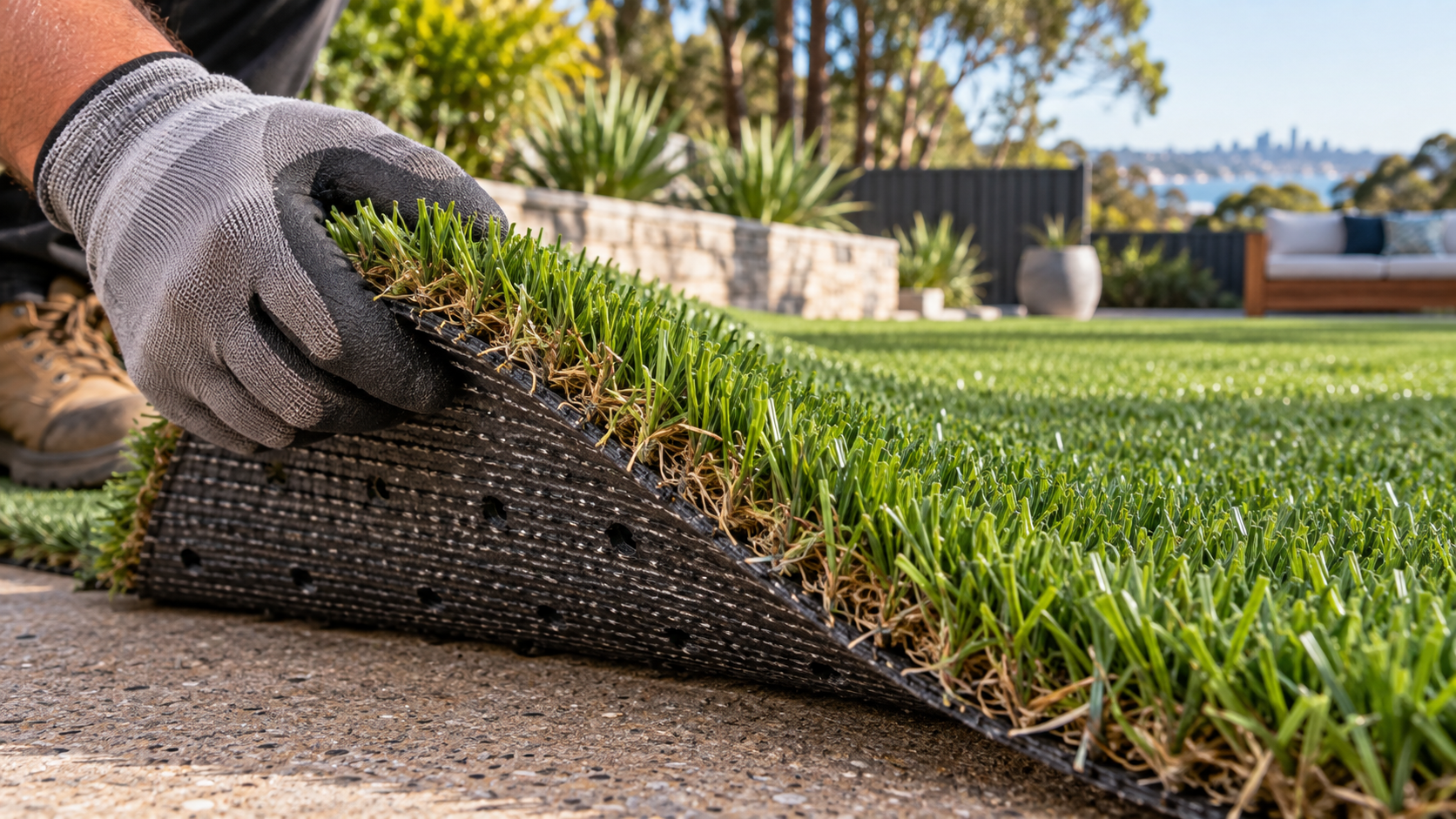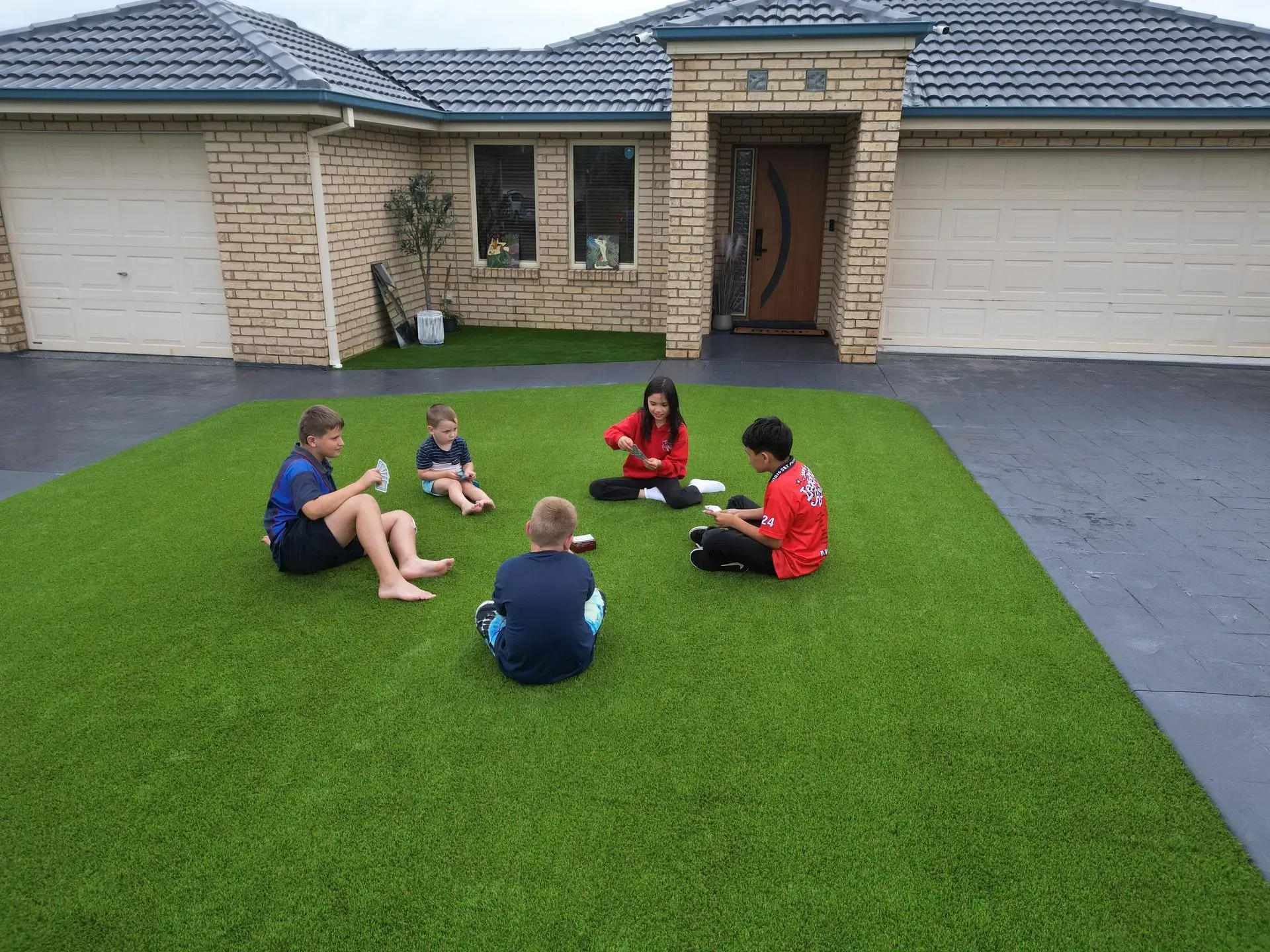

The cost of a synthetic cricket pitch in Australia depends on the constructed area, ground conditions, drainage, surface specification, and installation work. Backyard practice strips, school facilities and club pitches require different budgets because their intended use and supporting infrastructure differ. Comparing complete, itemised quotations is more useful than comparing turf supply rates alone.
Synthetic pitches avoid the mowing and rolling of a living turf wicket, but still require stable foundations, appropriate playing characteristics, and ongoing maintenance. Homeowners, schools and clubs comparing synthetic grass installation options should budget for the complete project.
How Much Does a Synthetic Cricket Pitch Cost in Australia?
There is no reliable national installed price for every synthetic cricket pitch. A compact backyard strip may use less turf than a club facility, yet difficult access or unstable soil can make even a small project expensive. Schools and clubs may also budget for intensive use, safety infrastructure and additional practice facilities.
Synthetic Cricket Pitch Cost Comparison
| Installation Type | Typical Project Requirements | Main Cost Considerations |
|---|---|---|
| Backyard cricket pitch | Smaller recreational practice area | Turf, excavation, base preparation and access |
| School cricket pitch | Regular student use and school sports activities | Durability, drainage, site preparation and safety |
| Club cricket pitch | Organised cricket and frequent training | Playing specifications, surface consistency and base construction |
| Multi-pitch facility | Multiple playing or practice areas | Larger site works, drainage, labour and additional infrastructure |
Budgeting note: These are budgeting categories, not verified price ranges. Obtain a site assessment and defined construction specification.
A1SGS’s synthetic cricket pitch guide explains how installation requirements differ between backyard practice areas, school facilities and cricket clubs.
How Should Synthetic Cricket Pitch Prices Be Calculated?
Contractors may quote a complete installation, a square-metre rate or separate work items. A turf-only rate excludes important expenses. First, measure the entire constructed area, including required run-ups or practice sections. Then compare itemised costs using this formula:
Before comparing quotes, confirm:
- Whether the price covers supply only or full installation.
- Whether excavation and soil disposal are included.
- Whether base materials and compaction are specified.
- Whether drainage improvements are included.
- Whether the price includes GST.
- Whether nets, fencing and line markings are additional.
Compare totals including GST and identify provisional allowances for unexpected ground conditions. A cheaper turf-only rate is not necessarily a cheaper completed pitch.
For example, compare two proposals using the same constructed length and width, surface specification, compacted base requirements and drainage scope. One contractor might include excavation and disposal while another lists them as exclusions. Record each difference before comparing the final totals.
Ask how variations will be priced if unsuitable fill is discovered, and whether optional nets or fencing can be delivered as a separate stage. This makes budgeting decisions more transparent without relying on unverified national price averages.
What Factors Affect the Cost of Installing a Synthetic Cricket Pitch?
Ground conditions, playing requirements and site access can make two similarly sized pitches cost different amounts. An existing concrete or asphalt surface might reduce excavation, but only if its stability, levels and drainage suit the proposed system.
Main Factors Affecting Installation Costs
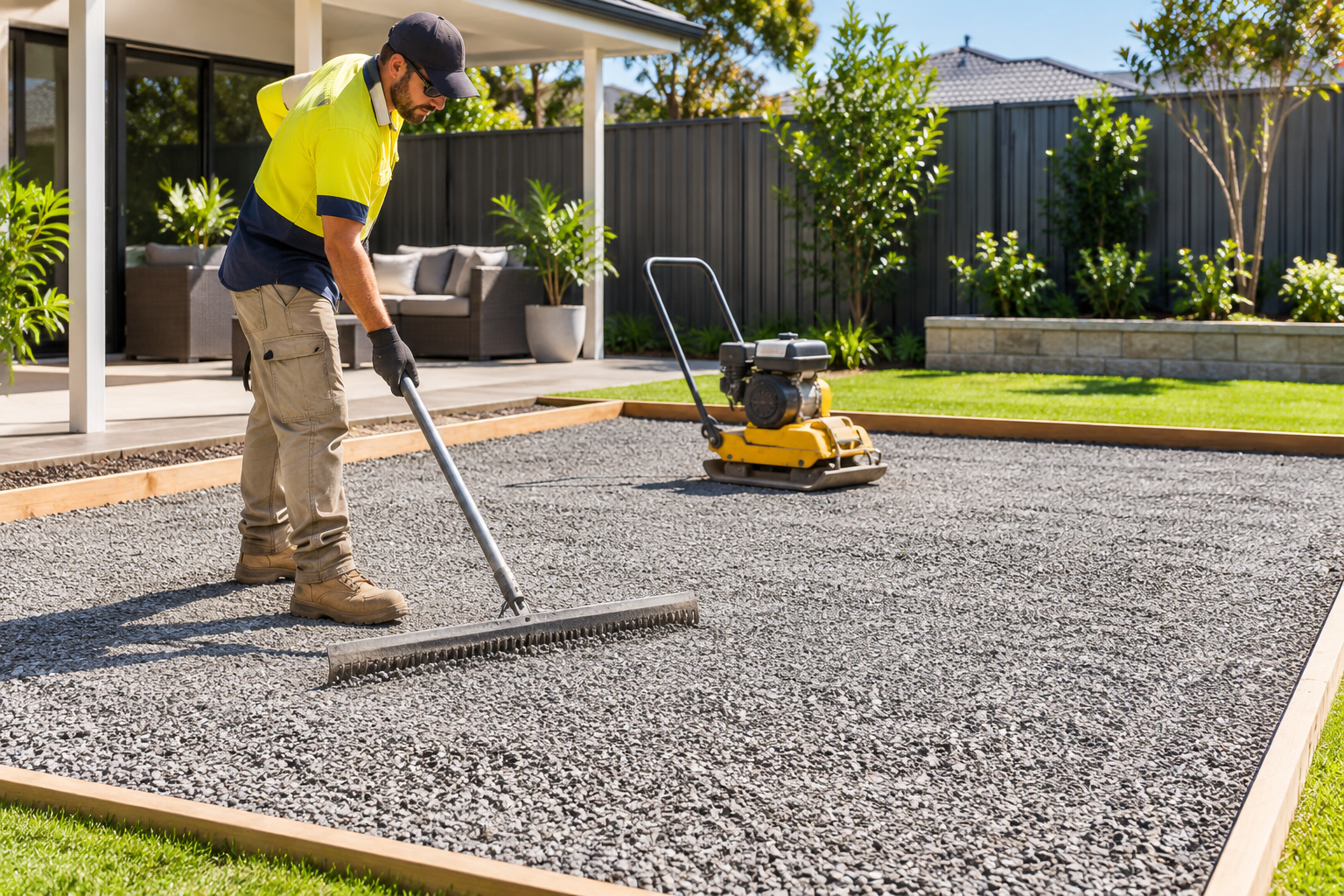
Vegetation removal, excavation, levelling and soil disposal affect the quote.
Aggregate specification, compacted thickness and subgrade stability determine foundation work.
Cricket-specific fibre construction, backing and durability influence suitability and price.
The total constructed area determines the quantities of materials and the extent of groundwork.
Poor drainage may require grading or additional water-management works.
Labour varies with complexity, equipment and access.
Restricted access increases handling and transport work.
Includes secure joins, crease markings, edging and surrounds.
Synthetic Cricket Pitch Quote Comparison Checklist
| Quote Item | What to Check |
|---|---|
| Surface material | Product specifications, intended use and warranty |
| Excavation | Removal of existing material and disposal costs |
| Base preparation | Aggregate type, thickness and compaction |
| Drainage | Included drainage work and discharge arrangements |
| Installation | Labour, joining and fixing methods |
| Finishing | Edging, markings and surrounding surfaces |
| GST | Whether the total includes GST |
| Warranty | Product and installation workmanship coverage |
A1SGS provides sports surface installation services. Request a site assessment before comparing quotations. For cricket, also ask how the proposed surface supports consistent ball response, stable joins and wear at batting creases and bowling landing areas.
How Do Backyard, School and Club Cricket Pitch Costs Compare?
Backyard, school, and club projects differ in their use, specifications, and supporting facilities. Define the playing purpose before deciding what to include in the budget.
Backyard Synthetic Cricket Pitches
Backyard pitches commonly serve recreational batting or bowling practice. A shortened strip may suit limited space, provided its layout allows safe movement and appropriate play.
Budget considerations include:
- Available backyard dimensions
- Existing soil and drainage conditions
- Surface and base requirements
- Access for installation equipment
- Optional batting nets or practice accessories
- Surrounding landscaping
Smaller areas use less turf but still incur mobilisation and groundwork costs. Junior practice and adult bowling may require different layouts.
A1SGS also provides residential synthetic turf installation services, which can help homeowners understand the groundwork required for backyard artificial surfaces.
School Synthetic Cricket Pitches
School pitches often support repeated student use. Budget for durability, appropriate performance, safe access and installation timing.
Additional budget requirements may include:
- Appropriate pitch dimensions
- Durable synthetic surface materials
- Ground preparation and drainage
- Safe access and surrounding areas
- Practice nets or fencing where required
- Installation scheduling around school activities
Confirm whether the facility is cricket-only or multipurpose before specifying materials.
A1SGS’s synthetic turf solutions for schools include sports fields and outdoor spaces intended for regular institutional use.
Club Synthetic Cricket Pitches
Clubs should budget for repeated training, required playing characteristics, high-wear zones and any additional lanes, netting or fencing.
The Cricket Australia Community Cricket Facility Guidelines guide planning, designing and developing community cricket infrastructure.
Confirm association and competition requirements before selecting dimensions, materials or facilities.
Backyard vs School vs Club Pitch Requirements
| Consideration | Backyard | School | Cricket Club |
|---|---|---|---|
| Main purpose | Recreational practice | Student sport and training | Organised cricket |
| Usage | Occasional or regular family use | Frequent scheduled use | Regular club training and matches |
| Project size | Usually smaller | Depends on school facilities | Depends on club requirements |
| Surface priority | Recreational suitability | Durability and suitable performance | Playing consistency and durability |
| Groundwork | Depends on backyard conditions | Depends on school grounds | Depends on facility layout |
| Additional facilities | Optional nets and equipment | Potential fencing and safety measures | Nets, practice areas and infrastructure |
Budget approval should follow agreement on intended use and required facilities. For schools and clubs, ask who will maintain the wicket, whether access for maintenance machinery is available, and whether use during school terms or competition fixtures limits installation dates.
These operational constraints can affect labour scheduling and the value of optional upgrades.
How Does Pitch Size and Surface Material Influence Installation Costs?
Pitch dimensions drive turf quantities, excavation and labour. Under the Laws of Cricket, a regulation pitch is 20.12 metres long and 3.05 metres wide.
That is not necessarily the total constructed synthetic area: run-ups, follow-through zones, edges and practice facilities may require additional space. Backyard or junior practice layouts may be shorter, subject to their intended use. Confirm the full installed dimensions against the relevant association and facility requirements.
How Pitch Size Affects Cost
| Project Requirement | Potential Cost Impact |
|---|---|
| Smaller backyard pitch | Less turf and groundwork, depending on site conditions |
| Larger school pitch | More surface materials and base construction |
| Club training facility | Potentially more extensive installation and infrastructure |
| Multiple practice lanes | Additional materials, drainage, labour and facilities |
Mobilisation and equipment costs mean a smaller pitch may have a higher installed cost per square metre.
How Synthetic Surface Materials Affect Cost
Cricket-specific surfaces differ in pile height, density, backing, and outdoor durability. Select for intended ball response, stability and use, not appearance alone.
| Surface Feature | What to Investigate |
|---|---|
| Fibre construction | Suitability for cricket and regular use |
| Pile height | Compatibility with intended playing characteristics |
| Density | Surface consistency and manufacturer specifications |
| Backing | Compatibility with the selected foundation |
| UV resistance | Suitability for Australian outdoor conditions |
| Warranty | Coverage, exclusions and maintenance requirements |
Long-pile landscaping turf is not automatically suitable for a cricket wicket: bounce and footing requirements differ. The A1SGS synthetic grass product range includes options with different fibre characteristics and intended applications.
Surface specification and certification: Cricket Australia’s synthetic surfaces guidance covers synthetic playing fields and outfields. The AFL/CA field certification scheme does not automatically certify centre cricket pitches. For a centre wicket, verify cricket-specific playing and facility requirements separately.
What Additional Costs Are Involved in Synthetic Cricket Pitch Construction?
A quoted turf price may exclude groundwork, site access and sports infrastructure. Request a complete itemised quotation and identify all exclusions.
Additional Construction and Facility Expenses
- Excavation and disposal: Removing vegetation, unsuitable soil or existing surfaces.
- Base materials: Supplying, transporting and compacting suitable foundation materials.
- Drainage improvements: Installing additional channels, pipes or site grading where necessary.
- Ground levelling: Correcting slopes or uneven areas.
- Edging and restraints: Securing the perimeter of the surface.
- Nets and fencing: Providing appropriate practice or safety facilities.
- Lighting: Supporting evening training where required.
- Equipment: Stumps, practice accessories and related facilities.
- Transport and access: Managing difficult deliveries or equipment access.
- Maintenance: Allowing for cleaning, inspections and future repairs.
Additional Cost Planning Table
| Additional Expense | Why It May Be Required |
|---|---|
| Excavation and soil disposal | Existing ground needs removal or correction |
| Drainage work | Water needs an appropriate drainage route |
| Base preparation | A stable foundation is required |
| Edging and finishing | The surface needs secure boundaries |
| Nets and fencing | Practice or safety facilities are needed |
| Lighting | Evening use is planned |
| Maintenance | The pitch requires ongoing care and repairs |
Allow for Site Conditions and Project Approvals
Unstable fill or unexpected drainage problems may require additional work. Ask whether the quote includes provisional amounts or a contingency, and confirm any relevant landowner, council or facility approvals.
NSW synthetic turf sports-field guidance concerns public open-space sports fields. It is not a universal requirement for private backyard pitches. Applicable approvals depend on the site and project.
Separate Essential Work from Optional Upgrades
Separate the essential pitch, base, drainage, and finishing from the optional nets, lanes, lighting, and landscaping. This lets schools and clubs approve a workable core budget before optional upgrades are added.
What Should You Budget for Synthetic Cricket Pitch Maintenance?
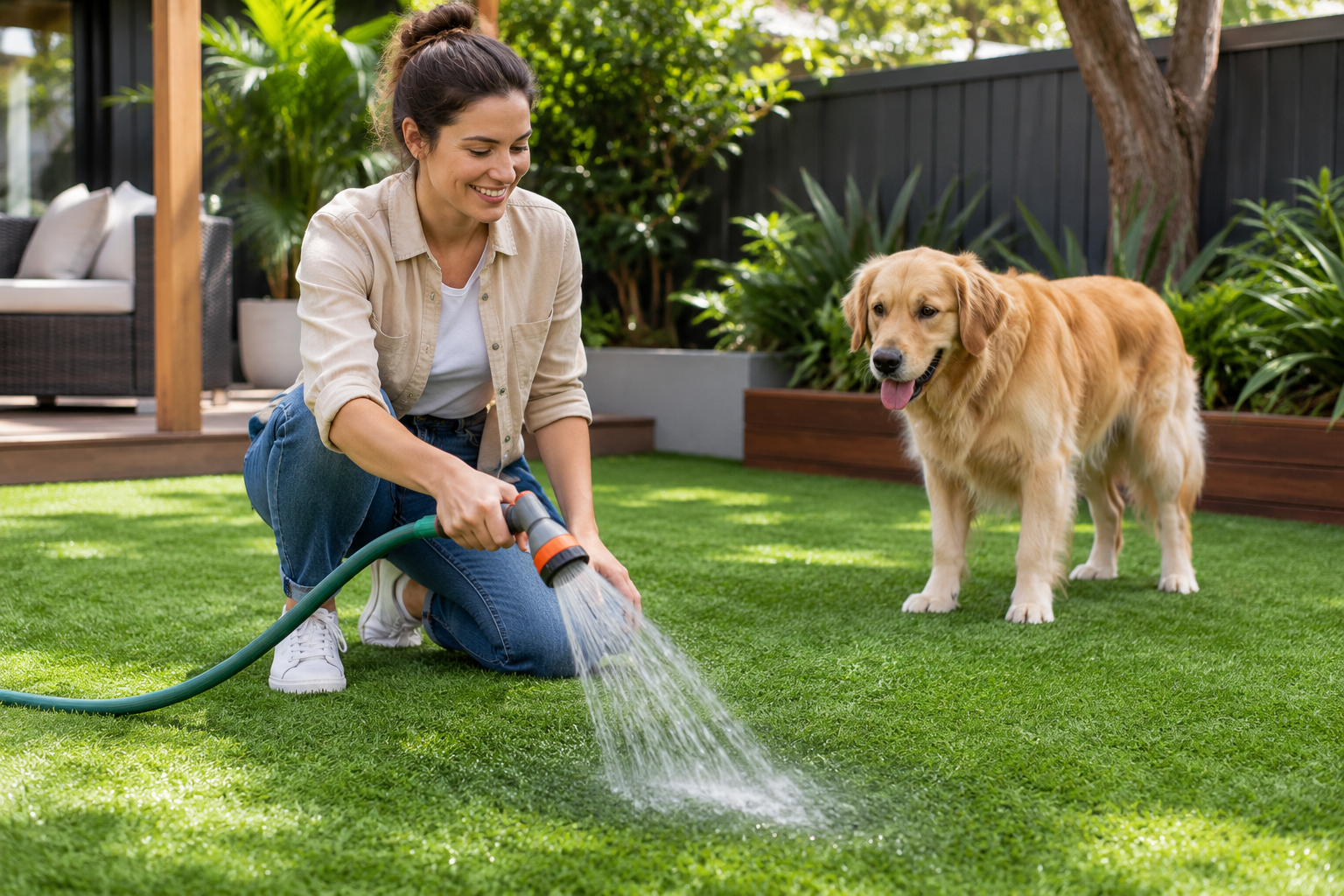
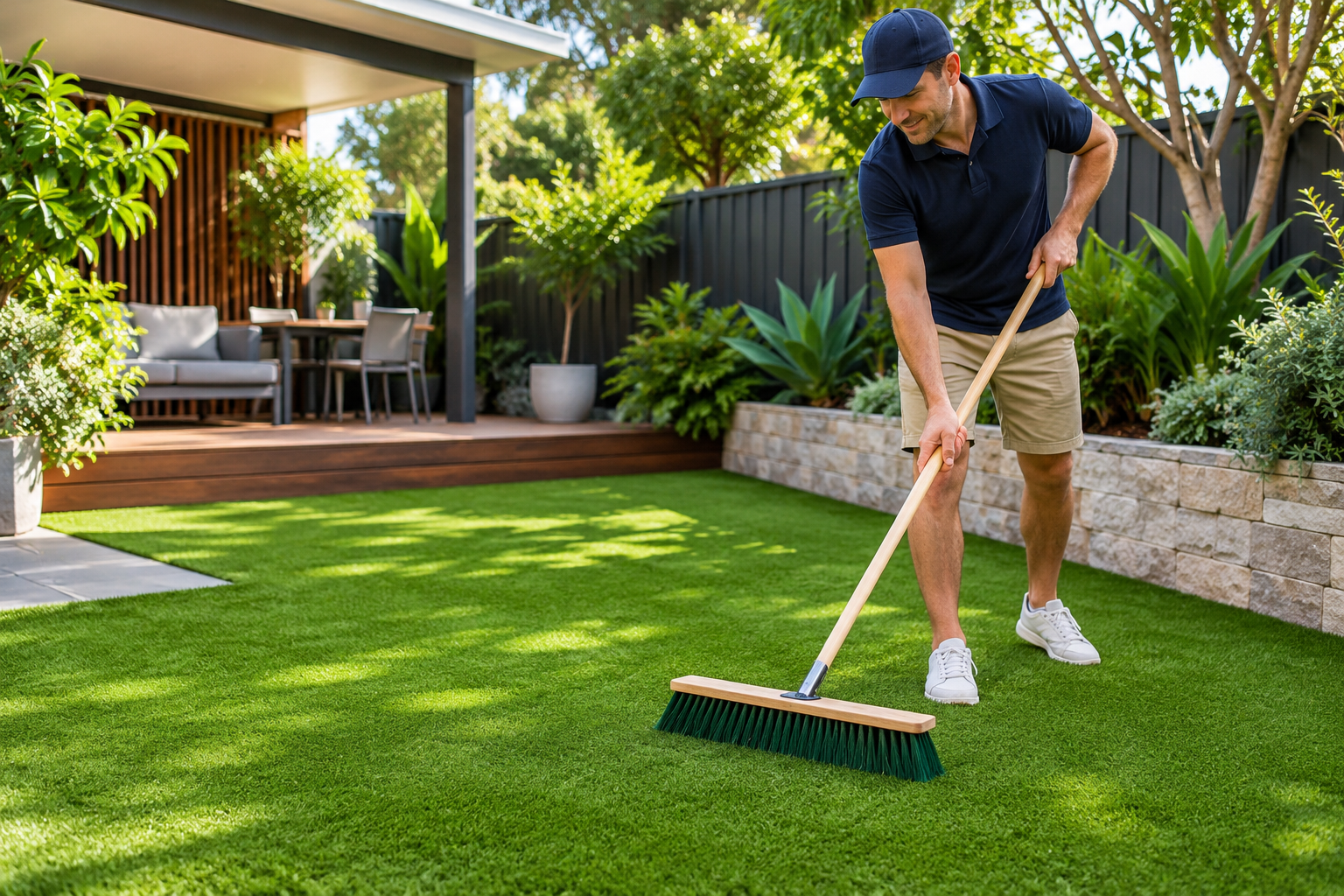
Synthetic pitches avoid the need to prepare living turf before play but still require scheduled cleaning, inspections, and occasional repairs. Budget separately for routine yearly tasks and less frequent resurfacing or major repairs.
Typical Synthetic Cricket Pitch Maintenance Tasks
| Maintenance Task | Budget Consideration |
|---|---|
| Debris removal | Routine staff or contractor time |
| Surface cleaning | Water, equipment and cleaning labour |
| Brushing where required | Suitable maintenance equipment |
| Edge and seam inspections | Periodic inspection and possible repairs |
| Drainage checks | Removing blockages or investigating pooling |
| Surface repairs | Repairing localised damage or worn sections |
| Eventual replacement | Future resurfacing allowance |
Schools and clubs should inspect batting creases, bowling landing zones, joins and drainage more frequently where use is heavy.
Synthetic vs Natural Turf Cricket Pitch Costs
Natural wickets need mowing, rolling, watering and specialist turf management. Synthetic pitches need cleaning, inspection, repairs and eventual replacement. Compare installation plus ongoing operating and replacement costs, not the initial price alone.
Plan Your Synthetic Cricket Pitch with a Clear Budget
Understanding the cost of a synthetic cricket pitch means comparing the total project cost, not just the turf price. Pitch dimensions, groundwork, playing specifications, facilities and future maintenance all affect the budget.
For a backyard, school or club project, explore A1SGS’s synthetic cricket pitch and sports turf solutions. Request a site assessment and an itemised quotation covering the constructed area, surface, drainage, installation, GST, and optional facilities.
Explore A1SGS Synthetic Turf SolutionsFrequently Asked Questions
How Much Does It Cost to Install a Synthetic Cricket Pitch?
Installation costs depend on constructed area, turf, groundwork, drainage and labour. Backyard, school, and club specifications vary, so there is no single reliable figure. Compare site-specific quotations that include GST, finishing and any required practice facilities.
What Is the Average Cost of a Backyard Synthetic Cricket Pitch?
There is no single verified national average that applies to every backyard pitch. A shorter strip may use less turf, but excavation, drainage, mobilisation and access still affect cost. Set out the intended practice space and request a site-specific installed quote.
Are Synthetic Cricket Pitches More Affordable Than Natural Turf Pitches?
Synthetic wickets avoid routine mowing and rolling but still require maintenance and eventual resurfacing. Natural and synthetic surfaces also differ in playing characteristics. Compare construction, annual operating costs, replacement allowances and intended use before deciding.
How Long Does a Synthetic Cricket Pitch Last?
Lifespan depends on turf quality, installation, use, weather and maintenance. Bowling landing areas and batting creases may wear faster. Review the manufacturer’s warranty, maintenance conditions, and future resurfacing requirements rather than relying on a fixed-lifespan claim.
What Maintenance Costs Should You Budget for a Synthetic Cricket Pitch?
Allow for routine cleaning, debris removal, drainage and seam inspections, and brushing where specified. Schools and clubs may need more frequent professional maintenance. Include a separate allowance for repairs and eventual resurfacing, and ask suppliers for a maintenance schedule.