
To clean dog urine from artificial grass, remove any solid waste, rinse affected areas where local water-use rules permit, and apply a pet-safe cleaner compatible with your turf if odours remain. Follow the product’s contact-time and pet re-entry instructions. When smells return despite cleaning, check the infill and drainage rather than repeatedly applying stronger chemicals.
Artificial grass avoids muddy patches and mowing, but it still needs attention when dogs repeatedly use the same area as a toilet. Urine may pass through permeable turf backing, yet residue can remain among fibres, in infill or within a poorly draining foundation.
This guide explains a straightforward cleaning routine, safe product choices and how to investigate persistent smells. If you're comparing pet-friendly artificial grass options, drainage and maintainability should be considered alongside appearance.
What Is the Best Way to Clean Dog Urine from Artificial Grass?
For fresh dog urine, focus on the affected spot instead of treating the entire lawn. Remove waste first, rinse when appropriate and use a compatible turf cleaner only if needed.
Clear solid waste, fallen leaves and organic debris from the affected area.
Rinse the affected spot where permitted and check that water drains properly.
Use a compatible pet-turf cleaner if needed and follow the product instructions.
Step-by-Step Guide to Cleaning Dog Urine from Artificial Grass
- Identify the Affected Area Locate your dog’s usual toilet spots, particularly beside fences, garden edges and corners.
- Remove Solid Waste and Debris Collect faeces, leaves and loose organic material with a scoop or bag.
- Rinse Thoroughly with Clean Water Where local rules permit, gently rinse the affected section. Avoid high pressure that may disturb turf joints, backing or infill. Do not keep adding water if it pools instead of draining.
- Apply a Suitable Artificial Grass Cleaner If residue or smell persists, select a cleaner labelled for synthetic turf in pet-use areas.
- Rinse Again if Required Some cleaners require rinsing; others need to remain in place for a defined contact period. Follow the label rather than automatically rinsing a treatment away.
- Allow the Area to Drain and Dry Keep dogs away until the manufacturer’s re-entry conditions are met. Check whether water drains properly through the installation.
- Check for Lingering Odours Reassess the area once dry. A smell that returns quickly may indicate accumulated residue or inadequate drainage beneath the visible surface.
Practical Cleaning Tips for Dog Owners
- Clean known toilet spots instead of unnecessarily washing the whole lawn.
- Remove faeces and fallen leaves promptly.
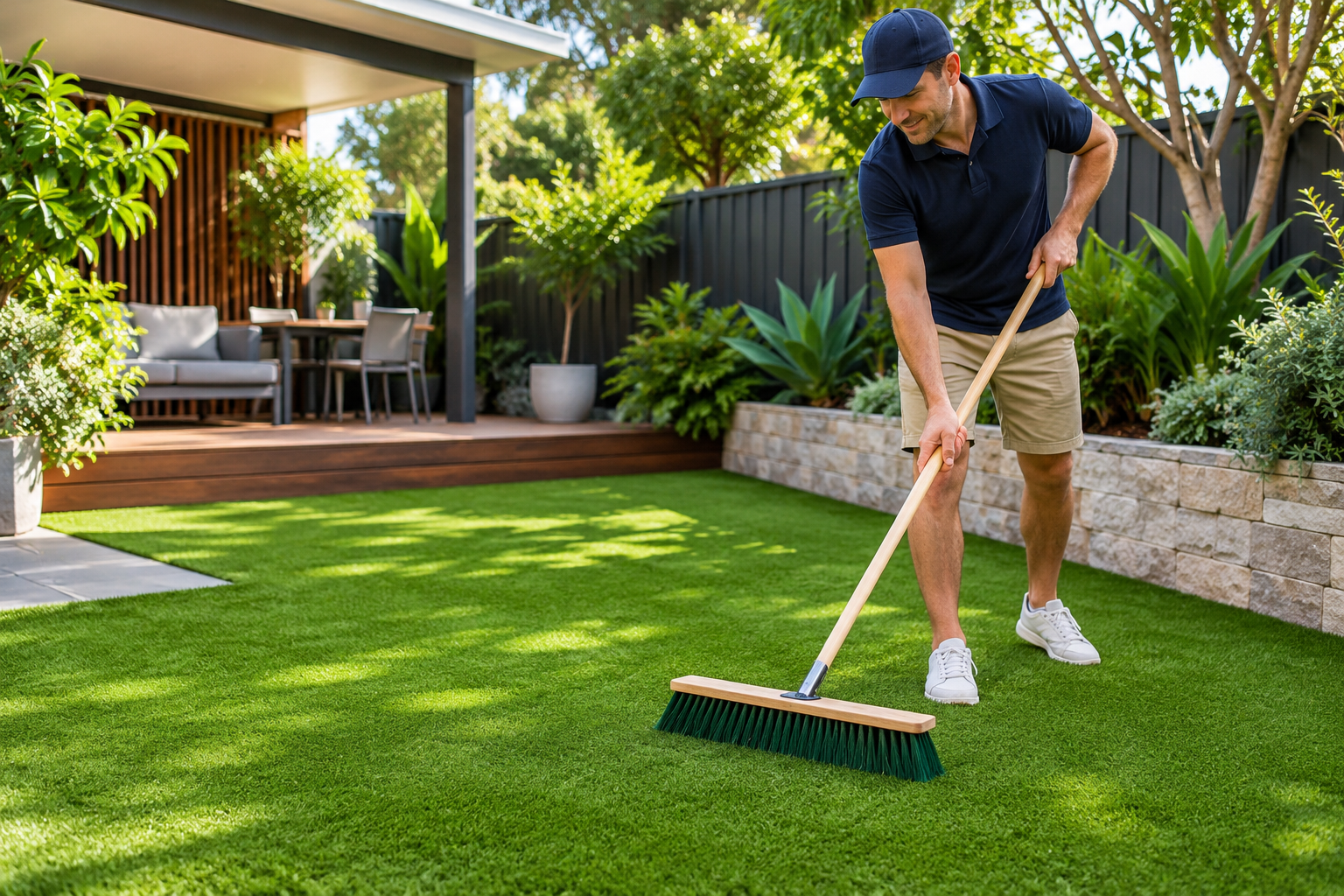
- Use a compatible synthetic-bristled brush to remove trapped debris.
- Avoid aggressive equipment, solvents and corrosive products.
- Monitor the same areas after rainfall or routine rinsing.
For general brushing and debris removal, A1SGS provides an artificial grass cleaning and maintenance guide.
How Often Should You Rinse Artificial Grass to Remove Dog Urine?
Rinsing frequency depends on the number of dogs, available lawn area, weather and drainage. One dog in a large backyard may occasionally need less frequent cleaning than several dogs sharing a small toilet area.
Remove solid waste promptly and inspect high-use spots regularly. Rinse only when necessary and permitted under current local water-use rules. Sydney homeowners should check Sydney Water’s Water Wise Guidelines and any current restrictions; artificial turf cleaning should not automatically be treated as permitted lawn watering.
Suggested Artificial Grass Cleaning Schedule for Dog Owners
| Cleaning Task | Suggested Frequency |
|---|---|
| Remove solid dog waste | Promptly after use |
| Inspect frequently used toilet spots | Daily or as needed |
| Rinse urine-affected sections | As needed, where permitted |
| Apply approved pet turf cleaner | When residue or odours require treatment |
| Check drainage and odour-prone areas | Monthly and whenever problems appear |
| Complete a thorough surface clean | Periodically, according to use and turf instructions |
How to Build a Simple Dog-Friendly Cleaning Routine
Consider establishing a designated toilet spot where practical. Keep waste bags and a suitable scoop nearby, check that leaves have not collected in the pile and review drainage after heavy rain. For multi-dog households, daily inspection may be helpful even when daily rinsing is unnecessary or restricted. A1SGS’s artificial grass for dogs guide explains how pet-area use, infill and drainage influence maintenance.
What Cleaning Products Are Safe for Removing Dog Urine from Artificial Grass?
Choose a cleaner approved for both the particular synthetic turf system and areas used by pets. A product described as natural, pet-friendly or deodorising is not automatically safe for every animal, material or application method. Check the product label and turf manufacturer’s instructions.
Comparing Dog Urine Cleaning Products
| Cleaning Option | Potential Use | Important Consideration |
|---|---|---|
| Clean water | Removing fresh, accessible urine residue | Use only when permitted; drainage must work |
| Artificial grass cleaner | General turf-compatible cleaning | Confirm compatibility with fibres and backing |
| Pet odour remover | Reducing lingering smells | May mask rather than remove the cause |
| Enzyme-based cleaner | Treating particular organic residues | Must be approved for synthetic turf and pet areas |
| Mild cleaning solution | Selected spot-cleaning tasks | Only if the turf manufacturer permits it |
Cleaning, Deodorising and Disinfecting: What Is the Difference?
Physically removes dirt and organic residues.
Reduces smells, sometimes only by masking them.
Uses a product under specified conditions to reduce or inactivate certain microorganisms.
Routine dog-urine cleaning does not automatically require disinfecting.
Pet-Safety Precautions When Using Cleaners
- Check that the label permits use around pets and on artificial turf.
- Measure dilution accurately and observe required contact time.
- Prevent pets from licking or walking on treated areas during application.
- Follow all rinsing, drying and re-entry directions.
- Store chemicals securely away from children and animals.
- Never mix bleach, vinegar or other household cleaners.
Victoria’s Better Health Channel guidance on chemicals in the home provides general advice on safe chemical handling. It does not certify a particular cleaner as safe for A1SGS turf.
How Do You Remove Lingering Dog Urine Smells from Artificial Grass?
A persistent artificial grass smell can arise when residue accumulates in the pile, infill, or underlying base. The goal is to identify where the odour originates, not merely repeat the fresh-urine routine with stronger cleaning products.
Surface odours may improve after removing debris and washing the surface. A smell that quickly returns, especially after rain, can suggest trapped residue, moisture, or drainage problems that need closer inspection.
Step-by-Step Method for Removing Persistent Pet Turf Odour
- Locate the Strongest Smell Identify the affected patch and note whether odour is concentrated around a regular toilet spot, an edge or a poorly drained area.
- Remove Organic Material Clear trapped leaves, faeces and soil. Inspect the pile and perimeter for material that remains damp or holds residue.
- Check Drainage Before Rinsing Look for slow drainage or water pooling. Where rinsing is permitted, use a modest amount of water and observe whether it passes through the system.
- Assess Infill and Apply a Suitable Treatment If the turf contains infill, check for contaminated or displaced material without disturbing the installation. Use only an approved pet-odour or enzyme treatment and follow its instructions.
- Follow the Required Treatment Period Respect product contact time and rinse only when directed. Repeated applications beyond label instructions may increase exposure without improving the result.
- Allow the Turf to Drain Keep dogs away during the specified period. If the area remains wet long after treatment, further cleaning may not be the solution.
- Check Whether the Smell Returns If odours persist after appropriate cleaning, arrange an assessment of the infill, the base, and the drainage. Do not assume the grass fibres are the sole cause.
Why Does Artificial Grass Still Smell After Cleaning?
Common causes include repeated toileting in one place, organic debris, urine-related residue in infill, or poorly draining ground beneath the turf. A1SGS describes drainage and pet-use construction considerations in its pet-friendly synthetic grass options.
Persistent odour and drainage problems: Persistent water pooling, recurring smells or sinking sections should prompt an installation inspection rather than repeated deodorising.
Can Vinegar or Enzyme Cleaners Help Remove Dog Urine from Artificial Grass?
Vinegar and enzyme cleaners are not interchangeable. Vinegar is a household acidic solution, while enzyme-based products contain ingredients intended to act on particular organic substances. Neither is guaranteed to remove every urine odour.
Vinegar vs Enzyme Cleaners for Artificial Grass
| Cleaning Method | How It May Help | What to Consider |
|---|---|---|
| Diluted vinegar | Selected household surface cleaning | Not universally approved for artificial grass |
| Enzyme cleaner | Targets certain organic deposits | Select a turf-compatible, pet-use formulation |
| Clean water | Flushes accessible fresh residue | Does not necessarily remove accumulated deposits |
| Specialist pet turf treatment | Addresses specified pet odours | Follow the label and re-entry instructions |
Can Vinegar Damage Artificial Grass?
Vinegar should not be assumed to be compatible with every turf, infill, backing, or adhesive system. Unless the manufacturer approves it, use a purpose-made cleaner instead.
Never mix vinegar with bleach or other cleaners; hazardous reactions can occur. Consult the product label and the Better Health Channel’s household chemical guidance for general handling precautions.
How Do Enzyme Cleaners Work?
Enzyme-based cleaners use particular enzymes to break down targeted substances. Products formulated for pet urine may help with some organic residue, but effectiveness depends on their formulation and whether the treatment reaches the source of the odour.
Choose a product specifically suitable for artificial grass and dog-accessible areas. Follow instructions for dilution, application, contact time and pet re-entry. If urine has accumulated in unsuitable infill or a poorly draining base, a surface cleaner may not resolve the cause.
How Can You Prevent Dog Urine Smells from Returning?
The best routine targets the parts of the lawn dogs use most often.
Practical Ways to Keep Pet Turf Fresher
- Inspect toilet spots: Check high-use locations before smells accumulate.
- Remove waste promptly: Keep faeces and debris out of the turf pile.
- Rinse selectively: Use water where needed and permitted.
- Choose compatible products: Follow turf and pet-safety instructions.
- Monitor infill: Investigate contaminated or displaced material.
- Check drainage: Look for recurring moisture or pooling.
- Maintain edges: Remove debris and inspect spots where dogs dig.
Why Drainage Matters for Pet Turf Hygiene
Drainage involves more than holes in the grass backing. The underlying base must also allow water to move away through suitable soil or a designed drainage route.
Good drainage may reduce retained moisture but cannot guarantee an odour-free lawn or replace the need for cleaning. If water or urine-related residue accumulates beneath the surface, installation changes may be more useful than additional chemicals.
Keep Your Pet-Friendly Artificial Grass Clean and Fresh
Knowing how to clean dog urine from artificial grass helps homeowners maintain a fresher outdoor space without unnecessary chemical treatments. Start with waste removal and targeted rinsing when allowed, then use compatible pet-safe products for stubborn residue.
When odours persist, investigate the source of the odour rather than repeatedly masking it. Regular inspections and suitable cleaning practices support a more manageable pet lawn.
For homeowners planning a new pet-friendly lawn or addressing ongoing drainage concerns, A1SGS offers synthetic grass options for dogs and residential pet areas. Discuss site conditions, how your dogs use the space and ongoing maintenance requirements before choosing an installation approach.
Explore Pet-Friendly Artificial GrassFrequently Asked Questions
How Do You Get Dog Urine Smell Out of Artificial Grass?
Remove waste and debris, rinse the affected patch where permitted, then apply an approved pet-turf odour treatment if necessary. Follow the cleaner’s contact-time and re-entry instructions. If smells return, check whether residue has accumulated in the infill or the underlying base, and whether drainage needs a professional assessment.
Can You Use Vinegar to Clean Dog Urine from Artificial Grass?
Only use vinegar if the turf manufacturer confirms it is suitable. It is not a guaranteed treatment for urine odour and may be inappropriate for certain installation materials. A purpose-made cleaner approved for artificial grass and pet-use areas is generally a more dependable starting point. Never mix vinegar with bleach.
Is Disinfectant Safe to Use on Artificial Grass Where Dogs Play?
Not automatically. A disinfectant must be compatible with the turf and labelled for the intended pet-accessible area. Observe dilution, contact time and re-entry requirements. Ordinary urine cleaning does not necessarily require disinfecting. Never mix cleaning chemicals or allow dogs onto treated turf before the label permits it.
How Often Should You Clean Artificial Grass If You Have Dogs?
Remove faeces promptly and inspect preferred toilet areas regularly. Clean urine-affected spots as needed, taking into account the number of dogs, rainfall, drainage, and local water-use rules. Multi-dog households may require more frequent attention. A fixed daily rinsing schedule is not necessary or appropriate for every property.
Does Artificial Grass Drainage Help Prevent Dog-Urine Odours?
Effective drainage helps water and some residue move through the turf, but it does not remove every urine deposit or guarantee there will be no smell. Regular cleaning, suitable infill and an appropriate foundation all matter. Repeated pooling or odours following cleaning may indicate a deeper installation problem.