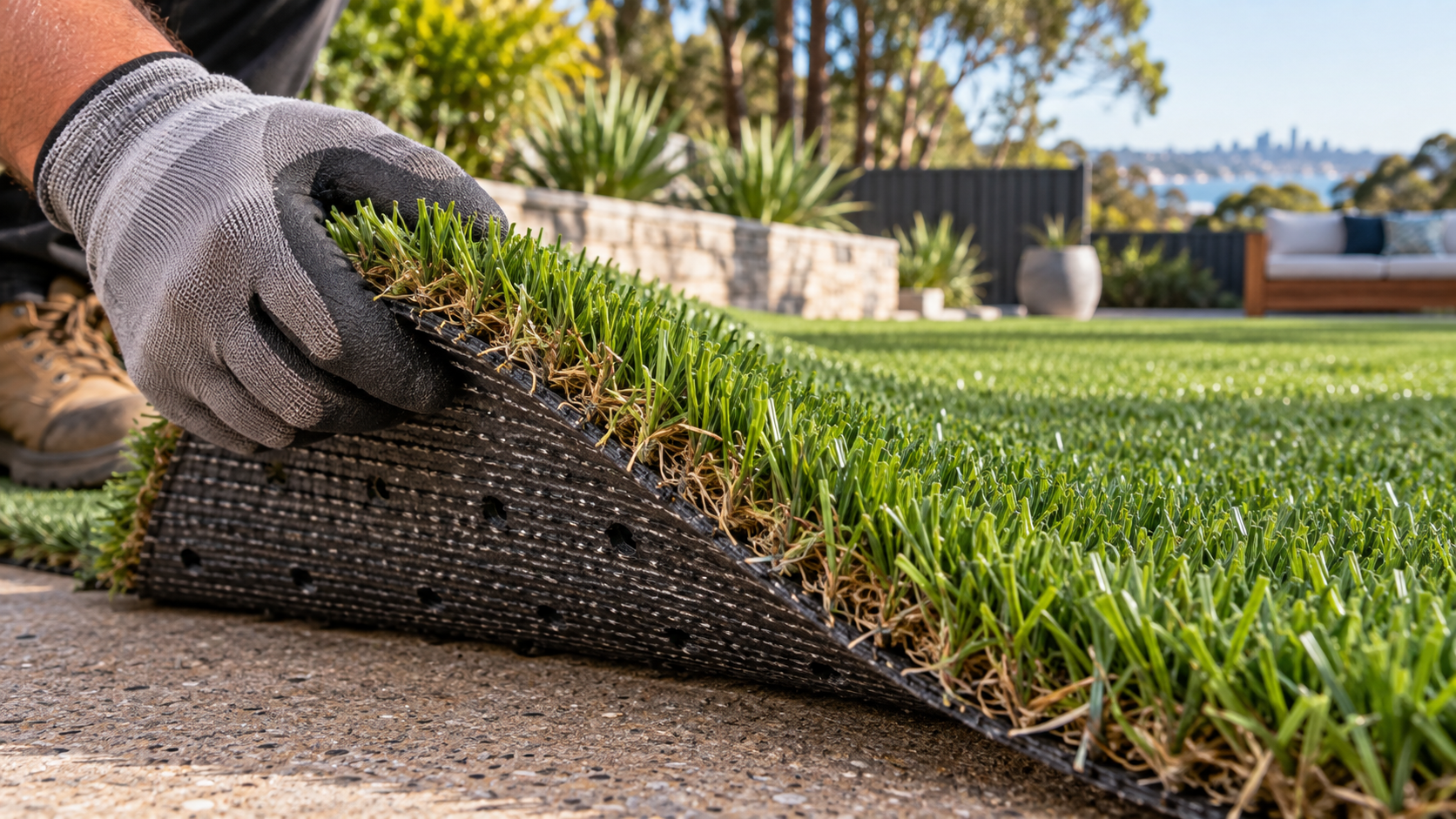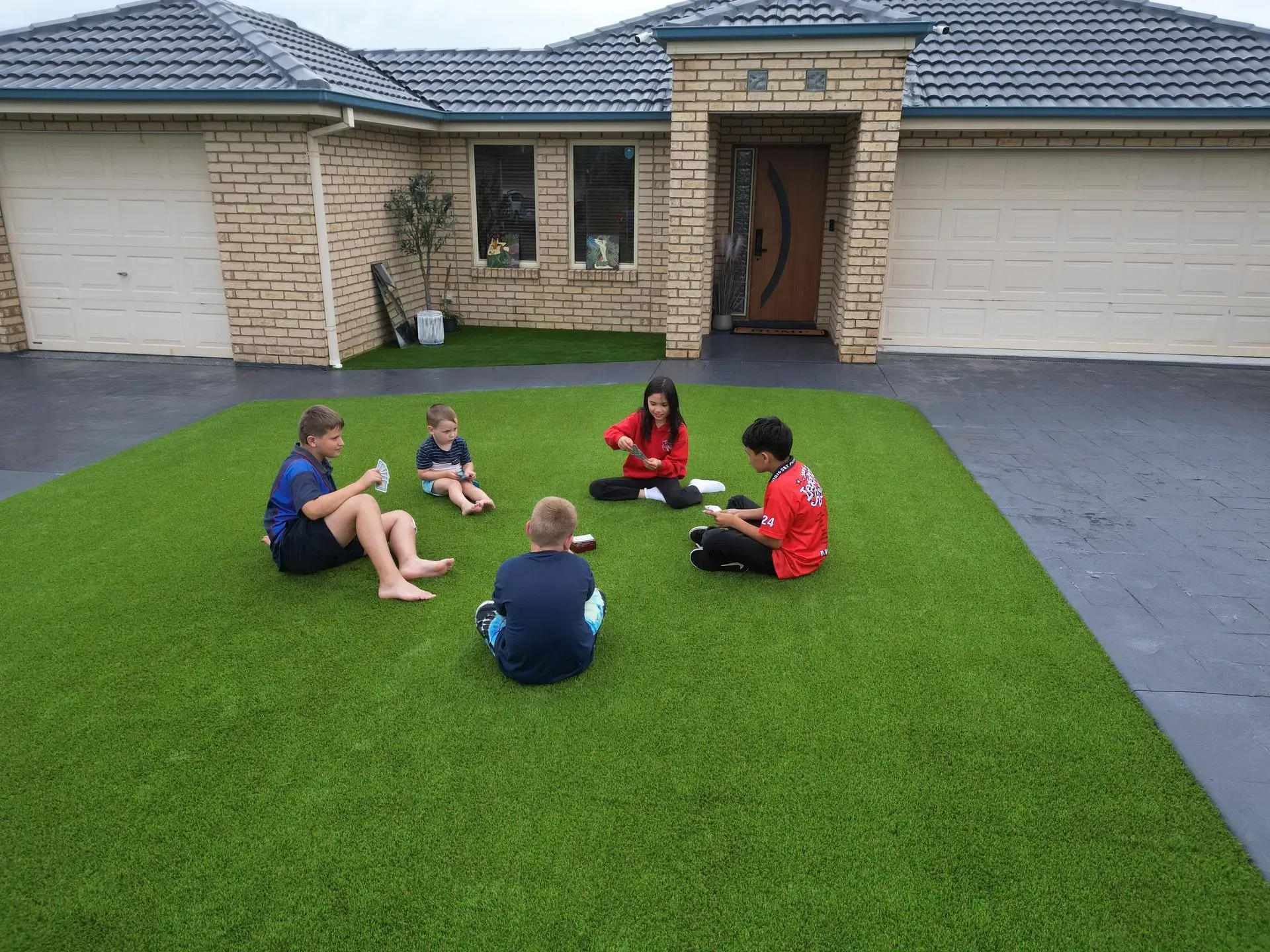

Artificial grass maintenance involves removing debris, cleaning spills and pet waste, brushing flattened fibres and checking drainage and joins. Frequency depends on foot traffic, pets, surrounding trees, weather and turf type. A weekly inspection and seasonal cleaning routine can help maintain the lawn and identify problems early. Unlike natural lawns, artificial grass does not require mowing, fertilising or regular watering to grow. However, dust, organic debris and everyday use can affect its appearance over time.
A year-round schedule makes it easier to adjust cleaning to seasonal conditions rather than repeat unnecessary tasks. For example, shaded lawns beneath trees often require more leaf removal, while open lawns used for entertaining may require more attention to food spills and flattened walking paths. The best routine responds to visible conditions rather than following a rigid timetable.
For homeowners considering new turf or comparing residential synthetic grass solutions, understanding ongoing maintenance is also helpful when choosing a suitable product.
How Often Should You Carry Out Artificial Grass Maintenance?
Artificial grass maintenance frequency depends on how often the lawn is used and the conditions around it. A decorative courtyard may need occasional cleaning, while a family backyard with children, pets and outdoor furniture may require more attention. Surrounding trees, rainfall and wind affect debris accumulation. Combine quick checks with occasional deeper inspections.
Suggested Artificial Grass Maintenance Schedule
| Frequency | Recommended Maintenance Task |
|---|---|
| Daily or as needed | Remove visible pet waste, spills and large debris |
| Weekly | Check for leaves, dirt and flattened areas; rinse where needed |
| Every 2–4 weeks | Brush frequently used areas and inspect the turf |
| Every few months | Carry out deeper cleaning and check drainage |
| Seasonally | Adjust cleaning for weather, falling leaves and outdoor activity |
This schedule is a general guide rather than a fixed requirement. Some lawns need more frequent cleaning, especially during periods of heavy use.
How to Adjust Your Maintenance Routine
- Households with pets: Prioritise waste removal, rinsing and odour control.
- Family backyards: Inspect play areas and frequently used pathways.
- Lawns beneath trees: Remove fallen leaves and twigs more frequently.
- Outdoor entertaining areas: Clean food spills promptly and check furniture marks.
- Decorative lawns: Focus on debris removal and occasional brushing.
For example, two dogs using the same toilet area may require daily checks, while a decorative front lawn may need attention only when debris accumulates.
What Is the Best Way to Clean and Maintain Artificial Grass?
The best way to clean artificial grass is to remove loose debris, rinse dirty areas with clean water and spot-clean stains using products approved for synthetic turf. A leaf blower, a suitable brush, or a plastic rake can remove routine debris without harsh chemicals.
Step-by-Step Artificial Grass Cleaning Instructions
- Remove Leaves and Loose Debris Clear leaves, twigs and debris using a blower or turf-compatible plastic rake. Check corners and fence lines.
- Clear Smaller Particles Gently remove particles trapped between fibres without disturbing joins or infill.
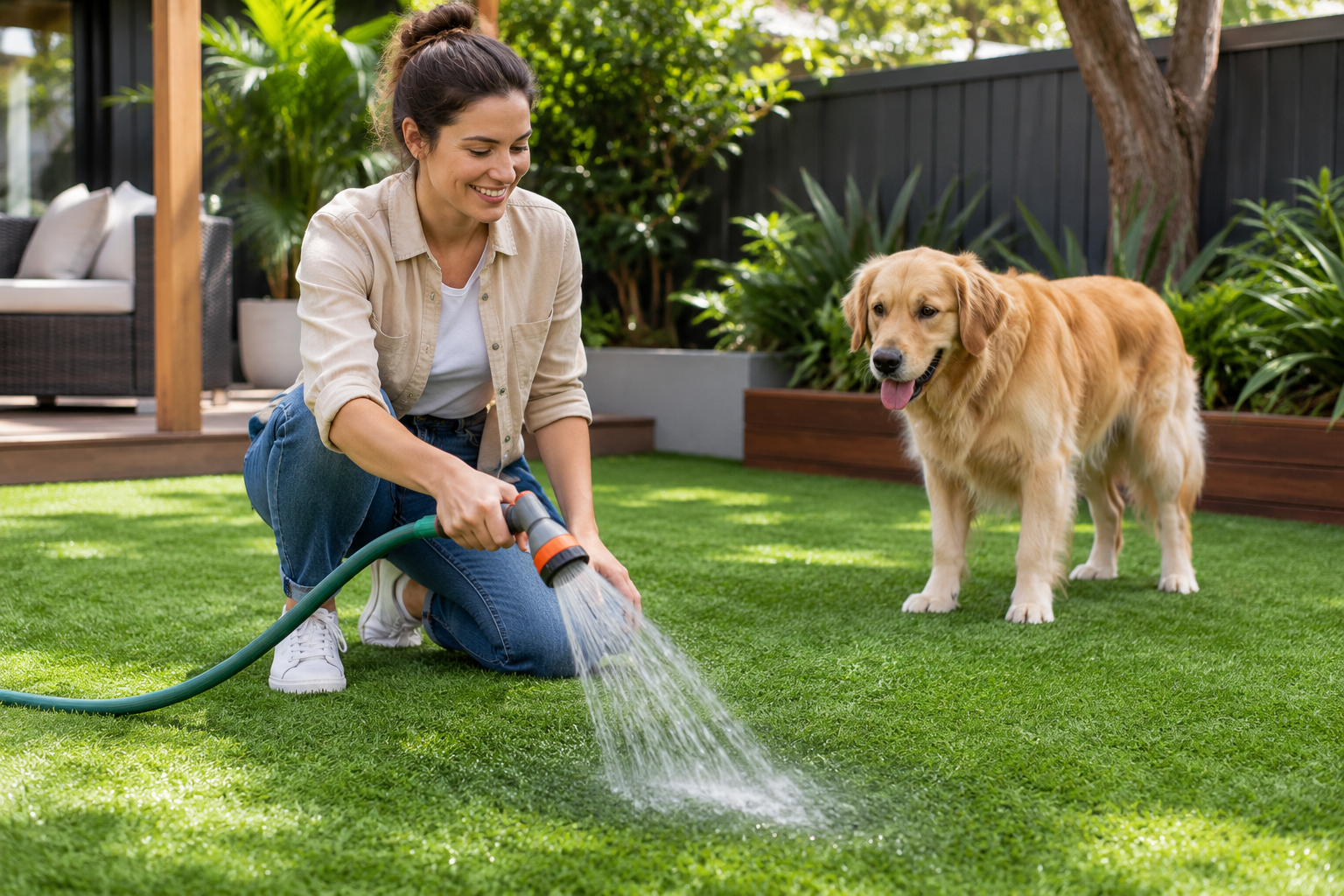
- Rinse Dirty Areas Rinse dirty areas only when necessary and permitted. For Greater Sydney, check Sydney Water’s Water Wise Guidelines and current restrictions before using a hose. Do not assume artificial turf qualifies for natural-lawn watering rules.
- Spot-Clean Stains Remove solids, blot spills, and apply a manufacturer-approved turf cleaner if needed. Rinse as instructed.
- Check Drainage Check drainage after cleaning. Persistent pooling may indicate debris blockage or an underlying installation defect.
Cleaning Products and Methods to Avoid
- Strong bleach or corrosive cleaning products
- Unsuitable solvents and chemical degreasers
- Wire brushes or sharp metal rakes
- Excessively aggressive scrubbing
- High-pressure water jets without manufacturer approval
- Cleaning products that may damage fibres, backing or infill
The NSW EPA’s household chemical guidance addresses general chemical safety; the turf manufacturer determines product compatibility.
For everyday cleaning, start with the mildest suitable method. A stronger cleaner should only be used when the turf manufacturer confirms it is compatible with the installation.
Remove trapped organic matter rather than cleaning only the visible surface.
What Tools Do You Need for Artificial Grass Care?
Most residential lawns need only basic tools that remove debris without damaging fibres or joins.
Recommended Artificial Grass Maintenance Tools
| Tool | Recommended Use | Important Precaution |
|---|---|---|
| Garden hose | Rinsing dust, dirt and pet areas | Avoid excessive water pressure |
| Leaf blower | Removing dry leaves and loose debris | Use appropriate airflow settings |
| Synthetic-bristle brush | Lifting flattened grass fibres | Avoid aggressive brushing |
| Plastic-tined rake | Collecting leaves and light debris | Do not pull against joints |
| Spray bottle | Applying approved spot cleaners | Follow dilution instructions |
| Cloth or sponge | Blotting and cleaning spills | Use gentle pressure |
| Pet-safe turf cleaner | Treating suitable pet-related residue | Confirm product compatibility |
For detailed equipment and cleaning techniques, see A1SGS’s artificial grass cleaning guide. Follow your turf manufacturer’s instructions before buying specialist products.
How Do You Brush Artificial Grass to Keep the Fibres Upright?
Brushing artificial grass helps lift fibres that have flattened due to regular foot traffic, children’s activities, or outdoor furniture. The suitable brush and direction depend on the turf product. Where recommended, gentle brushing against flattened fibres can improve appearance but cannot repair permanent damage.
Step-by-Step Artificial Grass Brushing Method
- Identify Flattened Areas Check pathways, seating and play areas for visibly flattened fibres.
- Choose a Suitable Brush Use a manufacturer-compatible synthetic-bristle brush; avoid wire or metal tools.
- Brush Against the Fibre Direction Where the manufacturer recommends it, gently brush against the fibre grain to lift the pile.
- Work in Small Sections Work in small sections with gentle, steady strokes, especially around joins and infill.
- Check the Result Check the result and stop when fibres stand more evenly.
How Often Should You Brush Artificial Grass?
Brush high-traffic areas when flattening appears; frequency varies with pile construction and use. Some artificial grass installations also contain infill, which helps support the fibres. If the infill becomes uneven or displaced, brushing alone may not restore the intended appearance.
Heavy furniture can also leave temporary or persistent indentations. Moving suitable furniture occasionally and using appropriate protective supports may help reduce localised flattening. See A1SGS’s guide to artificial grass types and pile heights for product differences.
How Can You Remove Stains, Pet Waste and Odours from Artificial Grass?
Clean food spills, pet waste and organic residue promptly using methods suitable for the turf product. Begin by removing solids and blotting liquids before applying any cleaner.
How to Remove Food and Drink Stains
For food and drink spills:
- Remove any solid food or debris.
- Blot liquid spills with a clean cloth.
- Apply a mild, turf-compatible cleaning solution if required.
- Gently clean the affected section.
- Rinse away residue according to product instructions.
Avoid spreading oily stains. Check the manufacturer’s advice before treating grease, oil, or sunscreen.
How to Clean Pet Waste and Urine
Remove solid pet waste promptly. Where permitted, rinse urine-affected areas as needed. For odours, choose a cleaner suitable for both pets and the specific synthetic turf, following its label and manufacturer instructions. A1SGS provides additional guidance on caring for artificial grass for dog owners.
How to Remove Persistent Artificial Grass Odours
Persistent odours may involve urine residues trapped in infill, the underlying base or poorly drained areas, not just surface dirt. If smells return shortly after cleaning, note whether the problem occurs in the same spot and whether water disappears quickly after rinsing. This information can help a professional distinguish a cleaning problem from a drainage or base issue.
To investigate:
- Identify the area producing the odour.
- Remove trapped waste and organic debris.
- Clean the affected section with a suitable product.
- Check whether water drains properly.
- Inspect infill and surrounding edges where accessible.
- Seek professional advice if the odour returns after appropriate cleaning.
Important: Deodorisers may mask smells without correcting drainage or accumulated residue.
Extra Artificial Grass Maintenance Tips for Pet Owners
- Remove solid waste promptly.
- Rinse frequently used toilet areas as needed.
- Use cleaning products suitable for both pets and synthetic turf.
- Check shaded or poorly drained areas for lingering moisture.
- Remove organic debris that may trap residue.
- Inspect edges where pets regularly dig or scratch.
See A1SGS’s pet-friendly synthetic grass options for pet-area material and drainage considerations.
What Artificial Grass Maintenance Tasks Should You Do Each Season?
Australian seasonal conditions affect maintenance priorities: summer heat, autumn leaf fall, winter rain and spring garden growth. Adjust the following tasks to your local climate and turf product.
Summer Artificial Grass Maintenance
During summer:
- Remove dust, pollen and debris as required.
- Rinse dirty sections when needed and permitted.
- Brush flattened fibres in frequently used areas.
- Keep fire pits, barbecue equipment and other hot objects away from synthetic grass.
- Inspect the lawn before allowing barefoot play during very hot weather.
Artificial turf can become too hot for bare skin or paws. Australian research on artificial turf temperatures highlights concerns about contact burns. Check the surface before children or pets use it, provide shade or cooler alternatives and avoid peak-heat exposure. Rinsing is not a lasting cooling solution.
Autumn Artificial Grass Maintenance
During autumn:
- Remove leaves before they accumulate.
- Clear twigs and seed pods.
- Inspect shaded areas beneath trees.
- Remove debris around outdoor furniture.
- Brush flattened sections after cleaning.
Remove wet leaves early to prevent debris building up between fibres.
Winter Artificial Grass Maintenance
During winter:
- Remove accumulated dirt and organic matter.
- Check that drainage outlets remain clear.
- Inspect areas where water collects.
- Avoid aggressive cleaning tools.
- Allow water to drain naturally after rainfall.
Recurring pooling may indicate a base or drainage problem rather than surface dirt. Check whether nearby garden beds, paving or downpipes direct extra water onto the turf, and avoid blocking existing drainage outlets with fallen leaves or stored outdoor equipment.
A1SGS’s synthetic grass installation process explains how ground preparation and drainage contribute to a finished installation.
Spring Artificial Grass Maintenance
During spring:
- Complete a thorough surface clean.
- Brush visibly flattened fibres.
- Check seams and joins for lifting.
- Inspect perimeter edges.
- Remove emerging weeds.
- Check drainage and infill condition where applicable.
Check edges and joints along paths, fences, and garden beds; address any defects before heavier use.
Seasonal Maintenance Checklist
| Season | Main Maintenance Priority |
|---|---|
| Summer | Dust removal, high-traffic brushing and heat awareness |
| Autumn | Fallen leaves and organic debris |
| Winter | Drainage checks and wet debris removal |
| Spring | Deep cleaning, edge inspections and weed management |
When Should You Seek Professional Artificial Grass Maintenance?
Routine cleaning is usually manageable at home. Persistent defects need different attention from ordinary stains.
Consider contacting a specialist if you notice:
- Persistent odours after appropriate cleaning
- Repeated water pooling or poor drainage
- Seams separating or edges lifting
- Large areas of uneven or displaced infill
- Significant fibre damage
- Surface depressions or visible movement
Persistent pooling or depressions may indicate problems with the base or drainage; separated seams and damaged fibres may require specialist repair. Avoid lifting turf or attempting major repairs without understanding the installation system.
Keep Your Artificial Grass Looking Its Best Year-Round
A simple artificial grass maintenance routine can help keep your synthetic lawn clean, fresh and attractive throughout the year.
A seasonal schedule, prompt pet clean-up and product-compatible brushing help maintain appearance, while periodic checks identify drainage, edge or infill problems.
If you need advice about your existing lawn or are planning an upgrade, A1SGS can help you explore residential artificial grass products and installation options suited to your property’s use and ongoing maintenance requirements.
Explore Residential Artificial GrassFrequently Asked Questions
How Do You Maintain Artificial Grass Throughout the Year?
Remove debris, clean up spills and pet waste, brush flattened fibres when recommended, and inspect drainage and joints. Adapt the schedule to traffic, pets and weather, and follow the turf manufacturer’s instructions.
How Often Should Artificial Grass Be Cleaned?
Weekly checks and occasional deep cleans suit many lawns, but use, pets, trees, and weather determine the frequency. Remove spills and pet waste promptly rather than waiting for a scheduled cleaning.
Do You Need to Brush Artificial Grass Regularly?
Brushing can lift flattened fibres where the manufacturer recommends it. Use a compatible synthetic-bristle brush gently, especially around joins and infill. Do not use wire brushes or aggressive techniques.
Can You Use a Pressure Washer to Clean Artificial Grass?
Only pressure wash if the manufacturer explicitly permits it. Excessive force may damage fibres, joins or infill. For routine cleaning, remove dry debris first and use gentle rinsing where water-based cleaning is allowed.
How Do You Prevent Weeds from Growing Through Artificial Grass?
Ground preparation and suitable membranes may reduce weed growth, but seeds can germinate in surface debris or along edges. Remove emerging weeds and organic matter promptly. Check turf compatibility before using herbicides.