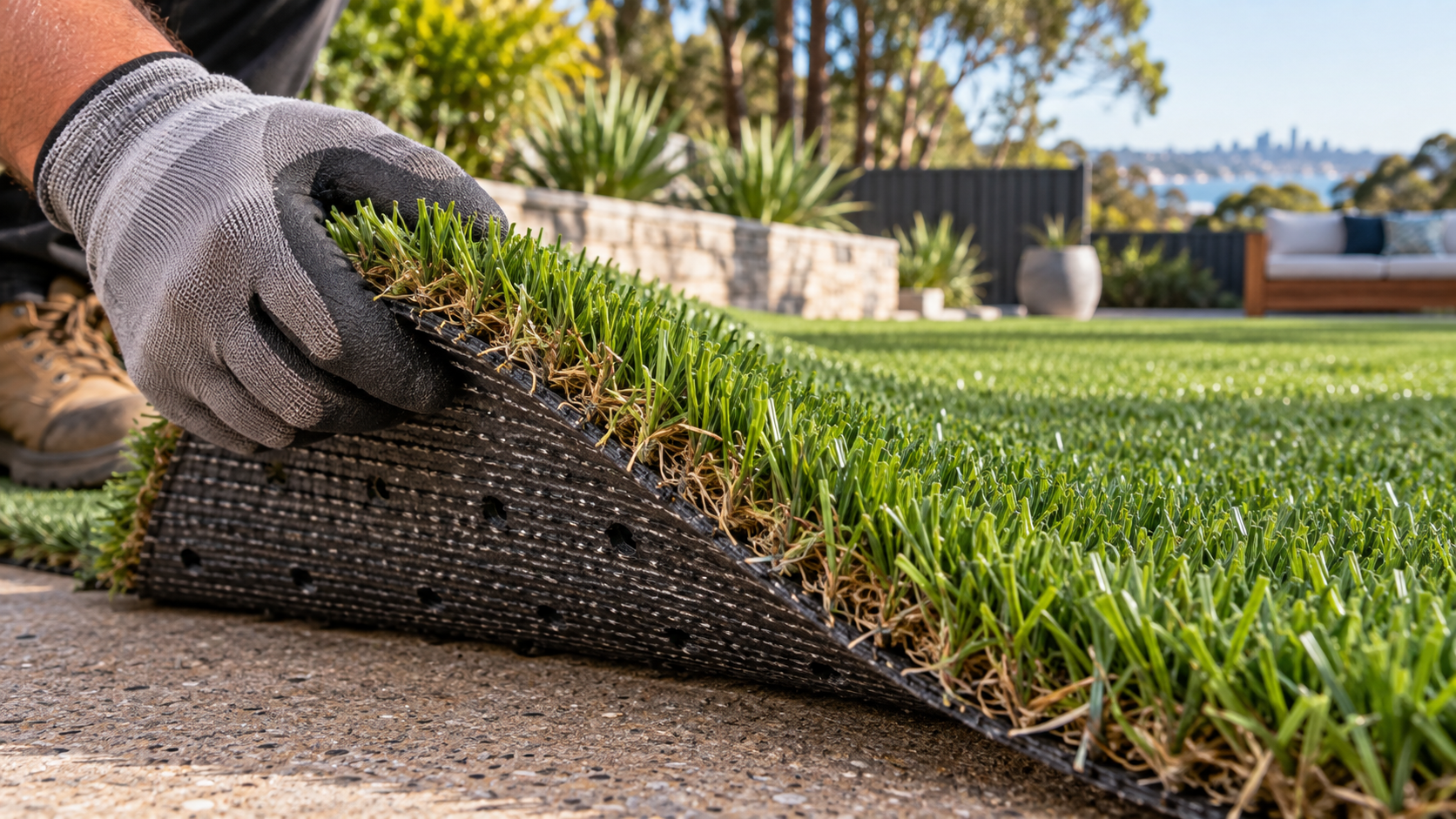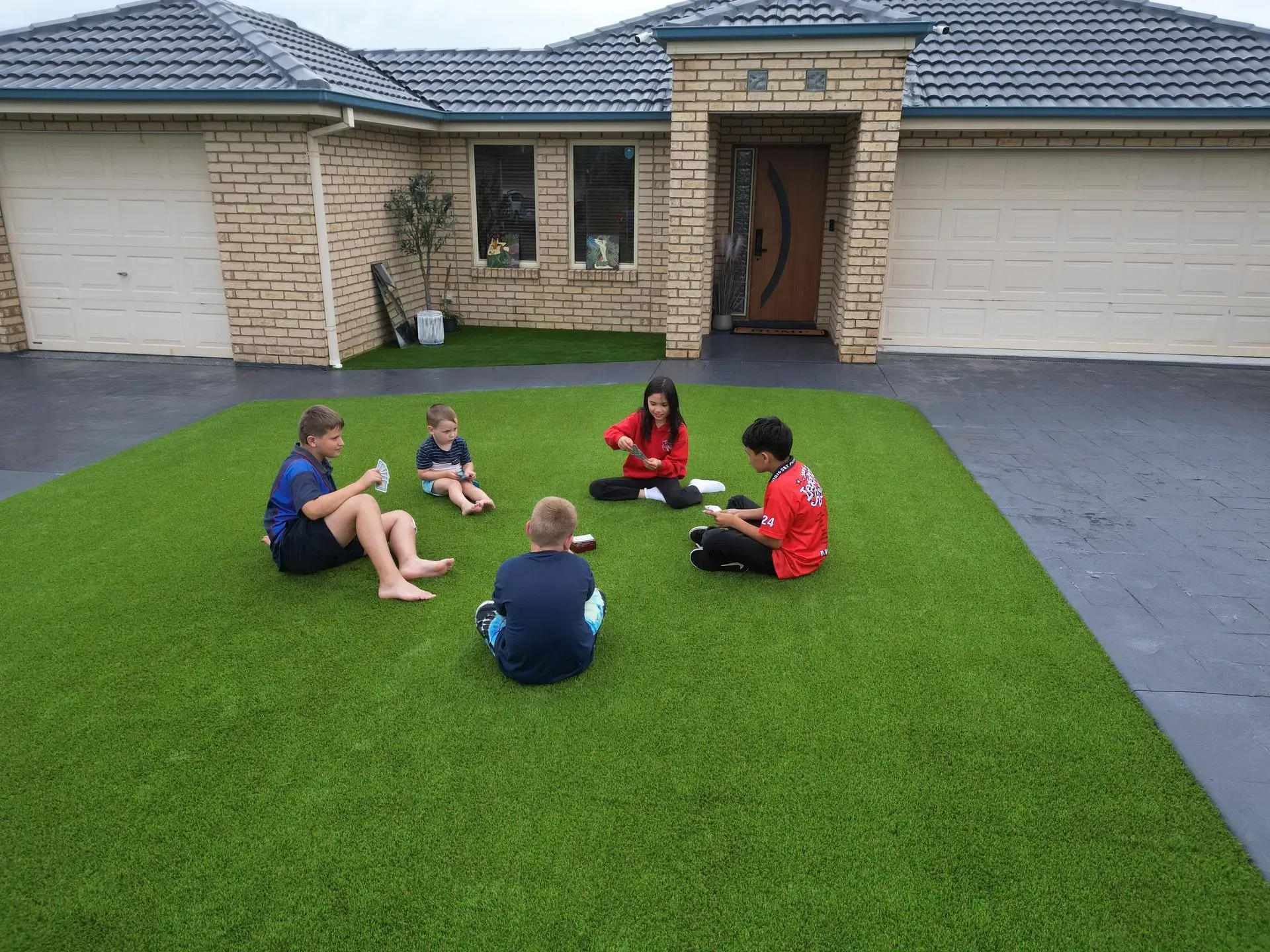

Artificial grass base preparation involves removing unsuitable vegetation and soil, establishing correct levels, managing drainage and installing a stable, compacted foundation before laying synthetic turf. Proper preparation helps reduce sinking, uneven surfaces and water pooling. The appropriate materials and methods depend on ground conditions, intended use and the turf manufacturer’s installation requirements.
Even high-quality synthetic turf can develop visible dips, loose edges or drainage problems when the underlying ground is poorly prepared. For Australian homeowners, understanding the groundwork makes it easier to plan a lawn upgrade and compare what different installation quotes include.
Why Is Proper Base Preparation Important for Artificial Grass Installation?
Proper base preparation supports an even finished lawn, helps distribute normal foot traffic and establishes a suitable route for rainwater. Without it, remaining roots, loose soil or inconsistent aggregate can settle beneath the turf, causing wrinkles, hollows or unstable edges.
A well-prepared base also helps maintain the intended surface levels where artificial grass meets paving, garden beds and buildings. It cannot eliminate every future maintenance issue, but it reduces avoidable problems that originate beneath the surface.
Main Benefits of Proper Base Preparation
- Stable foundation: Reduces movement caused by loose or unsuitable ground.
- Even surface: Helps prevent bumps, depressions and visible ridges.
- Drainage management: Provides an appropriate route for water to flow through or away from the base.
- Reduced settlement: Limits uneven movement beneath the finished lawn.
- Weed management: Removes existing vegetation and reduces some opportunities for regrowth.
- Better appearance: Helps the turf retain consistent levels and finished edges.
- Fewer corrective works: Reduces the likelihood of lifting turf to repair defective groundwork.
Common Installation Problems and Prevention Methods
| Installation Problem | Likely Cause | Prevention Method |
|---|---|---|
| Uneven artificial grass | Poor levelling or inconsistent compaction | Check and correct levels before installation |
| Sinking or depressions | Loose fill, roots or unstable soil | Remove unsuitable material and compact the foundation |
| Water pooling | Poor drainage or unsuitable falls | Plan infiltration or discharge before building the base |
| Weed growth | Remaining vegetation or exposed edges | Remove roots and use suitable weed-control measures |
| Visible ridges | Poorly finished aggregate layers | Smooth and inspect the finished base |
| Loose perimeter edges | Inadequate edging or fixing | Prepare secure perimeter supports |
Homeowners comparing residential artificial grass installation should ask how excavation, drainage, materials and compaction will be handled, not just which turf will be supplied.
What Materials Are Needed for Artificial Grass Base Preparation?
The materials needed depend on soil stability, drainage, expected use and the chosen artificial grass system. A compactable crushed aggregate commonly forms the foundation, with fine levelling material used where specified. Edging and drainage components may also be needed.
Materials must work together. For example, a permeable turf backing will not prevent pooling if water collects on an impermeable subgrade and there is no adequate outlet.
Common Artificial Grass Base Materials
| Material | Main Purpose | Important Considerations |
|---|---|---|
| Crushed rock or road base | Stable, compactable foundation | Select suitable grading and compacted thickness |
| Decomposed granite or fine aggregate | Smooth levelling surface where specified | Must suit the selected installation system |
| Geotextile membrane | Separates soil from aggregate | Use a suitable permeable separation product |
| Weed-control membrane | Restricts some vegetation growth | Not always required; must not impede drainage |
| Edging materials | Supports and secures the lawn perimeter | Must remain stable under expected use |
| Drainage aggregate or pipes | Manages excess water when needed | Requires suitable outlet and site design |
| Plate compactor | Consolidates aggregate layers | Select equipment appropriate to the material and area |
How to Choose the Right Base Materials
Check whether the ground contains sand, clay, loose fill or organic material. Consider existing drainage, foot traffic and whether children or pets will use the lawn. Follow the turf manufacturer’s instructions rather than assuming one base specification fits every property.
Geotextile and weed-control membranes are not interchangeable by default. A separation geotextile helps stop soil and aggregate mixing. A weed-control membrane is intended to restrict plant growth. Some products may perform both roles, but permeability and compatibility with the drainage design must be confirmed.
Effective drainage also depends on what happens below the turf. Water must pass through the specified layers and either infiltrate into suitable ground or reach an appropriate drainage outlet. Heavy clay or low-lying sites may need additional assessment, but drainage pipes are not required everywhere.
The Australian Government’s YourHome stormwater guidance explains how soil type, slopes and local conditions affect water management. A1SGS’s pet-friendly synthetic grass solutions are also relevant where regular pet use makes drainage and perimeter strength particularly important.
How Do You Prepare the Ground Before Installing Artificial Grass?
Preparing the ground for synthetic grass starts with inspecting the soil, surface falls, nearby buildings, and underground services. The following ten stages describe the original preparation sequence. Exact materials and installation methods should be adjusted to the site and chosen turf system.
Step-by-Step Artificial Grass Base Preparation
Measure the lawn area, mark boundaries and identify paths, garden beds, buildings and drainage points. Confirm the desired finished turf height before excavation.
Look for loose fill, soft spots, clay-heavy soil, slopes and existing pooling. Determine whether water can infiltrate or needs a designed drainage outlet.
Remove natural grass, weeds, roots and organic matter. Material left beneath the base can decompose, contributing to settlement.
Excavate enough ground to accommodate the specified compacted aggregate, any levelling layer and the turf. Depth depends on the site, not a universal measurement.
Correct unstable areas and install drainage measures where required. Water should follow an appropriate infiltration or discharge route, without being directed towards buildings or neighbouring property. Check relevant local requirements.
Lay specified permeable geotextile or weed-control material according to the installation design. Avoid membranes that trap water or conflict with the turf manufacturer’s directions.
Place the selected crushed aggregate evenly. Where multiple layers are specified, spread them in manageable lifts to allow effective compaction.
Use suitable compaction equipment and pay attention to corners, edges and disturbed areas. The aim is a firm, consistent foundation rather than loose material that later settles.
Use appropriate levelling tools to find depressions and ridges. Correct irregularities while maintaining planned drainage falls.
Confirm edging, final heights, compaction and drainage before laying the turf. Check that the completed base is compatible with the specified installation system.
Practical Ground Preparation Tips
Before digging, obtain available underground-service information through Before You Dig Australia. Follow asset owners’ instructions and arrange additional service locating or verification where needed. Plans alone do not establish that an excavation area is safe.
Keep loose aggregate away from unfinished edges, check levels beside paths and buildings, and address drainage before placing the base. Retrofitting drainage after laying aggregate may require completed sections to be excavated again.
For wider installation context, see A1SGS’s synthetic grass installation guide.
How Deep Should the Base Be for Artificial Grass Installation?
There is no universal excavation depth for artificial grass. The correct depth depends on existing ground levels, soil conditions, the specified compacted base thickness, any levelling layer, turf backing, pile height, and drainage needs.
Artificial Grass Base Layer Breakdown
| Layer | Purpose |
|---|---|
| Prepared subgrade | Stable existing ground after unsuitable material is removed |
| Compacted aggregate base | Supports the finished synthetic lawn |
| Fine levelling layer | Creates consistent levels where specified |
| Artificial grass | Finished surface selected for intended use |
Factors That Determine Excavation Depth
- Stability and height of the existing ground.
- Thickness of vegetation and unsuitable material.
- Specified aggregate layers and expected foot traffic.
- Drainage arrangements and any required outlet.
- Turf backing, pile height and finished surface levels.
- Transitions to paving, doors, edging and garden beds.
Loose aggregate depth is different from compacted thickness. Aggregate becomes thinner as it is consolidated, so installers should confirm the specified compacted layer thickness and final surface level rather than measuring only the loose material delivered to site.
A deeper excavation is not automatically better. Unnecessary removal of sound material can add disposal and replacement costs. The goal is an adequately supported, drained base suited to the property. YourHome’s site selection guidance provides broader information about soil conditions, site drainage and ground preparation. Ask installers to explain the proposed excavation depth and finished base specification in their quotation.
What Are the Common Mistakes to Avoid During Artificial Grass Base Preparation?
Base preparation mistakes may only become visible once turf is installed. Poorly compacted areas can settle, while unsuitable levels or drainage can leave the lawn uneven or wet. Inspecting the base before covering it is usually easier than repairing defects afterwards.
Common Base Preparation Mistakes
| Common Mistake | Potential Consequence |
|---|---|
| Installing over existing grass | Decomposing organic material causes settlement |
| Using unsuitable aggregate | Base remains loose or unstable |
| Inadequate compaction | Depressions develop over time |
| Ignoring drainage | Water pools beneath or around the lawn |
| Incorrect excavation depth | Finished levels clash with adjoining surfaces |
| Leaving dips or ridges | Surface irregularities show through the turf |
| Poor perimeter preparation | Edges lift or move |
| Ignoring manufacturer instructions | Layers may not perform as intended |
Final Pre-Installation Inspection Checklist
Before laying artificial grass, confirm:
- Existing vegetation, roots and debris are removed.
- The subgrade is stable and unsuitable fill has been addressed.
- Aggregate layers meet the specified compacted thickness.
- Finished levels are even and maintain suitable falls.
- Water has an appropriate infiltration or discharge route.
- Edging and perimeter supports are secure.
- The foundation follows the selected turf system’s requirements.
Weed removal reduces vegetation beneath the turf but does not guarantee a weed-free lawn. Seeds can still germinate in soil or debris collected on the surface. For pet-use considerations, A1SGS also discusses drainage, odour management and secure edges in its artificial grass buying guide.
DIY vs Professional Artificial Grass Base Preparation: Which Is Better?
DIY preparation can be practical for small, accessible areas with stable ground and straightforward drainage. Larger lawns, unstable fill, steep slopes or persistent water pooling may benefit from professional assessment and equipment.
The comparison should consider the complete groundwork rather than labour cost alone.
DIY vs Professional Preparation
| Consideration | DIY Preparation | Professional Preparation |
|---|---|---|
| Small, level garden | May be manageable | Suitable |
| Unstable or clay-heavy soil | Greater risk of mistakes | Specialist assessment beneficial |
| Complex drainage | Additional advice may be needed | Experienced planning beneficial |
| Equipment | May need hiring | Usually arranged by installer |
| Labour and time | Homeowner responsibility | Included in agreed scope |
| Quality control | Requires suitable knowledge | Can be specified and checked |
When comparing quotes, ask whether they include vegetation removal, excavation, waste disposal, aggregates, compaction, drainage, edging, and turf installation. Confirm what happens if unsuitable ground or buried services are discovered.
A clearly itemised scope makes it easier to understand whether two proposed installations include equivalent preparation work.
Build a Stable Foundation for Your Artificial Lawn
Proper preparation of the artificial grass base helps create a stable, even synthetic lawn with adequate drainage and finished levels. Removing unsuitable material, selecting compatible aggregate and membranes, compacting the foundation and checking the site before installation all matter.
Homeowners should compare the groundwork included in quotations rather than focusing only on turf supply. For advice tailored to your property, request a quote for A1SGS residential synthetic grass installation, including excavation, base materials, compaction, drainage and edging.
Explore Residential Artificial GrassFrequently Asked Questions
What Is the Best Base for Artificial Grass?
A suitable compactable aggregate, such as appropriately specified crushed rock or road base, is commonly used. The best material depends on soil conditions, drainage, expected traffic and the turf manufacturer’s installation instructions. Correct levelling and compaction are as important as material choice.
How Do You Prepare Soil Before Laying Artificial Grass?
Remove vegetation, roots and debris; inspect soil and drainage; excavate unsuitable material; and install any specified drainage or separation layers. Spread and compact the aggregate, check finished levels and prepare the perimeter before laying the turf.
How Deep Should You Dig When Preparing a Base for Artificial Grass?
There is no single appropriate depth. Excavation must accommodate the specified compacted aggregate, any levelling layer, and the finished turf, while matching the surrounding levels. Soil stability, drainage and intended use affect the design.
Do You Need a Weed Membrane Under Artificial Grass?
Not always. A compatible permeable weed-control membrane may help restrict growth from below, but it must not obstruct drainage. A geotextile used to separate soil and aggregate performs a different primary function. Neither prevents all weeds growing from seeds deposited above the turf.
Can Artificial Grass Be Installed Directly on Soil?
Installing turf directly over untreated soil is generally not recommended. Soil can settle, hold moisture and support vegetation, leading to an uneven surface. A properly specified, compacted foundation provides more consistent support, subject to the turf system and site conditions.